The Amazfit Bip 6 is the best running watch under £100 for most UK buyers in this shortlist. It combines built-in GPS, a large AMOLED screen and route-map features at a price that leaves room for running shoes or a chest strap. The Bip Max suits runners wanting an even larger display, while Huawei and TOZO cover lighter, cheaper and simpler alternatives.
Quick picks: the best running watches under £100
- Best overall: Amazfit Bip 6 — 1.97-inch amoled, built-in gps and maps.
- Best for maps and a large display: Amazfit Bip Max — 2.07-inch amoled, built-in gps and offline maps.
- Best lightweight smartwatch: Huawei Watch Fit 3 — amoled, built-in gps.
- Best budget fitness band with GPS: Huawei Band 11 Pro — slim colour display, built-in gps.
- Best alternative GPS smartwatch: TOZO Watch 1 — colour display, gps activity tracking.
Quick navigation
- How we chose
- Watch comparison
- Five watches reviewed
- GPS, heart rate and battery
- When to spend more
- Frequently asked questions
How we chose
This is specification-led research; the watches were not physically evaluated. We checked current UK prices and compared whether GPS is built in, display size, route or mapping functions, stated battery claims, app support, water-resistance claims and how each watch differs in daily use. Every selected variant was in stock and below £100 when checked.
None of these should be treated as a substitute for a dedicated performance watch from Garmin, Polar or COROS. Budget watches can record pace, distance and heart rate, but sensor accuracy and training analysis vary with fit, conditions, firmware and activity type. Sleep, calorie and recovery figures are estimates rather than medical measurements.
- Built-in GPS: records outdoor routes without carrying a phone; connected GPS borrows location from a paired phone.
- Readable data: a large bright display is useful for checking pace while moving.
- Battery: quoted maximums usually assume lighter use than regular GPS training.
- App quality: check phone compatibility, permissions, exports and whether key features need an account.
Running watches under £100 compared
| Watch | Best for | Display | Location | Main compromise |
|---|---|---|---|---|
| Amazfit Bip 6 | Best overall | 1.97-inch AMOLED | Built-in GPS and maps | Less training depth than dedicated running watches |
| Amazfit Bip Max | Best for maps and a large display | 2.07-inch AMOLED | Built-in GPS and offline maps | Large case will not suit every wrist |
| Huawei Watch Fit 3 | Best lightweight smartwatch | AMOLED | Built-in GPS | Fewer running metrics than specialist models |
| Huawei Band 11 Pro | Best budget fitness band with GPS | Slim colour display | Built-in GPS | Small screen for mid-run data |
| TOZO Watch 1 | Best alternative GPS smartwatch | Colour display | GPS activity tracking | Less established running ecosystem |
All five cover basic run recording. The decision is mainly between screen size, navigation, comfort and software rather than laboratory-grade sensor differences.
The five best running watches under £100 reviewed
1. Amazfit Bip 6: best overall

- Display: 1.97-inch AMOLED.
- Location: Built-in GPS and maps.
The Bip 6 is the easiest recommendation because it balances price, display and useful outdoor features. Built-in GPS means the watch can record a route without the phone providing location data, while the large AMOLED screen is easier to glance at than a narrow fitness band. Free maps add value for unfamiliar routes, though they are not equivalent to full turn-by-turn navigation on a premium sports watch.
Its large rectangular case may feel bulky on smaller wrists. Amazfit’s stated battery figure is a light-use maximum; frequent GPS sessions, bright display settings and calls will shorten it. Wrist-heart-rate readings are most useful for general trends, not precise interval control.
- Buy it if: you want the strongest balance of GPS, screen and mapping below £100.
- Skip it if: you need advanced workout analysis, physical buttons or a small case.
- Main compromise: limited training depth compared with dedicated running watches.
2. Amazfit Bip Max: best for maps and a large display

- Display: 2.07-inch AMOLED.
- Location: Built-in GPS and offline maps.
The Bip Max prioritises visibility. Its 2.07-inch AMOLED display gives pace, distance and map screens more room, while offline maps and onboard storage distinguish it from basic fitness trackers. It is the better pick for runners who value a large interface and occasionally follow routes, including mixed gym and outdoor training.
The 50mm case is the obvious trade-off. It may move more on a narrow wrist, which can affect comfort and optical-sensor consistency. It also sits right against the budget ceiling, where discounted specialist watches sometimes become worth checking.
- Buy it if: you want the biggest screen and offline maps while staying under £100.
- Skip it if: you prefer a compact watch or can stretch to a discounted specialist model.
- Main compromise: large case size and a price close to the ceiling.
3. Huawei Watch Fit 3: best lightweight smartwatch
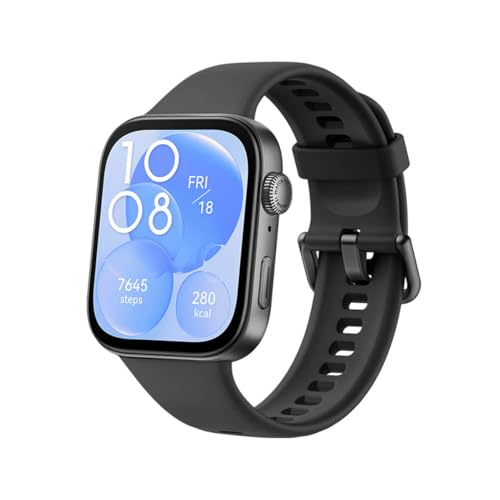
- Display: AMOLED.
- Location: Built-in GPS.
Huawei’s Watch Fit 3 is the more watch-like lightweight option. The slim rectangular case and AMOLED display suit everyday wear as well as running, and built-in GPS avoids taking a phone purely for route recording. It makes sense for runners who also want notifications and general activity tracking without a thick sports-watch body.
Huawei’s health and training scores remain consumer estimates, and app integration may not match the export workflow a serious runner expects. Check compatibility with your phone and preferred running platform before buying, particularly if historical data matters.
- Buy it if: you value a slim, light design and built-in GPS for regular easy runs.
- Skip it if: you want deep training-load tools, extensive button control or broad third-party integration.
- Main compromise: more lifestyle-focused software than a dedicated running platform.
4. Huawei Band 11 Pro: best budget fitness band with gps

- Display: Slim colour display.
- Location: Built-in GPS.
The Band 11 Pro is the cheapest recognisable option here with built-in GPS in the validated listing. Its narrow format weighs less on the wrist and suits beginners who mainly want time, distance, route and everyday activity tracking. It also costs substantially less than the two Amazfit models.
The smaller screen limits how much information can be read mid-run, and touch controls are less convenient with wet fingers or gloves. A slim band also provides less space for navigation and detailed workout pages. Confirm the exact UK app and phone requirements before ordering.
- Buy it if: you want low-cost built-in GPS in a light fitness-band format.
- Skip it if: you need large pace fields, maps or detailed structured workouts.
- Main compromise: small screen and reduced on-watch detail.
5. TOZO Watch 1: best alternative gps smartwatch

- Display: Colour display.
- Location: GPS activity tracking.
TOZO Watch 1 rounds out the shortlist as a lower-cost alternative to the dominant Amazfit and Huawei choices. Its listing specifies GPS activity tracking, and the conventional smartwatch format provides more screen space than a narrow band. It can cover casual running, steps and everyday notifications without approaching premium-watch pricing.
TOZO has a less established running ecosystem than Garmin, Polar, COROS, Amazfit or Huawei. Check whether recorded activities export to the services you use and whether GPS is genuinely independent for the exact mode you need. Marketing claims about health readings should not be treated as clinical data.
- Buy it if: you want a general GPS smartwatch and do not need advanced coaching tools.
- Skip it if: long-term app support and running-platform integration are priorities.
- Main compromise: a less mature running software ecosystem.
GPS, heart rate and battery expectations
Built-in versus connected GPS
Built-in GPS records location from the watch itself. Connected GPS relies on a paired phone, so leaving the phone at home removes the route. Even built-in GPS accuracy changes around tall buildings, dense trees, steep valleys and sharp turns. Wait for a position lock before starting and compare trends across several runs rather than judging one trace.
Our guide to GPS watch accuracy explains why measured distance can differ between devices. For setup help, follow the first-run GPS watch checklist.
Wrist heart rate
Optical sensors are convenient for steady running but can lag during intervals or struggle with cold skin, loose fit and arm movement. Wear the watch snugly above the wrist bone. If heart-rate zones guide hard training, compare an appropriate chest strap using our optical versus chest-strap guide.
Battery claims
Quoted battery life normally reflects a defined mix of notifications, screen use and limited GPS. Always-on displays, calls, frequent syncing and long outdoor workouts reduce it. Our running-watch battery guide covers the settings that matter.
Apps, maps and training features
Check whether the companion app works with your phone, whether workouts export to your chosen platform, and whether maps can be loaded without a subscription. A long feature list does not guarantee a clean running experience. Large pace fields, reliable lap controls and easy post-run syncing matter more than dozens of sports modes.
Beginners should prioritise simple run recording and consistency. The GPS watch guide for beginner runners explains which metrics are worth watching, while the Couch to 5K guide provides a practical training starting point.
When spending over £100 is worthwhile
Spend more when you need dependable physical buttons, structured workouts, longer GPS battery, clearer lap control, multisport support or a mature training platform. Garmin Forerunner, Polar Pacer and COROS Pace models were above £100 in the current search, but discounts and refurbished stock can narrow the gap.
Compare the next price bands before buying at the ceiling: our guides to running watches under £150 and running watches under £200 show what extra money buys.
Frequently Asked Questions
What is the best running watch under £100?
The Amazfit Bip 6 is the best-balanced option here for built-in GPS, a large display and maps at under £100.
Do cheap running watches have accurate GPS?
They can provide useful pace and distance estimates, but accuracy varies with environment, satellite lock, firmware and antenna design.
Is wrist heart rate accurate enough for running?
It is useful for general trends and steady efforts. A compatible chest strap is usually preferable for precise interval or zone work.
Can I run without my phone?
Yes when the watch has built-in GPS and the features you need do not depend on a live phone connection.
Are these watches waterproof?
They carry manufacturer water-resistance claims, but check the exact rating and permitted activities. Water resistance can deteriorate with damage and age.
When should I spend more than £100?
Spend more for advanced training tools, stronger platform support, longer GPS battery, physical controls or multisport features.
The bottom line
Choose the Amazfit Bip 6 for the best overall balance, Bip Max for maps and screen size, Huawei Watch Fit 3 for a lighter smartwatch, Band 11 Pro for the lowest price, or TOZO Watch 1 as an alternative. Treat health and training figures as estimates, confirm app compatibility and consider the £150 tier before buying at the top of this budget.