The Salomon Soft Flask 500ml is the best running water bottle for most UK runners who use a hydration vest or want a compressible flask: it carries a useful volume, shrinks as you drink and works without the sloshing of a half-empty rigid bottle. For a dedicated handheld, the HydraPak SkyFlask 350ml is lighter and easier to secure around the hand.
Choose by carry method before capacity. CamelBak’s Quick Grip Chill suits longer warm-weather road runs, Nathan’s SpeedDraw 2 combines hydration with phone storage, the Ultimate Performance bottle is the simplest rigid option, and the TRIWONDER handheld provides a lower-cost way to try a strapped soft flask.
In This Article
- Our direct answer
- Comparison table
- Six recommendations
- Bottle, flask or vest?
- How much water to carry
- Valves, grip, bounce and storage
- Cleaning
- Final verdict
- Frequently asked questions
Best Running Water Bottles: Our Direct Answer
Buy the Salomon Soft Flask 500ml if you want the most adaptable choice. It is large enough to be useful on a long training run, compresses as it empties and slots into many front hydration-vest pockets. Its main limitation is obvious: without a hand strap it is less convenient for runners who never wear a vest.
For hand carry, the HydraPak SkyFlask 350ml is the neater answer. The adjustable strap allows a relaxed hand rather than a constant grip, and the smaller volume limits the weight hanging from one arm. Choose CamelBak or Nathan when you need more liquid, insulation and storage.
A bottle is not compulsory for every run. Many people can complete a short outing comfortably without carrying fluid, particularly in cool weather and when starting well hydrated. Distance alone does not decide it: heat, humidity, pace, route exposure, personal sweat rate and access to safe refill points all matter.
Running Water Bottles at a Glance
The table keeps the purchase decision practical. Capacity is based on the selected product variant, but confirm the exact option before ordering because marketplace pages can group sizes and colours.
| Bottle | Our award | Capacity | Carry style | Best for |
|---|---|---|---|---|
| Salomon Soft Flask 500ml | Best overall | 500ml | Soft flask | Hydration vests and long runs |
| HydraPak SkyFlask 350ml | Best handheld soft flask | 350ml | Soft handheld | Runners wanting a low-bounce hand carry |
| CamelBak Quick Grip Chill | Best insulated handheld | 620ml | Insulated handheld | Longer warm-weather road runs |
| Nathan SpeedDraw 2 | Best with phone storage | 532ml | Insulated handheld | Carrying hydration, phone and keys |
| Ultimate Performance Runners Bottle | Best simple bottle | 580ml | Rigid handheld | Short runs and easy refilling |
| TRIWONDER Handheld Soft Flask | Best budget handheld | 500ml | Soft handheld | Trying a strapped flask for less |

The Six Best Running Water Bottles Reviewed
1. Salomon Soft Flask 500ml — Best overall

The Salomon Soft Flask 500ml is the best overall choice because it works equally well in a compatible running vest or carried in the hand for a while. Its soft body shrinks as you drink, so there is less liquid movement than in a half-full rigid bottle. The 500ml capacity also hits a useful middle ground: meaningful hydration without committing to a full reservoir.
This is the model to choose if you already use front flask pockets or expect to move to a vest for longer trail days. The high-flow bite valve allows quick sips without unscrewing a cap. Soft flasks do need more careful cleaning than a rigid bottle, and the flexible body is awkward to stand upright while filling unless you support it.
Check the dimensions against your vest pocket before ordering. A 500ml flask may sit too high in a short front pocket, while some vests are shaped for a specific shoulder or cap profile. For ordinary road runs, the HydraPak wrist strap or a shaped rigid bottle can be easier to carry.
2. HydraPak SkyFlask 350ml — Best handheld soft flask

The HydraPak SkyFlask 350ml is our preferred true handheld soft flask. Its adjustable wrist strap takes much of the gripping effort away from the fingers, while the compact 350ml size keeps the carried weight below that of the larger CamelBak and Nathan options when full.
That makes it a good fit for 5K-to-10K training, hot parkruns, or routes where you can refill. The body compresses as the drink level drops, helping reduce sloshing. The splash plug also addresses the annoying dribble that can occur when an open valve is swung repeatedly during a run.
Capacity is the trade-off. Three hundred and fifty millilitres may be plenty for a short outing but gives little margin on a long, exposed route. Choose the 500ml Salomon for a vest or the larger insulated handhelds when access to water is uncertain.
3. CamelBak Quick Grip Chill — Best insulated handheld

The CamelBak Quick Grip Chill carries about 620ml and is the best option here when you want an insulated handheld with useful capacity. The hand harness spreads the load more comfortably than squeezing an ordinary cycling bottle, and the storage pocket gives small essentials somewhere to go.
Insulation can slow warming, but it does not turn a handheld into a vacuum flask. The main practical gain is a drink that stays more pleasant during a warm run, not ice-cold water for hours. The larger bottle starts noticeably heavier than a soft 350ml flask, so the harness fit matters.
This model suits runners who dislike hydration vests but still want enough fluid for a longer road session. Alternate hands if the asymmetric load changes your arm swing, and tighten the strap only enough to stop bounce without restricting circulation.
4. Nathan SpeedDraw 2 — Best with phone storage

The Nathan SpeedDraw 2 is the most useful all-in-one handheld for runners carrying a phone, key and drink. Its 18oz capacity is roughly 532ml, and the hand harness includes storage so shorts do not have to manage everything. That is particularly handy for solo routes where a phone and house key are non-negotiable.
The ergonomic flask and blast-style valve are designed for drinking on the move, while the insulated construction aims to reduce rapid warming. As with the CamelBak, the pocket and harness add bulk compared with a bare soft flask. Large phones may also make the carrier feel more rigid against the hand.
Buy this for integrated storage rather than minimal weight. If your phone already sits securely in a belt or tights pocket, the simpler HydraPak or Ultimate Performance bottle will feel less complicated.
5. Ultimate Performance Runners Bottle — Best simple bottle
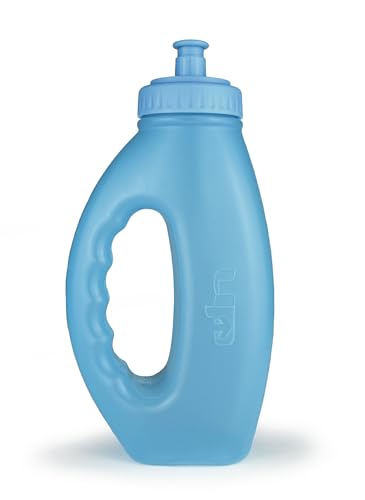
The Ultimate Performance Runners Bottle is the simple, familiar option: a shaped 580ml rigid bottle with an opening through the middle for the hand. It is easy to refill, easy to see inside and easier to scrub than a narrow soft flask. There is no strap to adjust and no carrier pocket to organise.
This design works best for short easy runs, run-walk sessions and organised events where practicality beats compact packing. Because the bottle stays the same size as you drink, water movement becomes more noticeable, and the grip still asks the hand and forearm to do some work.
It is also the easiest choice to share between running and general exercise. Do not mistake simplicity for inferiority: if you want a bottle you can fill, rinse and leave by the door, this may be more useful than a specialist soft flask.
6. TRIWONDER Handheld Soft Flask — Best budget handheld

The TRIWONDER 500ml handheld is the budget route into a strapped soft flask. It combines a collapsible bottle with a hand carrier, reducing the need to squeeze continuously. The capacity is suitable for medium-length outings, while the soft body packs down after use.
Its appeal is learning whether you get on with this carry style before paying more for a premium harness. The compromise is refinement: strap comfort, valve feel and pocket finish may not match the HydraPak, CamelBak or Nathan designs. Check and test every seal at home before taking it on a long route.
Choose it for occasional runs or as a first handheld. If you use a bottle several times a week, the better-shaped strap and cap systems on the established hydration models are easier to justify.
Handheld Bottle, Soft Flask or Hydration Vest?
Choose a handheld for simple access
A handheld is quick to grab and keeps drinking simple. Shaped bottles and straps reduce grip effort, but a full 500–620ml container still places roughly half a kilogram or more on one side once the bottle and carrier are included. Swap hands if comfortable and pay attention to altered arm swing.
Choose a soft flask for less sloshing
Soft flasks collapse as they empty, reducing trapped air and liquid movement. They are excellent in compatible vest pockets and pack small after use. Filling, drying and cleaning are more fiddly, and valve caps are not interchangeable across every brand.
Choose a vest for capacity and kit
A vest spreads fluid and kit across the torso, making it the better system for exposed trails, races with mandatory equipment or long unsupported routes. It costs more and needs careful sizing. Our guide to the best running hydration vests covers that decision separately.
- Short local loop: no bottle or a simple handheld.
- Medium road run: strapped handheld if refill points are limited.
- Long trail run: soft flasks in a fitted vest.
- Race: check organiser rules and aid-station spacing before choosing capacity.
How Much Water Should You Carry?
There is no single volume that is right for every runner. Start with expected time, weather, route and reliable access to drinking water. A shaded 40-minute winter run and an exposed 40-minute summer effort create different needs even though the distance is identical.
The NHS hydration guidance explains the role of regular fluid intake and using urine colour as one general indicator. During exercise, avoid forcing large amounts according to a rigid schedule. Thirst, conditions and your experience from similar sessions provide useful context.
Plan conservatively when a route is remote. Check whether taps are operating, carry a payment method where shops are the backup, and do not assume a stream is safe to drink. Our advice on running safely in hot weather covers route timing and warning signs in more detail. For long races, use the event’s published aid-station map rather than guessing from previous years.
Water or electrolytes?
Water is suitable for many ordinary runs. Longer, hotter or high-sweat sessions may justify a drink containing electrolytes, but concentration matters. Follow the product instructions rather than making the mixture stronger. Our guide to the best electrolyte drinks for runners covers drink choice, while the guides to running energy gels and a marathon nutrition plan cover fuelling alongside hydration.
Valves, Grip, Bounce and Storage
Test the valve at home
A bite valve should open without excessive effort and close without dripping when the bottle moves. Practise drinking while walking before trying it at pace. Confirm the cap is threaded correctly, turn the bottle upside down and squeeze gently over a sink.
Reduce grip effort
A strap should hold the bottle against the palm when the fingers relax. Too loose and it bounces; too tight and it can create pressure or numbness. Bottle shape matters for strapless rigid designs, particularly for runners with smaller hands.
Carry only useful storage
A pocket is valuable only if it fits what you need without making the carrier unstable. Check phone dimensions rather than relying on “phone compatible”, and protect electronics from sweat or leakage. A small key tether is often more useful than a large but bouncy compartment.
- Before the first run: wash, fill, invert and squeeze-test.
- During the first run: keep the route short enough to adjust the strap.
- After the run: inspect the cap, valve and seams for trapped residue.
Cleaning a Running Water Bottle
Rinse the bottle, cap and valve soon after every use, especially after electrolyte or carbohydrate drinks. Use the maker’s care instructions because dishwasher suitability varies. A narrow bottle brush helps with rigid flasks; soft flasks often need careful hand washing and thorough air drying.
Take removable bite valves apart only as instructed and note the order of seals. Leave components separated until fully dry. Storing a damp closed flask encourages odour and residue in places that are difficult to see.
Replace a bottle or valve when it remains tainted after cleaning, develops cracks, leaks at a seam, or no longer closes reliably. Do not use sharp tools inside a soft flask, as scratching or puncturing the lining creates a new problem.
Which Running Water Bottle Should You Buy?
Choose the Salomon Soft Flask 500ml for the broadest usefulness, particularly with a compatible hydration vest. It offers more capacity than the HydraPak handheld without the fixed bulk of a rigid bottle.
The HydraPak SkyFlask is the better dedicated handheld for shorter runs. CamelBak adds more insulated capacity; Nathan adds integrated storage; Ultimate Performance keeps things simple; and TRIWONDER is the sensible trial option if you are unsure whether a strapped soft flask suits you.
Do not buy by capacity alone. A smaller bottle that stays comfortable and gets used is better than a large one that changes your arm swing, leaks or remains in the cupboard.
Frequently Asked Questions
What is the best running water bottle in the UK? The Salomon Soft Flask 500ml is our best overall choice for vest use and adaptable carrying. For a purpose-built handheld, choose the compact HydraPak SkyFlask 350ml.
Do I need to carry water for a 5K run? Not always. In cool conditions, many runners starting well hydrated will not need a bottle for a short run. Heat, effort, personal needs and water access can change that decision.
Are soft flasks better than rigid running bottles? Soft flasks reduce sloshing and pack down as they empty. Rigid bottles are easier to fill, inspect and scrub. The better type depends on your preferred carry system.
How do I stop a handheld bottle bouncing? Adjust the strap so the bottle stays against the palm when your fingers relax, but not so tightly that it causes pressure or numbness. A smaller capacity can also reduce movement.
Can I put electrolytes in a soft flask? Usually, if the manufacturer permits it. Mix according to the drink instructions, rinse immediately after the run and clean the valve carefully to prevent residue and odour.
How often should I clean a running water bottle? Rinse it after every use and wash it thoroughly after drinks other than water. Separate removable components as instructed and allow everything to dry fully before storage.