The ASICS Novablast 5 is the best running shoe here for most neutral road runners: it combines generous cushioning with enough bounce for easy miles, steady sessions and long runs. Choose the Brooks Ghost 17 for a calmer daily trainer, Saucony Ride 18 for versatile daily training, HOKA Clifton 10 for comfort-led road mileage, Salomon Speedcross 6 for mud, or Brooks Cascadia 19 for mixed trails.
Road and trail shoes solve different grip problems, and fit matters more than any award. Start with terrain, then compare cushioning, stability, outsole and width. The exact product links below may open on a specific men’s size or colour, so always select the correct size before ordering.
Contents
- Our direct answer
- Comparison table
- Six reviews
- How to choose
- Road versus trail
- Fit, width and sizing
- Cushioning, stability and rotation
- Final verdict
- Frequently asked questions
Best Running Shoes: Our Direct Answer
Choose the ASICS Novablast 5 if most of your running is on roads or smooth paths and you want one neutral shoe for varied daily training. It has a more energetic feel than the Ghost 17 and more cushioning than the restrained Ride 18, without turning into a specialist racing shoe.
The Brooks Ghost 17 is the safer choice for runners who dislike pronounced rocker or bounce. HOKA’s Clifton 10 suits those who actively want a high, cushioned platform. Saucony’s Ride 18 sits between them as a conventional all-rounder.
For trails, decide how soft the ground is. Salomon Speedcross 6 is the mud specialist. Brooks Cascadia 19 is more versatile across gravel, woodland and rocky paths. If your runs regularly mix pavement with firm trail, Cascadia is easier to justify than deep Speedcross lugs.
Running Shoes at a Glance
| Shoe | Our award | Terrain | Best for | Variant shown |
|---|---|---|---|---|
| ASICS Novablast 5 | Best overall road shoe | Road | Neutral, cushioned daily training | 10 UK |
| Brooks Ghost 17 | Best dependable daily trainer | Road | Steady easy miles and beginners | 9 UK |
| Saucony Ride 18 | Best versatile daily trainer | Road | Daily runs from easy to steady | 10.5 UK |
| HOKA Clifton 10 | Best cushioned road option | Road | Comfort-led easy and long runs | 9 UK |
| Salomon Speedcross 6 | Best for mud and soft ground | Trail | Wet, soft and technical trails | 10.5 UK |
| Brooks Cascadia 19 | Best mixed-terrain trail shoe | Trail | Hard-packed paths and varied trails | 10.5 UK |
The four road recommendations are neutral shoes. Runners who need or prefer stability or support should not treat this shortlist as a complete support-shoe comparison. Use the final column as a reminder to check variants: the product links may open on a specific men’s size or colour, which does not mean that variant will fit or suit every runner.
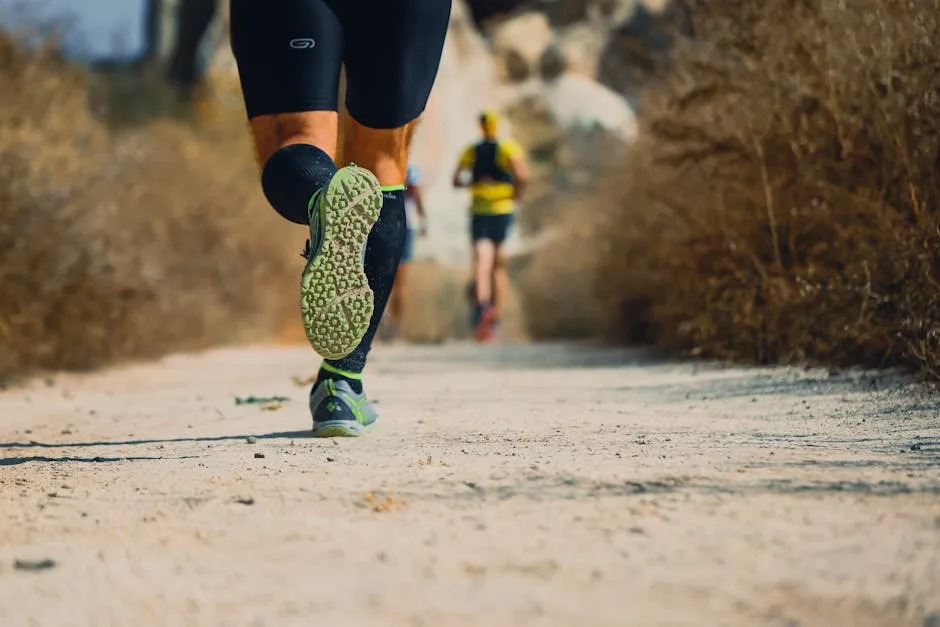
The Six Best Running Shoes Reviewed
1. ASICS Novablast 5 — Best overall road shoe

The ASICS Novablast 5 is the best all-round road choice here because it balances soft cushioning with enough rebound to avoid feeling flat when the pace rises. It makes most sense as a neutral daily trainer: comfortable for easy miles, lively enough for steady running and capable of covering a long run without requiring a second specialist shoe.
ASICS uses its FF BLAST MAX foam and a trampoline-inspired outsole geometry to create the springy character. That sensation will suit runners who enjoy a soft, energetic platform; those who prefer a firm, low-profile shoe may find it too bouncy or tall.
This variant shown is a men’s UK 10, so treat the link as a product-and-colour reference rather than assuming the displayed size fits. Check current size options, allow roughly a thumb’s width in front of the longest toe and compare the width with shoes that already fit you well.
2. Brooks Ghost 17 — Best dependable daily trainer

The Brooks Ghost 17 is the dependable choice for runners who want their shoe to disappear beneath them. It is a neutral road trainer aimed at everyday mileage rather than racing drama. The appeal is predictable cushioning, a conventional heel-to-toe transition and an upper built around comfort.
That makes it particularly easy to recommend to a new runner who is still learning what feels good, or to an experienced runner who wants a reliable easy-day shoe. It is less exciting than the Novablast and not designed to deliver the snap of a carbon-plated racer, but dependable is a useful quality across hundreds of ordinary training miles.
The listing is for men’s UK 9. Brooks fit can differ from ASICS, HOKA and Saucony, so do not carry a size across automatically. Check forefoot pressure and heel hold while wearing the socks you actually run in.
3. Saucony Ride 18 — Best versatile daily trainer

The Saucony Ride 18 is a versatile daily trainer because it covers a broad range of daily running without a highly specialised geometry. It is cushioned enough for easy days, light enough for steady sessions and more restrained underfoot than the softest maximal shoes.
That balanced character suits runners buying one pair for a mixed week. It also makes the Ride a useful rotation partner for a trail shoe: use it for pavements and smooth park loops, then switch to a lugged outsole when the route turns wet or uneven.
This variant is men’s UK 10.5. The Ride is neutral, so runners who have been prescribed or consistently prefer a structured support shoe should not change solely because this model appears versatile. Comfort and a stable feel during a short easy run matter more than the category label.
4. HOKA Clifton 10 — Best cushioned road option

The HOKA Clifton 10 is the comfort-led road option for easy and long runs. Its high cushioning and rocker-style transition reduce the sense of a harsh heel-to-toe roll for runners who enjoy a protective platform. The broad use case is steady road mileage, recovery runs and time on feet rather than short, aggressive speed sessions.
A tall cushioned shoe is not automatically more protective for every runner. Some people love the smooth rocker; others feel less connected to the ground or notice pressure from HOKA’s fit. The right verdict comes from comfort and stable movement, not from choosing the thickest midsole.
The exact product is men’s UK 9. Check width as carefully as length, particularly through the midfoot and toe box. If the arch or sidewall feels intrusive while standing, do not assume it will improve after several runs.
5. Salomon Speedcross 6 — Best for mud and soft ground
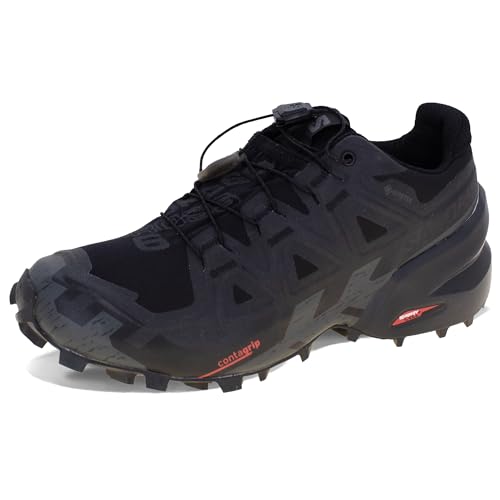
The Salomon Speedcross 6 is the specialist pick for mud, wet grass and soft ground. Its deep, widely spaced lugs are designed to bite into loose surfaces and shed debris more readily than a road outsole. The close foothold and Quicklace system also suit uneven routes where the foot must stay secure inside the shoe.
That aggressive outsole is a compromise on tarmac and hard-packed paths. The lugs can feel prominent, wear faster on abrasive surfaces and offer less surface contact on smooth wet rock than their muddy-trail confidence might suggest. Choose it because your regular routes are consistently soft, not because “trail” sounds more rugged.
This variant is men’s UK 10.5. Salomon often feels closer through the midfoot than broad road trainers, so runners needing extra width should check the fit carefully. For mixed door-to-trail routes, the Cascadia is the more forgiving option.
6. Brooks Cascadia 19 — Best mixed-terrain trail shoe

The Brooks Cascadia 19 is the better trail choice when the terrain changes throughout the run. It combines a protective trail platform with an outsole intended for varied surfaces, making it more suitable than the Speedcross for gravel, woodland tracks, rocky sections and short road links.
The Cascadia’s advantage is versatility rather than maximum mud grip or road-shoe smoothness. It gives up some of the Speedcross bite in boggy ground, yet it is easier to live with on compact trails. A protective trail shoe can also help when stones and roots are common, though no outsole makes wet rock or roots risk-free.
This variant shown is men’s UK 10.5. Check that the heel is secure on descents and that toes do not strike the front when moving downhill. Trail fit often benefits from secure midfoot hold with enough toe space for swelling and descents.
How to Choose Running Shoes
Start with terrain
Road shoes prioritise smooth transitions and cushioning on predictable surfaces. Trail shoes add outsole lugs, upper security and underfoot protection. A park loop of tarmac and compact gravel usually needs a road shoe; muddy fields and technical woodland need trail grip. Our road-versus-trail shoe guide explains the boundary.
Let comfort rule
A shoe should feel secure without pinching, rubbing or forcing the foot into an awkward position. Ignore the urge to buy a model because it is popular if another shoe feels calmer and more natural. Comfort during an easy run is a better starting signal than a fashionable foam name.
Match the shoe to the run
Beginners and three-times-a-week runners can usually start with one versatile daily trainer. Faster runners may add a lighter workout shoe; trail runners may add a mud-specific pair. Our running-shoe selection guide covers gait, comfort and use in more detail.
Replace by condition, not a calendar
Look for compressed or uneven cushioning, worn-through outsole rubber, loss of grip, torn uppers and a change in how the shoe feels on familiar runs. Mileage can provide context, but runner weight, surface, gait and model construction all affect wear.
Road Versus Trail Running Shoes
Road outsoles maximise contact with pavement and use shallower tread. That usually makes them smoother and quieter on tarmac. Novablast, Ghost, Ride and Clifton fit this category, though all can handle dry, compact park paths.
Trail outsoles use lugs to engage loose ground. Deep, open lugs such as those on Speedcross suit mud; a more balanced tread such as Cascadia’s handles a wider mix. Grip remains surface-specific: sticky mud, wet roots, smooth rock and loose gravel create different demands.
- Mostly pavement: choose a road daily trainer.
- Road plus firm towpaths: road shoes or a mild mixed-terrain trail shoe can work.
- Regular mud and wet grass: choose deep, spaced trail lugs.
- Rocky or rooty trails: prioritise foothold, protection and stable placement.
Runners moving off-road should shorten stride, allow more time and treat pace as secondary to footing. Our guide to transitioning from road to trail running covers the change in technique and planning.
Fit, Width and Sizing
Try running shoes later in the day when feet may be slightly larger, wearing normal running socks. Aim for secure heel and midfoot hold without numbness or pressure, plus room for the toes to spread. A thumb’s-width check is useful, but shape matters as much as length.
Brand sizing is not perfectly transferable. A UK 10 from ASICS may not feel identical to a UK 10 from Brooks or Salomon. Compare the actual centimetre sizing where supplied, read the return conditions and avoid “breaking in” obvious pressure points.
Trail shoes need enough front space for descents without allowing the heel to lift on climbs. Lace pressure should be even. If the foot slides forward or the toes touch on a decline, the fit is wrong even if standing comfort seems acceptable.

Cushioning, Stability and Rotation
Cushioning is a preference
More foam changes feel; it does not automatically make a shoe safer or better. Novablast feels lively, Clifton is more comfort-led, Ghost is controlled and Ride is balanced. Choose the sensation that lets you run naturally without fighting the platform.
Neutral versus support
These six are selected as neutral or terrain-led shoes, not medical devices. If a clinician has advised a particular support approach, or a support shoe has consistently worked for you, do not switch categories based on a generic award. Persistent or worsening pain deserves assessment rather than another speculative shoe purchase.
When a rotation helps
One good daily trainer is enough for many runners. A second pair earns its place when it solves a clear problem: trail grip, a lighter workout feel, recovery comfort or allowing a wet pair to dry. Carbon-plated shoes are a specialist addition; see our carbon-plate running-shoe guide before treating one as an everyday upgrade.
Build training gradually whichever shoe you choose. The NHS Couch to 5K programme uses progressive run-walk sessions for beginners, and our Couch to 5K and beyond guide adds practical UK context.
Which Running Shoes Should You Buy?
Buy the ASICS Novablast 5 if you want one lively, cushioned road shoe for a varied week. Choose the Ghost 17 for a calmer and more traditional daily ride, Ride 18 for balanced daily training, or Clifton 10 when comfort-led cushioning is the priority.
For trails, Speedcross 6 is the clear mud specialist. Cascadia 19 is the more versatile choice for mixed surfaces and routes containing firm sections. Neither replaces a road shoe for regular pavement mileage.
The biggest mistake is ordering by award without checking terrain, size and shape. The best shoe is the one that fits securely, feels comfortable at an easy pace and matches the ground you actually run on.
Frequently Asked Questions
What are the best running shoes for most UK runners? The ASICS Novablast 5 is our best overall road choice for neutral runners wanting cushioned, versatile daily training. Fit and terrain should still decide the purchase.
Can I use trail shoes on the road? For short connecting sections, yes. Deep lugs such as those on the Speedcross 6 can feel awkward and wear faster on long road runs, while a mixed-terrain shoe is more adaptable.
How much room should running shoes have? Aim for secure heel and midfoot hold with enough toe room for natural spread and swelling. Roughly a thumb’s width can be a useful check, but shoe shape and width also matter.
Do cushioned running shoes prevent injury? No shoe can promise injury prevention. Cushioning changes comfort and ride feel; training load, recovery, strength, previous injury and individual movement also matter.
How often should running shoes be replaced? Replace them when grip, cushioning, structure or comfort has clearly deteriorated. Mileage is only a guide because wear varies by runner, shoe and surface.
Do beginners need expensive running shoes? No. Beginners need a comfortable, correctly fitting shoe suited to their terrain. A versatile daily trainer is usually more useful than a specialist racing shoe.