Your knees have been aching after every run for the past month. The NHS running guidance stresses that proper footwear is key to avoiding injury. You bought those shoes because they were on sale at Sports Direct, they looked fast, and the label said “running shoe.” Now you’re three months in, your left shin splints won’t quit, and someone at parkrun has just mentioned “overpronation” like it’s something you should obviously know about.
Choosing running shoes feels complicated because the industry has made it complicated. Wall-to-wall displays, 47 different models (our best running shoes 2026 guide cuts through the noise with tested recommendations), words like “energy return” and “carbon plate” — it’s designed to overwhelm you into spending £180 on something you might not need. After testing dozens of models across road, trail, and track, we can confirm: the truth is simpler than the marketing suggests, but there are a few things that genuinely matter. Get them right and running feels easy. If you’re just starting out, our Couch to 5K guide covers everything from first steps to race day. Get them wrong and you’re nursing injuries.
Understanding Your Gait: The Foundation of Shoe Choice
Your gait is how your foot moves when it hits the ground. Specifically, what happens in the split second between your heel striking and your toes pushing off. This is where pronation comes in.
What Is Pronation?
Pronation is the natural inward roll of your foot as it absorbs impact. Every runner pronates to some degree — it’s your body’s shock absorption system. The issue isn’t pronation itself; it’s how much you pronate.
Neutral pronation — Your foot rolls inward about 15%, which is the ideal amount. The impact is distributed evenly, and your foot pushes off fairly equally from the front. About 30-40% of runners have neutral pronation. If you look at the soles of your current shoes and the wear is roughly even across the forefoot, you’re probably neutral.
Overpronation — Your foot rolls inward more than 15%, often noticeably. The arch collapses further, and the push-off comes more from the big toe and inner forefoot. This puts extra stress on the knee, shin, and ankle. Overpronation is the most common gait type — about 50-60% of runners overpronate to some degree.
Check your old shoes: if the inner edge of the sole is worn down much more than the outer edge, you likely overpronate. Another tell: if the heel counter (the rigid bit at the back of the shoe) leans inward when you place the shoe on a flat surface, that’s your foot pulling it in.
Supination (underpronation) — Your foot rolls outward instead of inward, or doesn’t roll inward enough. Impact is concentrated on the outer edge of the foot. Supination is the least common gait type — only about 5-10% of runners. You’ll see heavy wear on the outer edge of the sole, and the shoe may lean outward.
Getting a Gait Analysis
You can guess your pronation type from shoe wear patterns, but a proper gait analysis is better. It’s quick, free at most specialist running shops, and it takes the guesswork out.
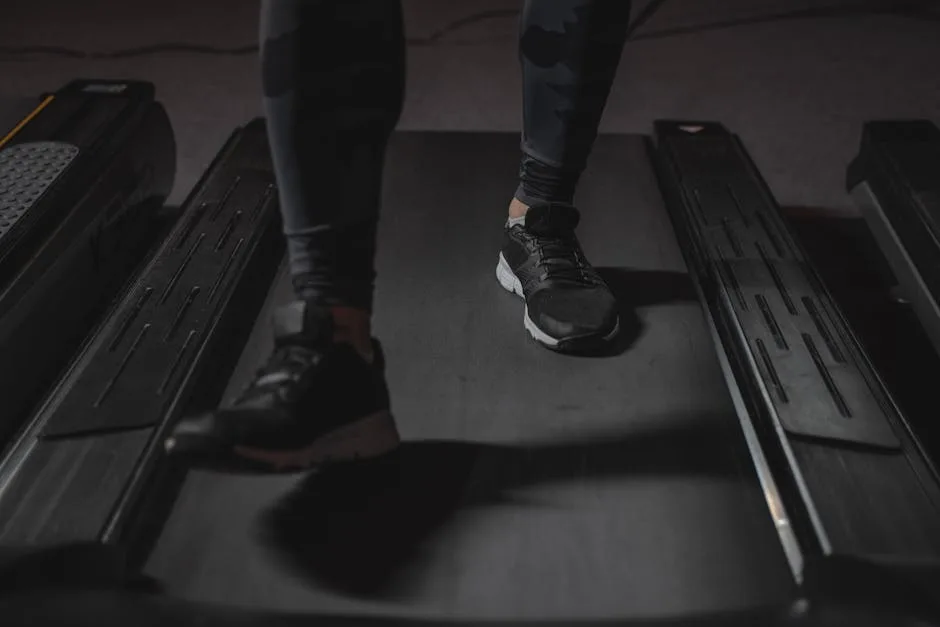
Here’s what happens: you run on a treadmill for a minute or two while the staff member watches (some shops also film your feet from behind). They’ll look at how your ankle and foot move through the gait cycle and recommend whether you need a neutral, stability, or motion control shoe.
It’s not a medical assessment — it’s a fitting tool. But it’s a good one, and it catches the obvious issues. If you’ve been running in shoes that don’t match your gait and wondering why your knees hurt, this is step one.
UK shops that offer free gait analysis:
- Runners Need — locations across England, well-trained staff, thorough analysis using video playback. This is where I’d go first.
- Up & Running — independent chain with about 10 shops across England. Excellent personal service. They’ll spend 20-30 minutes with you.
- Sweatshop — inside some Sports Direct stores, though the quality varies by location. The standalone Sweatshop shops (if you can find one) are better.
- Run4It — Scotland’s main specialist running shop, with branches in Edinburgh, Glasgow, and Aberdeen. Great reputation.
- Profeet — London only (Fulham), but one of the most detailed analysis services in the UK, including pressure plate analysis and custom insoles
- Decathlon — some larger stores now offer basic gait analysis for free. Worth checking your local branch.
Book an appointment if you can — walking in on a Saturday afternoon means you’ll be waiting, and the staff might rush through it.
Cushioning vs Stability vs Motion Control
Once you know your gait type, the shoe categories start making sense.
Neutral / Cushioned Shoes
For runners with neutral pronation or mild supination. These shoes have plenty of cushioning to absorb impact but don’t try to control or correct your foot’s movement. The midsole is the same density throughout.
Neutral shoes are the broadest category and include everything from ultra-cushioned max models (like the Hoka Bondi) to lightweight racing shoes. If your gait analysis says “neutral,” this is your playground.
Popular neutral shoes in the UK:
- Nike Pegasus 41 — about £105-115. The default recommendation for good reason. Reliable, versatile, suits most foot shapes.
- Hoka Clifton 9 — about £120-130. Maximum cushioning without excessive weight. Brilliant for easy miles and long runs.
- Asics Gel Nimbus 26 — about £150-165. Premium cushioning, very comfortable, slightly heavy but forgiving on tired legs.
- Brooks Ghost 16 — about £115-125. The “boring in a good way” shoe. Does everything well, nothing badly.
- Budget option: Decathlon Kiprun KS900 — about £60. Surprisingly good for the price. The foam isn’t as responsive as £120 shoes, but it’s comfortable and durable.
Stability Shoes
For runners who overpronate. Stability shoes have a firmer section in the midsole (usually on the inner/medial side) called a “medial post” or “guide rail.” This doesn’t stop your foot from rolling inward — it slows the roll and supports the arch through the gait cycle. For a related angle, see our Best Carbon Plate Running Shoes 2026 UK: Race Day Speed guide.
Modern stability shoes have got much better. The old ones felt like running in orthopaedic boots — stiff, heavy, and joyless. Current models use dual-density foams and guide rail systems that are subtle enough that you barely notice the support until you compare them directly to a neutral shoe.
Popular stability shoes in the UK:
- Asics GT-2000 13 — about £110-125. The benchmark stability shoe. Excellent support without feeling rigid. My top pick for overpronators.
- Brooks Adrenaline GTS 24 — about £115-130. GuideRails system that supports the whole kinetic chain, not just the foot. Very comfortable.
- New Balance 860v14 — about £115-130. Reliable stability shoe with a wide toe box option — great if you have broader feet.
- Nike Structure 25 — about £110-120. Lighter and more responsive than most stability shoes. Good for faster-paced runs.
- Budget option: Asics GT-1000 13 — about £75-90. Stripped-down version of the GT-2000 that still provides solid medial support.
Motion Control Shoes
For severe overpronation. These are the most structured and supportive shoes, with substantial medial posting, a rigid heel counter, and a straight last (the mould the shoe is built on). They’re heavier and stiffer than stability shoes.
Motion control shoes are less common now because severe overpronation is often better addressed with custom orthotics plus a stability shoe rather than relying on the shoe alone. If you’ve been told you need motion control, consider seeing a sports podiatrist — the NHS can refer you, or a private appointment costs about £50-80 for an initial assessment.
Options: The Brooks Beast and New Balance 1540 are the main motion control shoes still available. Both cost about £130-150.
Road Shoes vs Trail Shoes
Road Running Shoes
These are what most UK runners need. Designed for tarmac, pavement, and compacted paths, they have smoother outsoles with shallow tread patterns, lightweight construction, and midsoles optimised for consistent surfaces.
If your running involves pavements, parks, towpaths, and the occasional canal path, road shoes are what you want. They also work fine on dry, compacted trails — your local parkrun course in summer doesn’t need trail shoes.
Trail Running Shoes
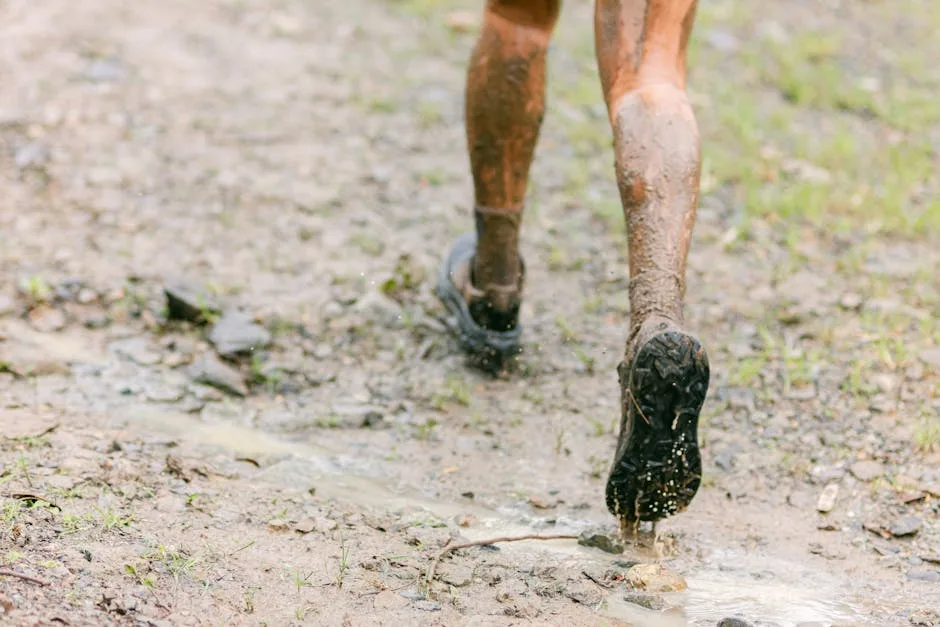
Trail shoes have deeper lugs on the outsole for grip on mud, rocks, and loose surfaces. They typically have a stiffer midsole to protect against sharp rocks underfoot, a reinforced toe bumper, and sometimes a rock plate (a stiff layer between the outsole and midsole that prevents sharp stones from bruising your foot).
If you regularly run on proper off-road terrain — footpaths across fields, bridleways, fell paths, moorland — trail shoes make a real difference. Trying to run a muddy cross-country course in road shoes is like driving on ice with summer tyres. Our Best Running Shoes for Flat Feet 2026 UK: Stability Options guide is useful alongside this.
When to consider trail shoes:
- Cross-country races and fell runs
- Regular off-road running on footpaths, bridleways, and moorland
- Parkrun courses that turn into mudbaths from October to March (looking at you, Bushy Park)
- Any terrain where you find yourself slipping in road shoes
Popular trail shoes in the UK:
- Inov-8 Mudclaw G 260 — about £130. Made in the UK (well, designed here). The best mud grip you can buy. Purpose-built for bog-standard British mud.
- Salomon Speedcross 6 — about £110-130. The default trail shoe recommendation. Aggressive lugs, excellent grip, available everywhere.
- Hoka Speedgoat 6 — about £140. Maximum cushioning with trail grip. Great for long trail runs where comfort matters as much as traction.
- Nike Pegasus Trail 5 — about £110-120. Road-to-trail crossover. Not as grippy as dedicated trail shoes but versatile enough for mixed terrain.
- Budget option: Decathlon Evadict MT2 — about £35-50. Decent grip and protection for the price. Perfect for occasional trail running without spending Salomon money.
Do You Need Both?
If you mostly run on roads and paths with occasional parkrun mud, road shoes are fine. A separate pair of trail shoes only becomes worth it if you’re regularly running proper off-road terrain — at least once a week.
Some runners keep an old pair of road shoes for muddy parkruns and save their good pair for training. That works too.
Understanding Shoe Specs
Stack Height and Drop
Stack height is the total thickness of material between your foot and the ground. A shoe with 35mm of stack has a lot of cushioning; one with 20mm is more minimal. More stack generally means more cushioning but less ground feel.
Drop (also called heel-to-toe offset) is the difference between the stack height at the heel and at the forefoot. A shoe with 30mm heel and 20mm forefoot has a 10mm drop. Most traditional running shoes have an 8-12mm drop. Lower-drop shoes (4-6mm) encourage a more midfoot strike, while zero-drop shoes (Altra is the main brand) put heel and forefoot at the same height.
If you’re currently running in standard shoes and have no issues, don’t change the drop suddenly. Going from a 10mm drop to zero overnight changes the load on your Achilles tendon and calves, which is asking for trouble.
Shoe Width
This is criminally overlooked. Most running shoes come in a standard width (D for men, B for women in UK sizing). If your toes feel squeezed or you get black toenails, you probably need a wide fit.
Brands that offer wide options in the UK:
- New Balance — consistently the best range of widths (2E and 4E options)
- Brooks — wide options available in most models
- Asics — wide fit available in key models like the GT-2000 and Nimbus
- Altra — naturally wide toe box design as standard
Nike and Hoka tend to run narrow. If you have wider feet, try before you buy.
Weight
Lighter shoes feel faster but often have less cushioning and durability. For training runs, a slightly heavier shoe (250-310g) with more cushioning protects your joints over high-mileage weeks. For races and fast sessions, a lighter shoe (200-250g) can really improve your times. We cover a similar decision in How to Choose Running Shoes for Your Gait Type.
Most recreational runners don’t need a separate racing shoe. If you’re running under 40 minutes for 10K and want to shave seconds, it’s worth considering. Otherwise, your training shoe is your racing shoe.
How Much Should You Spend?
Running shoes in the UK typically fall into these price brackets:
Under £60 (budget): Decathlon’s Kiprun range, older models on sale, and brands like New Balance and Asics at outlet prices. You can get a perfectly good running shoe for under £60 if you don’t need the latest model.
£60-100 (mid-range): Previous-generation versions of premium shoes. The Asics GT-2000 12 (last year’s model) for £80 is essentially the same shoe as the current GT-2000 13 at £120. This is the sweet spot for value.
£100-150 (premium): Current-generation shoes from major brands. Nike Pegasus, Hoka Clifton, Brooks Ghost. You’re paying for the latest foam technology and colours.
£150-250 (performance/carbon plate): Racing shoes and super-trainers with carbon or pebax plates. Nike Vaporfly, Asics Metaspeed, New Balance FuelCell. These are for racing, not daily training.
My advice: Spend £80-120 on your main training shoe. That’s where the quality-to-price ratio is best. Buy last year’s model in a colour you don’t care about and save £30-50.
Where to find deals:
- SportsShoes.com — consistently good prices on previous-season models
- Runners Need sale section — quality shoes at proper discounts
- Amazon UK — hit and miss, but price tracking with CamelCamelCamel finds bargains
- Decathlon — their own-brand Kiprun shoes offer incredible value
- Up & Running sale — smaller selection but well-curated
When to Replace Your Running Shoes
This is the question everyone asks and nobody gives a straight answer to, so here it is: replace your running shoes every 500-800km (300-500 miles).
That’s a wide range because it depends on several factors:
- Your weight — heavier runners compress the midsole faster. If you’re over 85kg, lean towards 500km.
- Your running surface — road running wears shoes faster than trails or grass.
- The shoe construction — budget shoes with cheaper foam may need replacing at 400-500km. Premium shoes with Pebax or similar foams can push towards 800km.
- How the shoe feels — if the cushioning feels flat and dead compared to when it was new, it’s done regardless of the kilometre count.
For a runner doing 30km per week, that’s roughly every 4-6 months. For someone running 50km per week, it might be every 3-4 months. Yes, that means serious runners might go through 2-3 pairs a year.
Signs Your Shoes Need Replacing
- Midsole compression lines — visible creases or wrinkles in the midsole foam
- Worn outsole — if the tread pattern has worn smooth in areas, grip and cushioning are both compromised
- Aches that weren’t there before — shin, knee, or hip discomfort that appeared gradually is often the shoes losing their support
- Asymmetric wear — one shoe breaking down faster than the other suggests a gait issue worth getting assessed
- The heel counter leans — if the back of the shoe tilts inward or outward when placed on a flat surface, the structure is gone
Rotation: The Smart Approach
If your budget allows, owning two pairs and alternating between them makes both pairs last longer. The midsole foam in modern running shoes is viscoelastic — it compresses during a run and needs time to recover. A study from the University of Luxembourg found that runners who rotated between multiple shoes had a 39% lower injury rate than single-shoe runners.
You don’t need two identical pairs. A common setup is one cushioned shoe for easy runs (Hoka Clifton, Brooks Glycerin) and one lighter shoe for faster sessions (Nike Pegasus, Asics NovaBlast). Together they last longer than each would individually.
Common Mistakes When Buying Running Shoes
Buying too small. Your feet swell during a run — by the end of a half marathon, they can be half a size bigger. Buy running shoes with a thumb’s width of space between your longest toe and the end of the shoe. This usually means going half a size up from your regular shoe size.
Buying based on looks. That neon green colour might not be your first choice, but if the shoe fits your gait and feels right, buy it. Running shoes are tools. The best-looking shoe that doesn’t suit your foot is worse than the ugliest shoe that does.
Ignoring the break-in period. New shoes need 30-50km before they feel fully bedded in. Don’t wear a brand new pair for your first marathon. Race in shoes you’ve already done at least 50km in.
Listening to friends instead of your feet. “My mate swears by the Nike Vaporfly” is not a reason to buy a shoe. Your mate’s gait, foot shape, and running style are different from yours. Get your own analysis done.
Buying online without trying first. Go to a running shop, get fitted, try several pairs, run in them on the in-store treadmill. If you want to buy online to save money after that, at least you know your size and model.
Getting Started: A Step-by-Step Plan
- Go to a specialist running shop — Runners Need, Up & Running, or your local independent. Not Sports Direct, not JD Sports. Specialist shops.
- Get a free gait analysis — takes 10 minutes, costs nothing, tells you whether you need neutral or stability.
- Try 3-4 pairs — the staff will bring options based on your gait. Run in each pair on the treadmill. One will feel obviously better.
- Buy the one that feels right — not the cheapest, not the most expensive, not the one that matches your kit. The one that felt best when you ran in it.
- Track your mileage — use Strava or your running watch to log total distance in each pair. Replace at 500-800km.
That’s it. Running shoes don’t need to be complicated. Get your gait checked, buy a shoe that matches, replace it when it’s worn out. Everything else is marketing.
Frequently Asked Questions
How do I know if running shoes fit properly? You should have a thumb’s width of space at the toes, a secure heel and no pinching across the midfoot. Try them later in the day when feet are slightly swollen.
How often should running shoes be replaced? Most shoes last roughly 300-500 miles. Replace them sooner if the midsole feels flat, grip is worn or niggles appear after normal runs.
Do beginners need expensive running shoes? No. Beginners need comfortable, suitable shoes more than premium foam or carbon plates. Fit and consistency matter more than race-day tech.
What should I check first with How to Choose the Right Running Shoes? Start with the real use case, then check size, compatibility, running costs and maintenance. A product that looks good on paper can still be the wrong fit if it does not suit the room, routine or budget.
How do I avoid wasting money on How to Choose the Right Running Shoes? Avoid buying on one headline feature alone. Compare the practical details, read the warranty or returns terms, and choose the option that solves your main problem rather than the one with the longest specification list.