Improving your running pace is mostly about learning to run slower on the right days and harder on the few days that deserve it. The best improve running pace tips are not magic workouts or carbon shoes; they are a repeatable mix of easy mileage, one focused speed session, better pacing judgement and enough recovery to let the work stick.
In This Article
- Start With the Pace You Can Run Today
- Build Easy Mileage Before Chasing Speed
- Use One Quality Session a Week
- Strength, Hills and Form Tweaks That Actually Help
- Pacing Tools, Shoes and UK Costs
- A Four-Week Pace Plan You Can Actually Follow
- Common Pace Mistakes
- Frequently Asked Questions
Start With the Pace You Can Run Today
Before changing training, work out what pace you can run now without kidding yourself. Most runners have three different numbers in their head: their best-ever pace, their current honest pace, and the pace they want to see on Strava. Only one of those helps you train.
Use a recent 5K, parkrun, treadmill run or GPS watch activity as your baseline. If you have not raced recently, do a controlled 20-minute run on a flat route after a 10-minute warm-up. Do not sprint the first kilometre. Run at a hard but controlled effort, then look at the average pace afterwards.
That number is not your identity. It is just the starting line.
Use pace zones rather than one target
A common mistake is treating your target pace as the pace for every run. If you want to run a 25-minute 5K, that is 5:00/km. It does not mean every training run should be near 5:00/km. Most should be slower.
Think in rough zones:
- Easy pace: conversational, often 60-90 seconds per km slower than current 5K pace.
- Steady pace: controlled effort where you can speak in short phrases.
- Tempo pace: comfortably hard, usually close to the pace you could hold for 40-60 minutes.
- Interval pace: faster than race pace for short repeats, with proper recoveries.
The NHS physical activity guidance says adults should aim for either 150 minutes of moderate activity or 75 minutes of vigorous activity each week, spread across the week where possible. That matters here because pace gains come from consistency, not one heroic Tuesday night effort followed by four days of sore calves.
Pick one measure and stick with it
Use minutes per kilometre if you run in the UK. It keeps everything consistent with local races, most GPS watches and treadmill settings. If your watch shows miles by default, change it now. There is no prize for doing mental arithmetic halfway up a hill in February drizzle.
Track these three numbers for four weeks:
- Easy run average pace: should feel controlled, not flattering.
- Fastest repeat pace: useful, but only if the last repeat is close to the first.
- Resting fatigue: heavy legs, poor sleep and irritability usually show up before injury does.
If all three improve together, your training is working. If interval pace improves but easy runs feel awful, you are probably forcing it.
Build Easy Mileage Before Chasing Speed
Easy running is boring in the best possible way. It gives you the aerobic base to hold pace for longer, recover between harder sessions and avoid turning every run into a fight. If you skip this part, faster sessions feel exciting for two weeks and then the wheels come off.
For most recreational runners, the biggest pace jump comes from moving from two inconsistent runs a week to three or four predictable runs. That does not need to mean huge mileage. A beginner improving from a 32-minute 5K may do better with three calm 30-minute runs than one savage interval session and a long run that becomes a shuffle.
The easy-run test
On easy days, you should be able to speak in complete sentences. If you need to gasp out one-word replies, slow down. If your ego objects, ignore it. Easy pace often feels too slow for the first 10 minutes, then makes sense by the final 10.
I like this rule: finish easy runs feeling as if you could do another 10-15 minutes. That reserve is not wasted effort. It is what lets you train again tomorrow.
How much should you add?
Add time before intensity. If you currently run twice a week for 25 minutes, move to three runs of 25-30 minutes. If you already run three times a week, add 5-10 minutes to one easy run rather than cramming in another hard day.
A sensible build looks like this:
- Weeks 1-2: keep your normal run count and make the easy days truly easy.
- Weeks 3-4: add 5-10 minutes to one easy run.
- Weeks 5-6: add a fourth short easy run if recovery is good.
- Week 7: reduce volume slightly and test your pace again.
If you are returning after time off, the guide to starting running again after a break is the safer route than jumping straight into faster work.

Use One Quality Session a Week
One quality session a week is enough for most runners trying to improve pace. Two can work if you already have a decent base. Three is where many normal people with jobs, families and hard pavements start collecting niggles.
A quality session is any run with a planned faster element. It should have a warm-up, a clear main set and an easy cool-down. Randomly sprinting lamp posts because you feel good is not a plan. It is just chaos in expensive shoes.
Intervals for speed
Intervals teach your legs to turn over faster while giving you recoveries so the quality stays high. Use a flat route, track, quiet park loop or treadmill.
Try this starter session:
- Warm up: 10 minutes easy, then 3 short strides of 15 seconds.
- Main set: 6 x 2 minutes fast, with 2 minutes easy jogging between each repeat.
- Effort: about 8/10, fast but not sprinting.
- Cool down: 10 minutes easy.
If the sixth repeat is much slower than the first, you started too fast. That is useful feedback. Next time, run the first two repeats with more control.
For more structured examples, the RunKitUK guide to interval training for runners goes deeper into session types and recoveries.
Tempo running for holding pace
Tempo runs help you hold a strong pace without tipping into panic. They are useful if your first kilometre is fine but your fourth and fifth kilometres fade badly.
Start with 3 x 6 minutes at comfortably hard effort, with 2 minutes easy between blocks. As that feels better, move to 2 x 10 minutes, then 20 minutes continuous. Tempo should feel controlled. You are not racing your watch.
Progression runs for pacing judgement
A progression run starts easy and gets quicker by the end. It is brilliant for runners who always go off too fast. Start with 30 minutes: 10 minutes easy, 10 minutes steady, 10 minutes close to tempo. You should finish strong, not hanging on.
This is also where a GPS watch helps, but do not stare at it every three seconds. Learn what different efforts feel like. The watch confirms; it should not drive.
Strength, Hills and Form Tweaks That Actually Help
Better pace is not only about lungs. Stronger hips, calves and hamstrings make each stride more stable. Hill work improves power without needing all-out sprinting. Small form changes reduce wasted movement.
You do not need a full gym programme to start. Two short strength sessions a week can be enough if you do them consistently.
The useful strength shortlist
For runners, I would start with:
- Calf raises: 3 x 12-15 reps, slow on the way down.
- Split squats: 3 x 8 reps each side, bodyweight first.
- Glute bridges: 3 x 12 reps, pause at the top.
- Side planks: 2 x 30-45 seconds each side.
- Step-ups: 3 x 8 reps each side on a stable step or box.
A basic resistance band from Decathlon or Amazon UK costs about £6-12. A 12kg kettlebell is roughly £25-40 from Argos, Decathlon or Sports Direct. You do not need a rack of weights to make your running stronger.
Hills without wrecking your week
Short hills are excellent pace work in disguise. Find a gentle hill that takes 20-30 seconds to run up. Run up with strong posture, jog or walk down, and repeat 6-8 times.
Do not sprint the hill like you are being chased. Keep the effort sharp but controlled. The point is power and form, not collapsing at the top while a dog walker looks concerned.
Form changes worth making
Most runners do not need a complete technique rebuild. They need small fixes:
- Run tall: imagine a string gently lifting the crown of your head.
- Keep arms compact: elbows back, hands relaxed, no crossing wildly over the body.
- Land under your body: avoid reaching far out in front with each step.
- Increase cadence carefully: a small rise of 3-5% can help if you overstride.
If you want the detail, read the running form guide alongside this article. The key here is not to obsess over perfect form when your weekly running is still inconsistent.
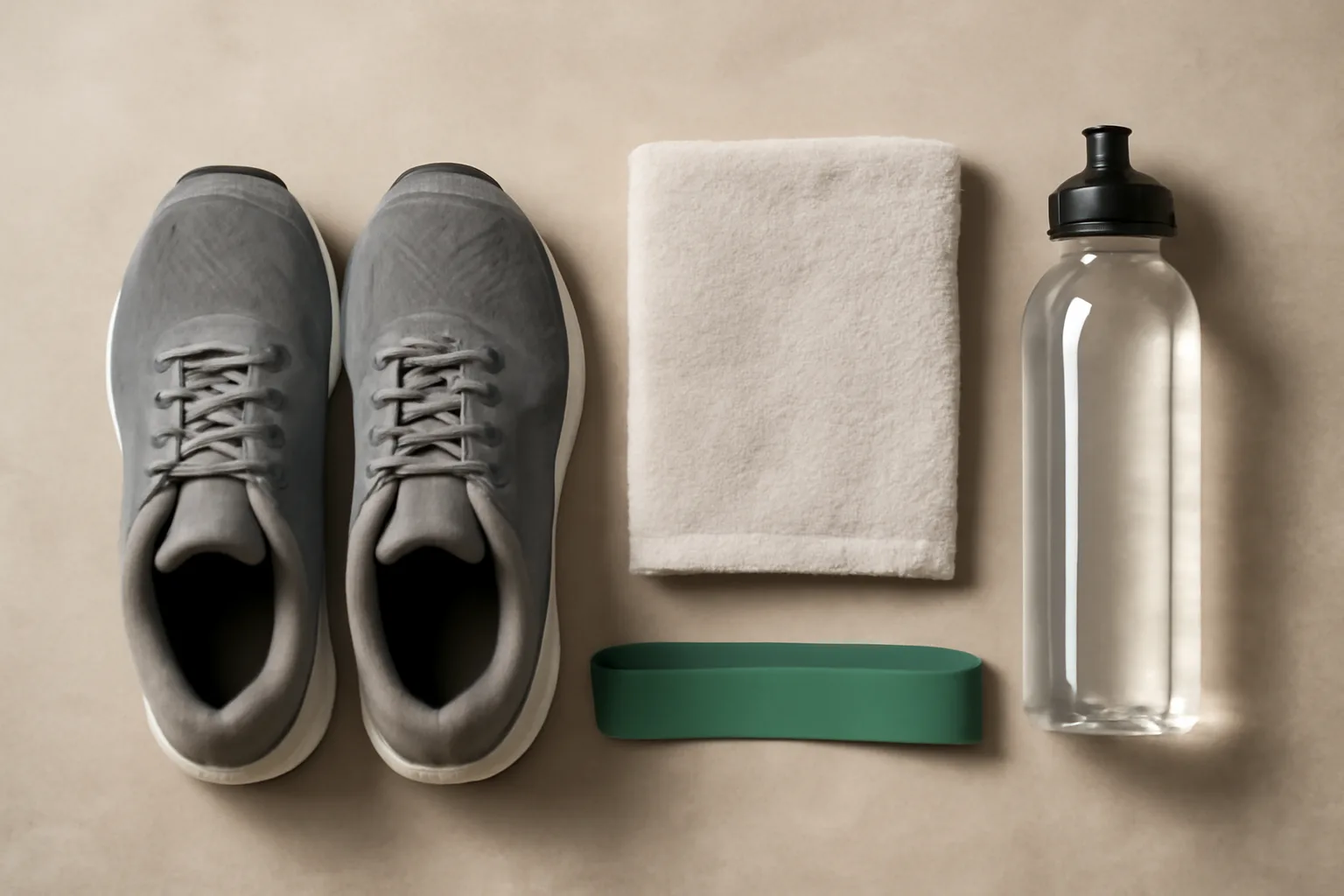
Pacing Tools, Shoes and UK Costs
You can improve pace with very little kit. A safe route, decent shoes and a way to time sessions are enough. Still, some tools make training easier, especially if you struggle to pace intervals by feel.
Watches and apps
Free apps such as Strava, Nike Run Club and Garmin Connect are fine for logging runs. If you carry your phone anyway, start there. The downside is GPS wobble in built-up areas and the faff of checking your phone mid-session.
A basic GPS watch is cleaner. Current UK examples:
- Budget: Amazfit Bip-style GPS watches are often about £50-80 from Amazon UK, but app quality varies.
- Reliable starter watch: Garmin Forerunner 55 is about £134.99 on Amazon UK at the time of writing.
- Better training features: Garmin Forerunner 165 or Coros Pace models usually sit around £180-230 from specialist running retailers.
If you already own a watch, keep it. Spend the money on shoes, a club session or a physio check before buying a shinier screen. The guide to using a GPS watch for interval training explains the features that matter.
Shoes that help without pretending to be magic
Shoes will not rescue poor training, but worn-out or unsuitable shoes can hold you back. If your trainers have 600-800km on them, the midsole may feel dead even if the upper looks fine.
Useful UK price points:
- Very low budget: Kalenji Jogflow shoes from Decathlon start around £19.99; fine for short easy runs, limited for faster work.
- Budget daily trainer: Kiprun Jogflow 190 Grip is about £34.99 at Decathlon.
- Better daily option: Kiprun KS900 Light has been around £49.99 in Decathlon sale pricing.
- Mainstream daily trainer: Nike Pegasus 41 has recently been about £65-69 at Sports Direct, depending on size and colour.
- Premium race shoe: carbon-plated shoes can run £150-280, and they are not where I would spend first.
My pick for most runners trying to get quicker is a comfortable daily trainer in the £70-130 bracket, bought after trying it on. Carbon shoes are fun, but they are dessert. Do the dinner first.
Clubs, parkrun and coached sessions
parkrun is free, timed and 5K every Saturday morning, which makes it perfect for monthly pace checks without paying race fees. Do not race it every week. Use one Saturday a month as a test, and treat the others as easy runs or social miles.
RunTogether groups from England Athletics are designed for friendly local running sessions. Many groups do not charge annual membership, though some charge a small fee per session depending on the leader and facilities. Traditional running clubs vary, but £30-70 a year is common, with track sessions sometimes charged separately at about £3-6.
That can be better value than another gadget. A coach or experienced group leader will spot pacing mistakes a watch cannot.
A Four-Week Pace Plan You Can Actually Follow
This plan suits a runner who can already run 5K continuously and wants to get faster without turning training into homework. If you are building up to 5K, use Couch to 5K and Beyond first.
Run by effort, not ego. If you feel unusually tired, swap a quality session for easy running. Missing one hard session is better than dragging a tight calf through three bad runs.
Week 1
- Run 1: 30 minutes easy.
- Run 2: 10 minutes easy, 6 x 2 minutes fast with 2 minutes easy, 10 minutes easy.
- Run 3: 35-45 minutes easy.
- Optional: 20 minutes very easy or a relaxed parkrun jog.
Week 2
- Run 1: 30-35 minutes easy plus 4 relaxed strides.
- Run 2: 3 x 6 minutes tempo with 2 minutes easy between blocks.
- Run 3: 40-50 minutes easy.
- Strength: two 20-minute sessions using the shortlist above.
Week 3
- Run 1: 30 minutes easy.
- Run 2: 8 x 30-second hill reps, controlled effort, full jog-down recovery.
- Run 3: 35 minutes progression: easy, steady, strong finish.
- Run 4: 45 minutes easy if recovery is good.
Week 4
- Run 1: 25-30 minutes easy.
- Run 2: 4 x 3 minutes fast with 2 minutes easy, controlled rather than desperate.
- Run 3: easy 20 minutes with 4 strides.
- Test: parkrun or a flat 5K effort, aiming for even pacing.
If your test improves, repeat the block with tiny changes: one extra repeat, a slightly longer tempo block or a longer easy run. If it does not improve but you feel fitter, keep going. Pace sometimes arrives after the body absorbs the work.
Common Pace Mistakes
Most runners do not fail because they lack effort. They fail because the effort goes in the wrong place.
Running every session moderately hard
This is the classic grey-zone trap. Easy days are too quick to recover from, hard days are too tired to be useful, and everything becomes a grind.
Fix it by making easy runs almost embarrassingly relaxed. Then make the quality session precise.
Testing fitness too often
If you race every parkrun, every club run and every last kilometre, you are testing more than training. A monthly 5K test is enough for most people.
Use the other weeks to build.
Copying faster runners
Your mate’s 10 x 400m session might be perfect for them and daft for you. Training age matters. Injury history matters. Sleep, work stress and running background matter.
Borrow principles, not exact sessions.
Ignoring recovery signs
Watch for heavy legs that do not ease after warming up, sharp pain, poor sleep, elevated resting heart rate and sudden irritability. A missed session now is cheaper than six weeks off later.
The running injury prevention guide is worth reading if you are increasing volume and speed in the same month.
Expecting pace to improve in a straight line
Pace jumps, stalls and occasionally goes backwards. Weather alone can explain a lot in the UK. A windy 24°C evening is not the same as a cool still morning.
Judge progress over four to six weeks. Look at effort, consistency and how quickly you recover, not just one watch screenshot.
Frequently Asked Questions
How quickly can I improve my running pace? Most runners can see a small improvement within four to eight weeks if they train consistently, keep easy runs easy and include one quality session a week. Bigger changes usually take several training blocks.
Should I run faster every time to get quicker? No. Running hard every time usually leads to fatigue and injury. Use easy runs for aerobic fitness and one planned faster session for pace development.
What is the best workout to improve running pace? The best starter workout is 6 x 2 minutes fast with 2 minutes easy recovery, plus a proper warm-up and cool-down. It is simple, measurable and hard to overcomplicate.
Can strength training make me run faster? Yes, especially if weak calves, hips or glutes are limiting your stride. Two short weekly sessions with calf raises, split squats, bridges and step-ups can help running economy.
Do I need expensive running shoes to improve pace? No. A comfortable daily trainer in the £70-130 range is enough for most runners. Carbon-plated shoes can help on race day, but they should not be your first upgrade.
Is parkrun good for improving pace? Yes, if you use it wisely. A monthly hard parkrun is a useful 5K test, while other weeks can be easy social runs or pacing practice.