You own a pair of road running shoes. They’re comfortable on tarmac, they’ve done a few parkruns, and now someone’s invited you on a trail run through the local woods. Can you just wear your road shoes? Technically yes. Should you? That depends on whether you enjoy sliding sideways down muddy slopes and bruising the soles of your feet on rocks.
Trail running shoes and road running shoes are built for fundamentally different surfaces, and the differences go deeper than tread pattern. This guide breaks down exactly how they differ, when each type matters, and whether you can get away with one pair for both.
In This Article
- The Fundamental Difference
- Outsole and Tread Pattern
- Cushioning and Stack Height
- Upper Construction and Protection
- Toe Protection and Rock Plates
- Heel-to-Toe Drop
- Weight Differences
- Stability and Ankle Support
- Durability and Lifespan
- Can You Use Road Shoes on Trails?
- Can You Use Trail Shoes on Roads?
- Hybrid Shoes: The Middle Ground
- Which Type Do You Need?
- Frequently Asked Questions
The Fundamental Difference
Road shoes are designed for consistent, predictable surfaces — tarmac, pavement, packed gravel paths, treadmills. The surface is flat, the friction is reliable, and the biggest impact forces come from the repetitive heel or forefoot strike on a hard surface.
Trail shoes are designed for inconsistent, unpredictable surfaces — mud, rocks, roots, loose gravel, wet grass, stream crossings. The surface changes with every stride, traction varies constantly, and your feet need protection from sharp objects underneath as well as stability on uneven ground.
Every design difference between the two flows from this fundamental split. Road shoes prioritise cushioning and lightweight speed. Trail shoes prioritise grip, protection, and stability.
Outsole and Tread Pattern
This is the most obvious difference and the one that matters most on day one.
Road Shoe Outsoles
Road running shoes have a relatively flat outsole with shallow, closely-spaced lugs or a smooth rubber tread pattern. The rubber compound is designed for grip on tarmac and concrete — hard, consistent surfaces where deep lugs would be wasted.
The tread pattern typically includes flex grooves that help the shoe bend naturally with your foot’s movement during the toe-off phase. Road outsoles use durable carbon rubber in the heel (where most road runners strike first) and softer blown rubber in the forefoot for flexibility.
Trail Shoe Outsoles
Trail shoes have deep, widely-spaced lugs — typically 3-6mm deep depending on the intended terrain. The wider spacing prevents mud from packing between the lugs, which would turn the sole into a smooth, useless surface within minutes.
The rubber compound is stickier than road shoe rubber, providing grip on wet rocks and slippery surfaces. Many trail shoes use proprietary outsole compounds — Vibram Megagrip is the most common in the UK market, found on brands like Hoka, Merrell, and The North Face. Inov-8, a UK brand, uses its own Graphene-Grip compound that’s both sticky and hard-wearing.
Why This Matters
Put road shoes on a wet, muddy trail and the shallow tread fills with mud immediately. You’re running on a flat rubber surface with no bite — every slope becomes a skating rink. Put trail shoes on dry tarmac and the deep lugs feel uncomfortable underfoot, wear down quickly, and the sticky rubber compound drags slightly, making you work harder. If you want to know more about choosing the right running shoes for your gait type, that’s a separate but related consideration.
Cushioning and Stack Height
Road Shoe Cushioning
Road shoes have evolved towards maximum cushioning in recent years. The midsole — the foam layer between your foot and the ground — is typically 25-35mm thick in modern road shoes. Brands like Hoka, Brooks, and Asics have pushed stack heights higher and higher, with some models exceeding 40mm.
This cushioning makes sense on roads. The surface is unyielding, so the shoe needs to absorb impact forces across thousands of identical strides. More foam means less impact stress on your joints over long distances.
Trail Shoe Cushioning
Trail shoes generally use less midsole cushioning — typically 20-30mm stack height. The reasons are practical:
- Ground feel — on trails, you need to feel what’s under your feet to react to terrain changes. Too much cushioning insulates you from the ground, making it harder to sense roots, rocks, and camber
- Stability — a tall stack of soft foam on uneven ground makes the shoe less stable. The higher the foam, the more leverage an uneven surface has to roll your ankle sideways
- Weight — less foam means less weight, and every gram matters when you’re lifting your feet over obstacles for hours
Some trail shoes (Hoka Speedgoat, for example) do offer significant cushioning — but the foam is firmer than road shoe foam, providing protection without the instability of a soft, tall midsole.
The Trade-Off
More cushioning means more comfort on flat surfaces but less stability on rough ground. Less cushioning means better ground feel and stability but more fatigue on long, hard-packed trails. Most trail runners find the sweet spot at 25-28mm stack height.
Upper Construction and Protection
Road Shoe Uppers
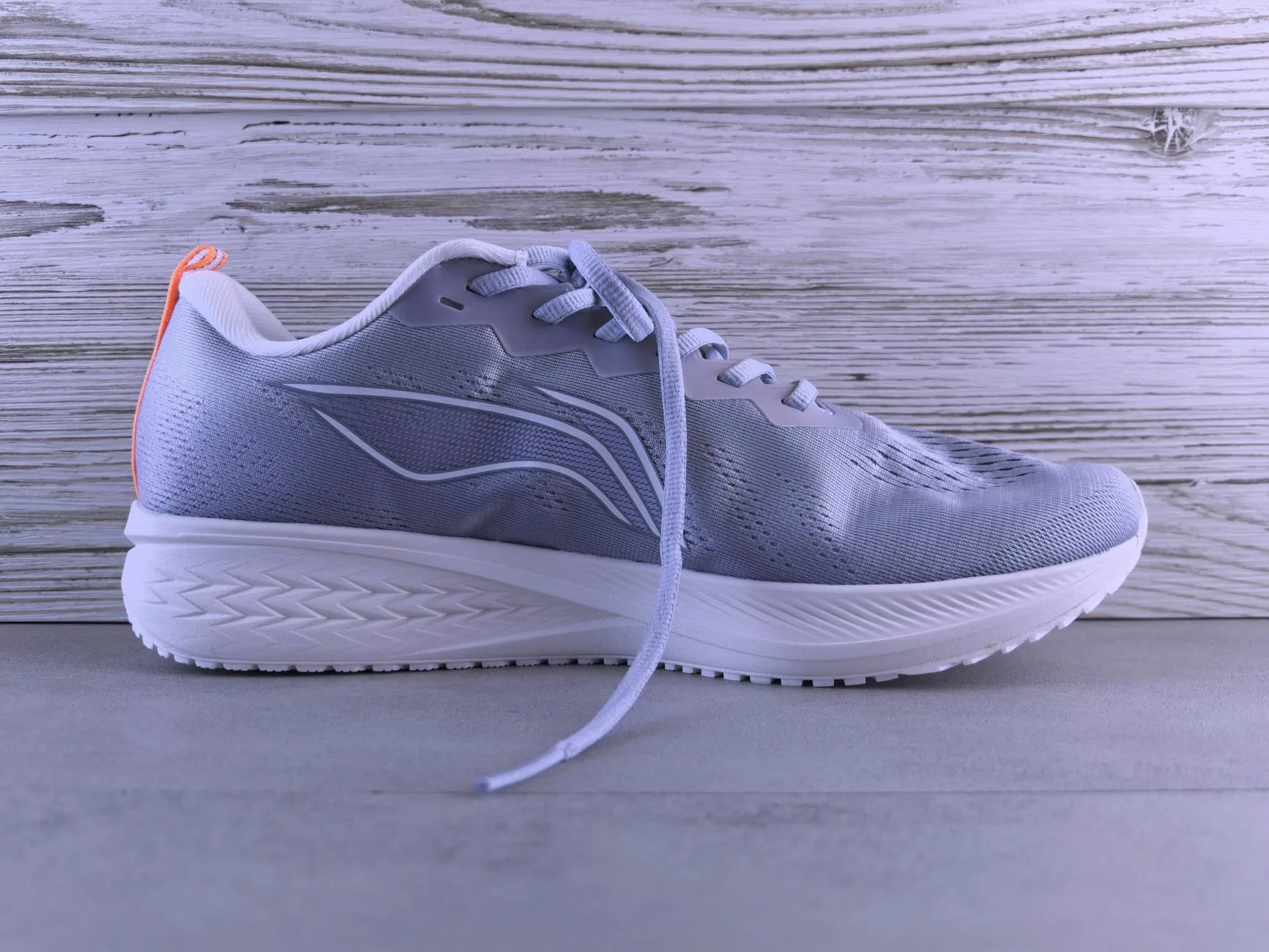
Road shoe uppers prioritise breathability and minimal weight. Engineered mesh — often a single-layer knit construction — keeps the shoe light and allows air to circulate around your foot. Road shoes rarely need water resistance because you’re running on surfaces that drain quickly.
The upper is typically soft and flexible, wrapping the foot closely without restrictive overlays. Comfort on consistent surfaces is the priority.
Trail Shoe Uppers
Trail uppers trade some breathability for protection and durability. The mesh is tighter and often reinforced with TPU overlays or welded panels in high-wear areas — the toe box, the sides near the midfoot, and around the heel. These reinforcements prevent sticks, rocks, and roots from poking through the upper.
Some trail shoes use water-resistant or waterproof membranes (Gore-Tex is common in UK trail shoes). Whether waterproofing is worth it depends on your running — a Gore-Tex trail shoe keeps puddle splashes out but also traps sweat inside, and once water comes over the top in a deep puddle, it takes much longer to dry than a non-waterproof shoe. For a related angle, see our Best Running Shoes 2026: UK Tested on Road & Trail guide.
For UK conditions — where mud and wet grass are constants — most experienced trail runners prefer a non-waterproof shoe that drains and dries quickly over a waterproof shoe that stays wet and heavy once water gets in.
Toe Protection and Rock Plates
Toe Bumpers
Trail shoes almost always feature a reinforced toe bumper — a rubber or TPU cap over the front of the shoe that protects your toes from impacts with rocks and roots. This is the piece of material you’ll be grateful for the first time you stub your toe on a hidden rock at pace.
Road shoes rarely have toe bumpers because there’s nothing on a road to kick. The front of a road shoe is typically soft mesh right to the edge.
Rock Plates
Many trail shoes include a rock plate — a thin, semi-rigid layer between the midsole and outsole that disperses the pressure from sharp rocks and stones across a wider area of your foot. Without a rock plate, stepping on a pointed rock sends that pressure directly through the foam into a small point on your sole. With a rock plate, the force spreads across the plate, reducing the bruising sensation.
Rock plates add a small amount of weight and reduce some ground feel. For rocky terrain — the Lake District, Snowdonia, the Pennine Way — they’re worth the trade-off. For soft, muddy trails with few rocks, they’re less necessary. British Athletics recommends proper trail footwear for off-road racing events, and rock plates are a key part of that protection.
Heel-to-Toe Drop
The drop is the difference in height between the heel and the forefoot of the shoe, measured in millimetres. This affects your running posture and which part of your foot strikes first.
Road Shoe Drop
Most road running shoes have a drop between 8-12mm. This encourages a heel-first landing pattern, which is the natural gait for most recreational runners on flat surfaces. The higher heel promotes a rolling motion from heel through midfoot to toe-off.
Trail Shoe Drop
Trail shoes typically range from 4-8mm drop, with some minimalist models going as low as 0mm. The lower drop encourages a midfoot or forefoot landing, which is more natural on uneven terrain — landing on your heel on a rocky, uneven surface puts more stress through your ankle than a midfoot strike.
What This Means for Switching
If you normally run in a 10mm drop road shoe and switch to a 4mm drop trail shoe, your calves and Achilles tendons will notice immediately. The lower drop demands more work from your calf muscles. Transition gradually — don’t go from a high-drop road shoe to a zero-drop trail shoe for a 15km run on your first outing. A few short trail runs in the new shoes let your legs adapt.
Weight Differences
Road shoes are generally lighter than trail shoes. A typical men’s road shoe weighs 230-280g, while a trail shoe in the same size weighs 280-350g. The extra weight comes from the deeper outsole, reinforced upper, toe bumper, and rock plate.
For most runners, 50-70g per shoe is barely noticeable on a single run. Over a 30km trail race, the accumulated effect of lifting heavier feet thousands of times does add up to slightly more fatigue — but trail surfaces already slow you down enough that the weight difference is a marginal concern. Our Best Carbon Plate Running Shoes 2026 UK: Race Day Speed guide is useful alongside this.
Some racing-focused trail shoes (like the Hoka Tecton X or Nike Zegama) have pushed trail shoe weight down to 240-260g by using carbon plates and lightweight foams, but these sacrifice some durability and protection.
Stability and Ankle Support
Road Shoes
Road shoes rely on the flat, consistent surface to provide stability. The midsole foam does most of the cushioning work, and lateral stability features are minimal — some pronation-control road shoes use medial posts or guide rails, but these address overpronation rather than terrain-induced instability.
Trail Shoes
Trail shoes build stability into the platform itself. A wider base, firmer midsole foam, lower stack height, and a more structured heel counter all contribute to preventing the ankle from rolling on uneven ground. Some trail shoes add lateral sidewall lugs that grip on angled surfaces.
The heel counter — the structured cup around the back of the heel — is typically stiffer and taller in trail shoes. This isn’t ankle support in the boot sense (trail shoes are still low-cut), but it does help keep your heel centred in the shoe when running on camber or sideslopes.
Neither Prevents Ankle Sprains
No shoe prevents ankle sprains. Trail shoes reduce the risk by keeping your foot more centred and providing better traction, but a deep rut or an unseen root will roll your ankle regardless of what you’re wearing. Ankle strength training is more effective than shoe choice for sprain prevention.
Durability and Lifespan
Road shoes typically last 500-800 km before the midsole foam loses its cushioning and responsiveness. Trail shoes last a comparable distance but wear differently — the outsole lugs erode faster on hard-packed trails and rocky terrain, while the foam often retains more cushioning because trail surfaces absorb some impact that would otherwise compress the foam.
If you run on both surfaces regularly, having a dedicated pair for each extends the lifespan of both. Using trail shoes on tarmac wears the lugs down rapidly, and using road shoes on rocky trails compresses the softer foam faster.
Our guide on how to know when your running shoes are worn out covers the specific signs to look for in both types.
Can You Use Road Shoes on Trails?
Yes, with caveats:
- Dry, hard-packed trails — canal towpaths, packed gravel paths, dry forest tracks — road shoes handle these fine. The surface is firm enough for road tread to grip
- Wet trails — road shoes lose grip quickly on wet mud, wet rocks, and wet grass. If there’s any chance of rain, road shoes aren’t safe
- Rocky trails — without a rock plate, your feet will feel every sharp stone. A few kilometres is tolerable; a full day isn’t
- Muddy trails — road shoes are useless in mud. The shallow tread packs immediately and you’ll be sliding constantly
If your “trail running” is mostly towpath jogging with occasional grass sections, road shoes are fine. If you’re running anything that a mountain biker would call a trail, get trail shoes.

Can You Use Trail Shoes on Roads?
Yes, but they’re not ideal:
- The lugs wear down quickly on tarmac — the aggressive tread is designed for soft surfaces and erodes fast on hard ones
- The ride feels clunky — deep lugs on flat tarmac create an uneven, slightly uncomfortable contact patch
- They’re heavier — the extra weight and stiffer construction feel sluggish compared to a road shoe on smooth surfaces
- Sticky rubber compounds drag slightly on tarmac, requiring marginally more energy per stride
Many trail runners use trail shoes for short road sections between trails without issue. But if your route is more than 30% road, you’ll be more comfortable in road shoes or a hybrid.
Hybrid Shoes: The Middle Ground
If you run mixed terrain — some road, some trail, some gravel path — a hybrid shoe might be the practical choice.
What Makes a Hybrid
Hybrid shoes sit between road and trail on every spec: moderate lugs (2-3mm, smaller than trail but deeper than road), protective but not heavy uppers, a rock plate that’s thinner than a dedicated trail shoe’s, and a midsole that balances cushioning with stability.
Good Hybrid Options for UK Runners
- Nike Pegasus Trail (about £115-130) — probably the best-known hybrid. Road-shoe cushioning with a trail-capable outsole. Works well on dry trails and towpaths but struggles in deep mud
- Hoka Challenger ATR (about £120-140) — generous cushioning with enough lug depth for light trails. A favourite for runners who do a mix of road and path running
- Salomon Sense Ride (about £120-135) — leans slightly more towards trail performance while remaining comfortable on road sections
The Compromise
Hybrid shoes are fine for everything but don’t excel at anything. On proper rocky, muddy UK trails, they lack the grip of a dedicated trail shoe. On roads, they feel heavier and clunkier than a road shoe. If 80% or more of your running is on one surface type, get a dedicated shoe for that surface and deal with the other 20%.
Which Type Do You Need?
Buy Road Shoes If…
- Most of your running is on pavement, tarmac, or treadmills — road shoes are designed for exactly this and nothing else does it better
- You race parkruns and road events — the lighter weight and responsive cushioning make a noticeable difference at pace
- You run primarily in urban or suburban areas — even if you include some park paths, road shoes handle packed surfaces fine
Buy Trail Shoes If…
- You run off-road regularly — even once a week on trails justifies a dedicated pair
- UK weather is a factor — if your local routes get muddy from October to April (and they will), trail shoes are essential for grip
- You run in hilly areas — the Lake District, Peak District, Brecon Beacons, Scottish Highlands all demand trail shoes
- Safety matters — on slippery terrain, trail shoes are a safety feature, not a luxury. If you’re interested in transitioning from road to trail running, start with a proper trail shoe
Buy Both If…
- You run three or more times per week and split between road and trail surfaces
- You want each pair to last longer — dedicated shoes for each surface extend the lifespan of both
- You take running seriously enough to own more than one pair — which, if you’re reading this, you probably do
Frequently Asked Questions
How much do trail running shoes cost compared to road shoes?
Trail shoes are typically £10-30 more expensive than road shoes at the same performance level. Entry-level trail shoes start around £70-90, mid-range options sit at £110-140, and premium models with carbon plates or Gore-Tex reach £160-200. Road shoes follow a similar spread but start about £10 lower at each tier.
Do I need waterproof trail running shoes in the UK?
Most experienced UK trail runners prefer non-waterproof shoes. Waterproof membranes keep shallow water out but trap sweat inside, and once water comes over the top in a deep puddle, the shoe takes much longer to dry. A non-waterproof shoe that drains and dries quickly is more practical for most UK conditions.
Can I do parkrun in trail shoes?
Yes, but you’ll be slightly slower than in road shoes on a tarmac or path parkrun course. Trail shoes are heavier and the lugs create drag on smooth surfaces. For grass or cross-country parkrun courses, trail shoes are actually the better choice. Some runners keep a pair of each and choose based on the course conditions that week.
How often should I replace trail running shoes?
Trail shoes typically last 500-800 km, similar to road shoes. However, check the outsole lugs regularly. When the lugs are worn to less than half their original depth, grip on wet and muddy surfaces drops noticeably. If your shoes are losing traction on surfaces they used to handle, it’s time for a new pair.
Should trail running shoes be a larger size than road shoes?
Many trail runners go half a size up from their road shoe size. On descents, your foot slides forward in the shoe, and extra toe room prevents black toenails. The reinforced toe bumper also takes up slightly more space than a road shoe’s soft mesh. Try them on with your trail running socks before buying.
How do I know if running shoes fit properly? You should have a thumb’s width of space at the toes, a secure heel and no pinching across the midfoot. Try them later in the day when feet are slightly swollen.
How often should running shoes be replaced? Most shoes last roughly 300-500 miles. Replace them sooner if the midsole feels flat, grip is worn or niggles appear after normal runs.
Do beginners need expensive running shoes? No. Beginners need comfortable, suitable shoes more than premium foam or carbon plates. Fit and consistency matter more than race-day tech.
Frequently Asked Questions
How do I know if running shoes fit properly? You should have a thumb's width of space at the toes, a secure heel and no pinching across the midfoot. Try them later in the day when feet are slightly swollen.
How often should running shoes be replaced? Most shoes last roughly 300-500 miles. Replace them sooner if the midsole feels flat, grip is worn or niggles appear after normal runs.
Do beginners need expensive running shoes? No. Beginners need comfortable, suitable shoes more than premium foam or carbon plates. Fit and consistency matter more than race-day tech.
What should I check first with Trail Running Shoes vs Road Running Shoes: Key Differences? Start with the real use case, then check size, compatibility, running costs and maintenance. A product that looks good on paper can still be the wrong fit if it does not suit the room, routine or budget.
How do I avoid wasting money on Trail Running Shoes vs Road Running Shoes: Key Differences? Avoid buying on one headline feature alone. Compare the practical details, read the warranty or returns terms, and choose the option that solves your main problem rather than the one with the longest specification list.