You’ve done a 10K. Maybe a half marathon. And now the thought is there — could I actually run a marathon? Twenty-six point two miles. The same distance that killed Pheidippides (though historians debate that). The same distance that makes grown adults cry at mile 20 and vomit at mile 24. The same distance that, once completed, gives you a story you’ll tell at every dinner party for the rest of your life.
The good news: almost anyone who can run a half marathon can train for a full marathon. The bad news: doubling the distance doesn’t mean doubling the training — it means fundamentally changing how you approach running, eating, sleeping, and recovering. Here’s a realistic, no-nonsense guide to getting from “I wonder if I could” to crossing the finish line.
In This Article
- Are You Ready for Marathon Training
- Choosing Your First Marathon
- How Long to Train for a Marathon
- The Training Structure Explained
- The Long Run: Your Most Important Session
- Easy Runs: Why Slow Is Fast
- Speed and Tempo Work
- Fuelling Your Marathon Training
- Race Day Nutrition: What to Eat and When
- The Taper: Resting Before Race Day
- Race Day Strategy for First Timers
- Common First Marathon Mistakes
- Frequently Asked Questions
Are You Ready for Marathon Training
Before you enter a marathon, be honest about your starting point.
Minimum Base Fitness
You should be comfortably running 3-4 times per week, covering at least 25-30 km total weekly mileage, and able to run 10-15 km without walking breaks. If you’re not there yet, build this base for 2-3 months before starting a marathon training plan. Jumping into marathon training from a low base is how injuries happen.
Injury History
If you’re carrying a niggle — a dodgy knee, a tight Achilles, a recurring calf strain — get it sorted before training. Marathon training amplifies existing problems. What’s a mild ache at 30 km per week becomes a debilitating injury at 60 km per week. See a sports physio (about £40-60 per session, check the Chartered Society of Physiotherapy directory) and get clearance before committing.
Life Commitments
Marathon training takes 5-8 hours per week for 16-20 weeks. That’s a second part-time job. Be realistic about whether your life — work, family, social commitments — can absorb this. Training while sleep-deprived, stressed, or resentful produces poor results and miserable people. Talk to your partner, check your calendar, and make sure the timing works.
Choosing Your First Marathon
Flat vs Hilly
For your first marathon, choose flat. Every metre of elevation you climb adds time, fatigue, and mental strain. London, Manchester, and Brighton are flat to gently undulating. Edinburgh, Snowdonia, and Beachy Head are hilly and better left for later marathons when you know what you’re getting into.
Popular First Marathons in the UK
- London Marathon (April) — the big one. Incredible atmosphere, flat course, massive crowd support. Ballot entry (apply in October, draw in December) with about a 10% acceptance rate. Charity places are easier to get but require raising £2,000+
- Manchester Marathon (April) — fast, flat, well-organised, and much easier to enter than London. One of the fastest marathon courses in the UK. About £60-70 entry
- Brighton Marathon (April) — coastal route, good atmosphere, flat with a few gentle hills. About £60-70 entry
- Edinburgh Marathon (May) — fast first half, hillier second half. Beautiful route but the late hills catch people out. Better as a second marathon
- Yorkshire Marathon (October) — flat, rural, well-supported. Good autumn option if spring doesn’t suit your schedule
Entry Timing
Most UK marathons open for entry 6-12 months before race day. Enter early — popular races sell out. You want your entry confirmed before you start serious training so you’ve got a race to aim for.
How Long to Train for a Marathon
The Standard: 16-20 Weeks
Most training plans run 16-20 weeks. This assumes you already have a running base (25-30 km per week). If you’re starting from less, add 4-8 weeks of base-building before the plan begins.
The Realistic Timeline
For a first marathon, allow 6 months from the day you decide to the day you race:
- Months 1-2: base building — increase weekly mileage gradually to 35-40 km
- Months 3-6: follow a 16-week training plan that builds to a peak long run of 32-35 km
Rushing this timeline is the fastest route to injury. Your cardiovascular system adapts faster than your tendons, ligaments, and bones. You’ll feel ready to run further before your body structurally is.
The Training Structure Explained
A good marathon plan has four types of session, each serving a different purpose.
Long Run (Once Per Week)
Your most important session. It builds the endurance base that gets you through 42.2 km. Starting at 14-16 km and building by 1.5-3 km per week until you reach 32-35 km three weeks before the race.
Easy Runs (2-3 Times Per Week)
Short, slow runs at conversational pace. These build aerobic fitness without adding stress. They should feel easy — if you can’t chat while running, slow down.
Tempo or Threshold Run (Once Per Week)
A sustained effort at “comfortably hard” pace — faster than easy, slower than racing. This builds your lactate threshold, teaching your body to clear waste products at higher speeds. Typically 20-40 minutes at a pace where you can speak in short sentences but not hold a conversation.
Rest Days (1-2 Per Week)
Complete rest or very light activity (walking, yoga, swimming). Rest is where adaptation happens — your body repairs and strengthens during recovery, not during the run itself.
The Long Run: Your Most Important Session
Building Distance Safely
The 10% rule (never increase weekly mileage by more than 10% per week) is a useful guideline. For long runs specifically, add 1.5-3 km per week. Every third week, drop the long run back by 3-5 km (a cutback week) to let your body absorb the training before building again.
Sample Long Run Progression (16 Weeks)
- Week 1: 14 km
- Week 2: 16 km
- Week 3: 13 km (cutback)
- Week 4: 18 km
- Week 5: 19 km
- Week 6: 16 km (cutback)
- Week 7: 21 km (half marathon distance)
- Week 8: 23 km
- Week 9: 19 km (cutback)
- Week 10: 26 km
- Week 11: 29 km
- Week 12: 23 km (cutback)
- Week 13: 32 km (peak long run)
- Week 14: 19 km (taper begins)
- Week 15: 13 km
- Week 16: Race day — 42.2 km
Long Run Pace
Run your long runs 45-90 seconds per kilometre slower than your target marathon pace. If you’re aiming for a 5-hour marathon (about 7:05/km), run your long runs at 7:50-8:30/km. This feels frustratingly slow, but the purpose is endurance, not speed. Running long runs too fast is the single most common training error and leads to injury and burnout.
Don’t Run 42 km in Training
Your longest training run should be 32-35 km, not the full marathon distance. Running 42 km in training takes 2-3 weeks to recover from — time you can’t afford during a training plan. The combination of your 32 km long run, accumulated weekly mileage, taper rest, and race-day adrenaline bridges the remaining 7-10 km on the day.

Easy Runs: Why Slow Is Fast
80% of your weekly running should be at easy pace — genuinely easy, where you can hold a full conversation without gasping. This is counterintuitive (why would running slowly make you faster?) but it’s the foundation of every elite marathon training programme.
The Science
Easy running develops your aerobic base — the mitochondria, capillaries, and fat-burning efficiency that sustain effort over 3-5 hours. Hard running develops speed but breaks down muscles and requires longer recovery. Too much hard running and too little easy running means you’re constantly tired, never fully recovered, and your aerobic base never develops properly.
How Slow Is Easy?
For most first-time marathoners, easy pace is 6:30-8:00/km. If your target marathon pace is 7:00/km, your easy pace might be 7:45-8:15/km. Use the talk test — if you can’t comfortably chat, you’re going too fast. Leave your ego at the door. Other runners will overtake you on easy days. Let them.
Speed and Tempo Work
You don’t need much speed work for a first marathon — one quality session per week is enough alongside your long run and easy runs.
Tempo Runs
Run 20-40 minutes at a pace that feels “comfortably hard” — roughly your half marathon pace. This teaches your body to sustain a higher effort for longer and improves your lactate threshold. Warm up for 10 minutes, run the tempo block, cool down for 10 minutes.
Intervals (Optional for First Timers)
If you want to include intervals, keep them moderate: 4-6 × 800m at 5K pace with 400m jog recovery. These improve running economy (how efficiently you use oxygen) but aren’t essential for finishing your first marathon. If you’re tight on time, drop the intervals and keep the tempo run.
Fuelling Your Marathon Training
Daily Nutrition
Marathon training increases your calorie needs by 300-600 calories per day depending on mileage. Don’t diet during marathon training — your body needs fuel to train and recover. Focus on carbohydrates (the primary fuel for endurance running), adequate protein for muscle repair, and plenty of vegetables and fruit. Our running nutrition guide covers daily eating in detail.
Pre-Run Eating
Eat a carbohydrate-rich meal 2-3 hours before long runs — porridge, toast with peanut butter, or a bagel with banana. Avoid high-fibre and high-fat foods close to running — they sit in your stomach and cause discomfort.
During-Run Fuelling
For runs over 90 minutes, you need to take on carbohydrates during the run. Start practising this in training — never try anything new on race day. Options:
- Energy gels — 20-25g of carbs per gel, taken every 30-45 minutes during long runs. Practice with different brands to find one that doesn’t upset your stomach. Our energy gel guide covers the options
- Jelly babies — a cheap, effective alternative. About 5 jelly babies = one gel’s worth of carbs
- Isotonic drinks — combine hydration and carbs. Carry in a handheld bottle or use belt bottles
Race Day Nutrition: What to Eat and When
The Night Before
Pasta, rice, or potatoes with a simple sauce and lean protein. Nothing exotic, nothing spicy, nothing you haven’t eaten before a long run in training. This isn’t carb-loading — that’s a multi-day process. This is just a normal, carb-focused dinner.
Morning of the Race
Eat 2.5-3 hours before start time. Porridge, toast, or a bagel — whatever you eat before training long runs. Drink 500ml of water with the meal. Sip 200-300ml in the hour before start. Don’t drink excessively — you’ll spend the first 5km looking for a toilet.
During the Race
Take your first gel or fuel at 45-60 minutes (around 8-10 km). Then every 30-45 minutes after that. Use the water stations to wash down gels. If the race provides gels on course, check in advance which brand and flavour — and practice with that exact product in training.
The Taper: Resting Before Race Day
What the Taper Is
Three weeks before race day, you reduce training volume while maintaining intensity. This lets your body repair accumulated fatigue, replenish glycogen stores, and arrive at the start line fresh.
How to Taper
- 3 weeks out: reduce weekly mileage by 20-25%. Long run drops to 20-22 km
- 2 weeks out: reduce by 40-50%. Long run drops to 13-16 km
- Race week: reduce by 60-70%. A few short easy runs. Complete rest 2 days before the race
Taper Madness
During the taper, you’ll feel guilty for not running, anxious that you’re losing fitness, and convinced that every minor ache is a serious injury. This is universal — every marathoner experiences it. You’re not losing fitness. You’re gaining freshness. Trust the process.
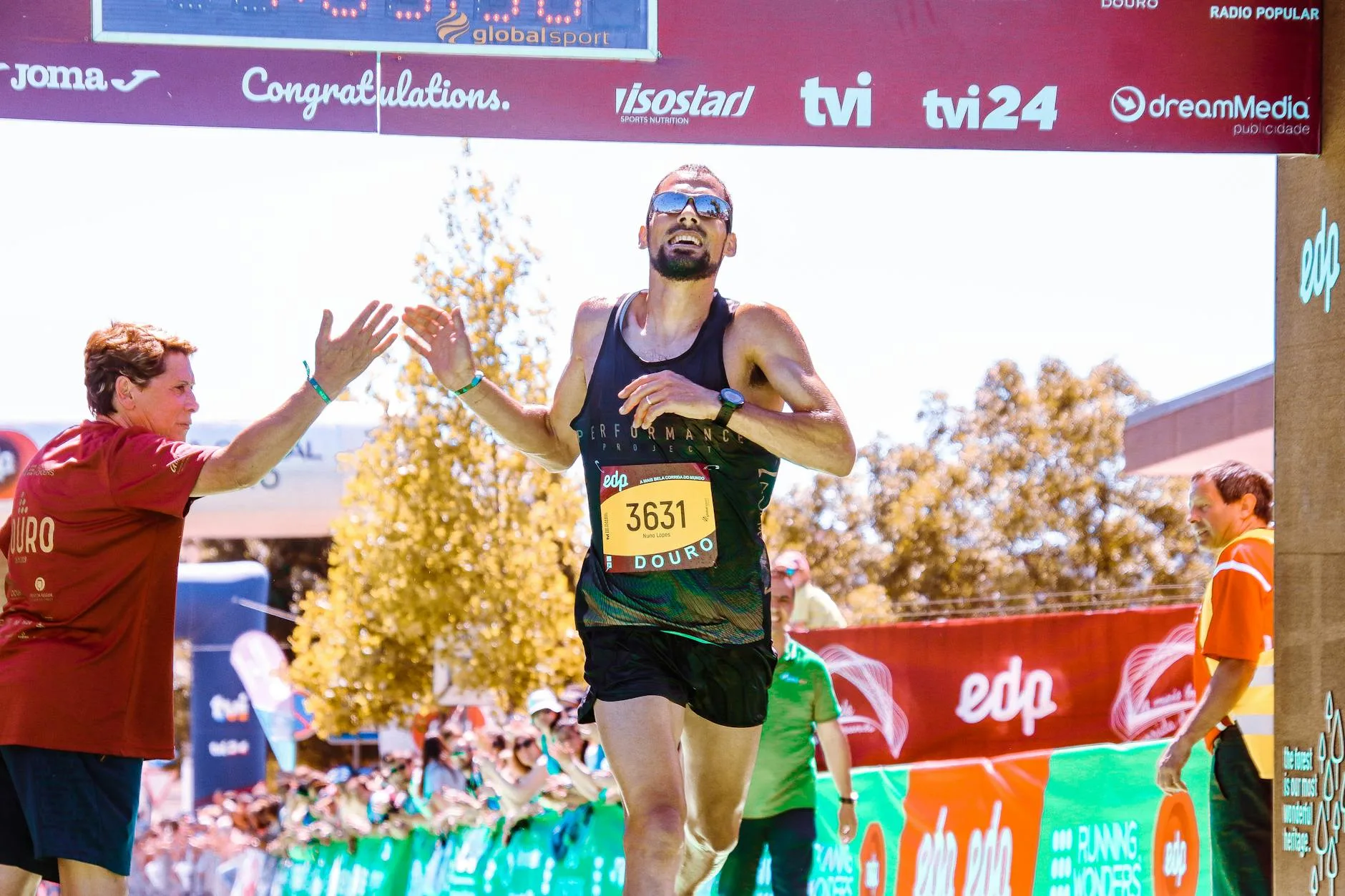
Race Day Strategy for First Timers
The Only Rule: Start Slow
Run the first 10 km slower than your target pace. This feels wrong — you’ll feel fantastic at the start, the crowd will be electric, and everyone around you is running fast. Ignore all of this. The energy you save in the first 10 km buys you the ability to keep running in the last 10 km. If you start at target pace, you’ll slow down later. If you start 15-20 seconds per kilometre slow, you’ll speed up later — and the experience of speeding up past struggling runners at mile 20 is one of the best feelings in sport.
The Wall (Mile 18-22)
At some point between 28-35 km, your glycogen stores run low and your body switches to burning fat — a less efficient fuel source. This is “the wall.” Your legs feel like concrete, your pace drops, and your brain tells you to stop. This is where all those long training runs pay off — you’ve trained your body to delay this moment and your mind to push through it.
Walking Is Fine
If you need to walk, walk. Plenty of marathon finishers walk sections — especially through water stations, up hills, or during bad patches. Walk for 60 seconds, gather yourself, then run again. Nobody judges a first-time marathoner for walking. The goal is to finish.
Common First Marathon Mistakes
- Starting too fast — the number one mistake. Adrenaline and crowd energy push you 30-60 seconds per km faster than planned. Wear a GPS watch and stick to your planned pace
- Wearing new kit on race day — new shoes, new shorts, new vest. All untested. Any of them could cause blisters, chafing, or discomfort over 42 km. Wear exactly what you wore for your longest training runs
- Skipping fuelling practice — trying gels for the first time during the race. Practice gel timing and brands during every long run over 90 minutes
- Too many long runs — running 30+ km every weekend instead of following a plan with cutback weeks. This leads to overtraining and arriving at the start line already exhausted
- Ignoring rest days — running every day because “more is better.” Rest is when adaptation happens. Skip rest and you skip improvement
- Comparing yourself to others — your pace is your pace. A 5-hour marathon is the same distance as a 2:30 marathon. Your only competition is the distance itself
Frequently Asked Questions
How long does it take to train for a first marathon? 16-20 weeks on a structured plan, assuming you already run 25-30 km per week. If you’re starting from less, add 2-3 months of base building. Total timeline: 5-7 months from decision to race day.
Can I walk during a marathon? Yes. Many first-time finishers walk sections. Run-walk strategies (run 9 minutes, walk 1 minute) are a legitimate and effective way to finish. The goal is to cross the line — how you get there is your business.
What’s a good time for a first marathon? Finishing is the achievement. For context, the UK average marathon time is about 4:30-4:45. Sub-4 hours is a solid first marathon. Sub-5 hours is excellent for someone who trained consistently. Anything over 5 hours is still completing a marathon — something 99% of the population has never done.
Do I need to run 42 km in training? No — and you shouldn’t. Your longest training run should be 32-35 km, three weeks before the race. Running the full distance in training takes too long to recover from and increases injury risk. The taper and race-day adrenaline bridge the gap.
What shoes should I wear for a marathon? The shoes you’ve trained in — specifically, the pair you wore for your longest runs. Race day is not the time to debut new shoes. If your training shoes have more than 500-600 km on them, buy the same model new and do 3-4 long runs in them before race day to break them in.