You’ve just finished a 10K training run, you’re standing in the kitchen drinking water, and you know you should stretch. But you don’t really know what to do, it feels like it takes forever, and you.re not even sure which stretches actually help versus which ones are fitness folklore from school PE lessons. Fair enough — stretching advice has changed massively in the past decade, and most of what you learned in the 90s is either outdated or actively counterproductive.
In This Article
- The New Science of Stretching for Runners
- Pre-Run Dynamic Warm-Up Routine
- Post-Run Static Stretching Routine
- How Long to Hold Each Stretch
- Stretches for Common Running Injuries
- When Stretching Isn’t Enough
- Building a 10-Minute Routine
- Frequently Asked Questions
The New Science of Stretching for Runners
Static Stretching Before Running: Don’t
The biggest change in sports science over the past 15 years: static stretching before exercise reduces performance. Holding a stretch for 30+ seconds before running actually decreases muscle power output, reduces running economy, and doesn’t prevent injury. The NHS physical activity guidelines recommend warming up with activity rather than static holds.
This doesn’t mean you skip warming up — it means you warm up differently. Dynamic movements (controlled movement through a range of motion) prepare muscles for running far better than touching your toes for 30 seconds.
Static Stretching After Running: Yes
Post-run static stretching is a different story. After running, your muscles are warm and shortened from repetitive contraction. Gentle static stretching helps:
- Restore resting length to muscles that have been contracting for 30-60+ minutes
- Reduce perceived stiffness (note: perceived — the evidence on actual muscle tightness is less clear)
- Improve flexibility over time when done consistently
- Provide a cool-down transition that helps your nervous system shift from exercise to rest
The Honest Truth About Injury Prevention
Stretching alone doesn’t prevent running injuries — this is well-established in research. Injuries are caused by training load errors (too much too soon), biomechanical issues, weakness, and fatigue. Stretching addresses flexibility, which is one small piece of a much larger picture.
What stretching does help with: maintaining range of motion that allows good running form, reducing post-run discomfort, and identifying tight areas before they become problems. It’s maintenance, not medicine.
Pre-Run Dynamic Warm-Up Routine
Do these before every run. Total time: 5-6 minutes. Each movement for 30-40 seconds or 10-12 reps per side.
Leg Swings (Forward-Back)
Stand side-on to a wall or fence for balance. Swing one leg forward and back in a controlled pendulum motion, gradually increasing the range.
- Targets: hip flexors, hamstrings, glutes
- Reps: 12 per leg
- Key point: keep your torso upright — the movement comes from the hip, not from leaning
Leg Swings (Side-to-Side)
Face the wall, swing one leg across your body and then out to the side. Controlled, progressive range.
- Targets: adductors (inner thigh), hip abductors, IT band
- Reps: 12 per leg
- Key point: don’t rotate your hips — keep pelvis facing forward
Walking Lunges
Step forward into a lunge, keeping your front knee over your ankle, back knee nearly touching the ground. Push up through the front foot and step into the next lunge.
- Targets: quads, glutes, hip flexors
- Reps: 8-10 per leg (walking forward)
- Key point: keep your torso tall, don’t lean forward
High Knees
Jog on the spot bringing knees to waist height. Drive arms in running motion.
- Targets: hip flexors, calves, cardiovascular warm-up
- Duration: 30 seconds
- Key point: land on the balls of your feet, not flat-footed
Butt Kicks
Jog on the spot, kicking heels up toward your glutes.
- Targets: quads (dynamic stretch), hamstrings (activation)
- Duration: 30 seconds
- Key point: keep knees pointing down, don’t flick outward
Walking Hamstring Scoops
Step forward, extend one leg straight with heel on the ground, hinge at the hips to reach toward the toes, then step through into the next rep.
- Targets: hamstrings, calves
- Reps: 8 per leg
- Key point: keep the moving leg straight but not locked — slight soft knee
Ankle Circles
Stand on one foot (hold a wall for balance), rotate the raised ankle clockwise then anticlockwise.
- Targets: ankle mobility, calf activation
- Reps: 10 each direction per foot
- Key point: make full circles, not just side-to-side rocking
A-Skips
Skip forward with high knee drive, emphasising a quick ground contact and upward drive. More vigorous than high knees — a running-specific drill.
- Targets: hip flexors, calves, running mechanics
- Duration: 20-30 seconds or 10 per leg
- Key point: drive the knee up and then actively pull the foot back down — this mimics the running “pull” phase
After these 8 movements, start your run at an easy pace for the first 5 minutes. Your warm-up is complete. For guidance on structuring the rest of your training, our beginner’s running guide covers building from first jog to 5K.
Post-Run Static Stretching Routine
Do these within 10 minutes of finishing your run while muscles are warm. Hold each stretch for 30-45 seconds. No bouncing.
Standing Quad Stretch
Stand on one foot, grab the other ankle behind you, and pull your heel toward your glute. Keep knees together and hips square.
- Targets: quadriceps, hip flexors
- Hold: 30-45 seconds per leg
- Tip: squeeze your glute on the stretching side for a deeper hip flexor stretch
- If unbalanced: hold a wall, fence, or car with your free hand
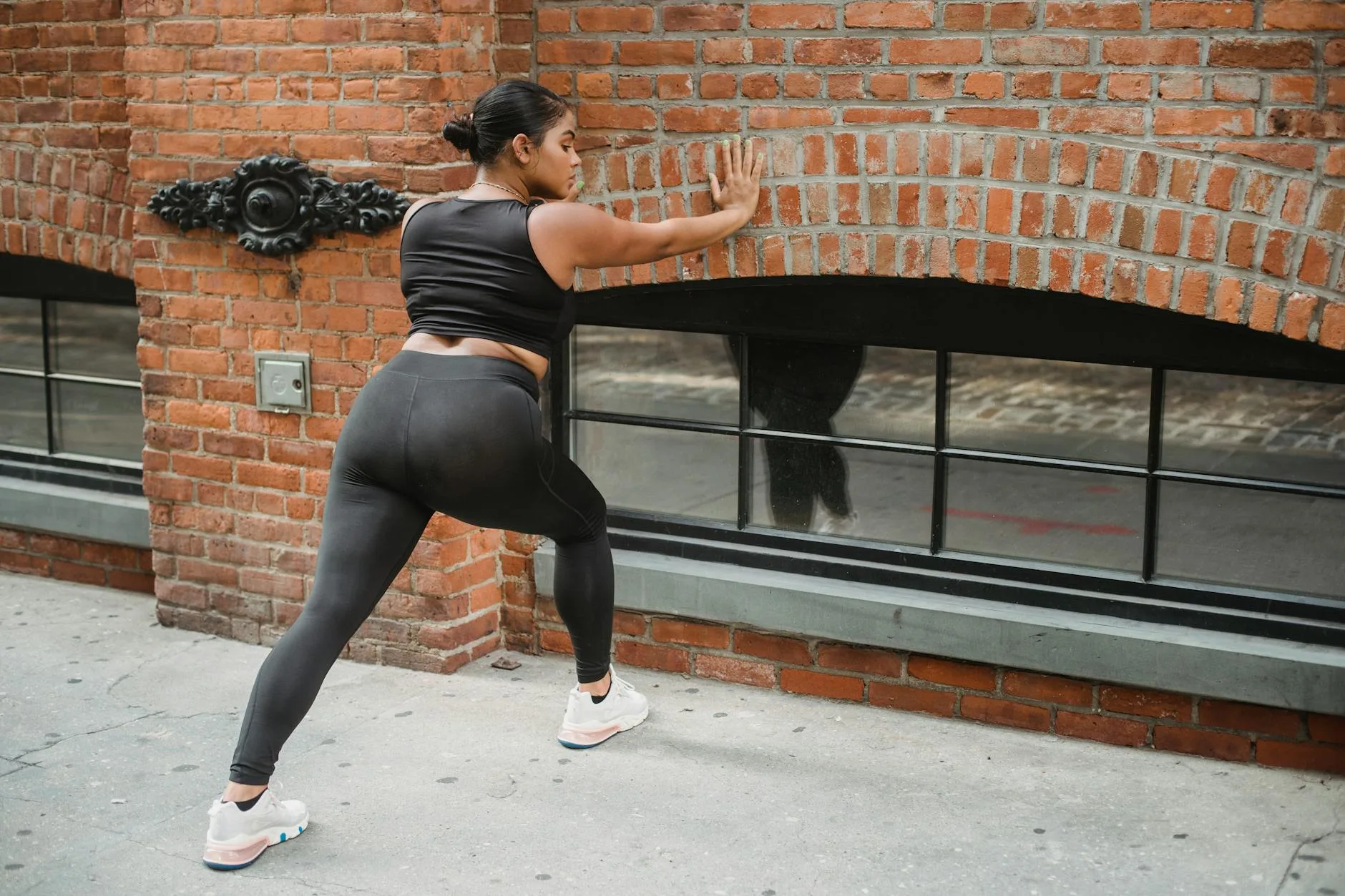
Standing Calf Stretch
Place hands against a wall, step one foot back, and press the back heel into the ground. Keep the back leg straight.
- Targets: gastrocnemius (upper calf)
- Hold: 30 seconds per leg
- Variation: bend the back knee slightly to shift the stretch to the soleus (deeper calf) — hold another 30 seconds
Standing Hamstring Stretch
Place one heel on a low step, kerb, or bench (knee straight but not locked). Hinge forward from the hips until you feel a stretch along the back of the thigh. For a related angle, see our Best Running Shoes 2026: UK Tested on Road & Trail guide.
- Targets: hamstrings
- Hold: 30-45 seconds per leg
- Key point: hinge from the hips, don’t round your back — think “chest toward knee” not “head toward foot”
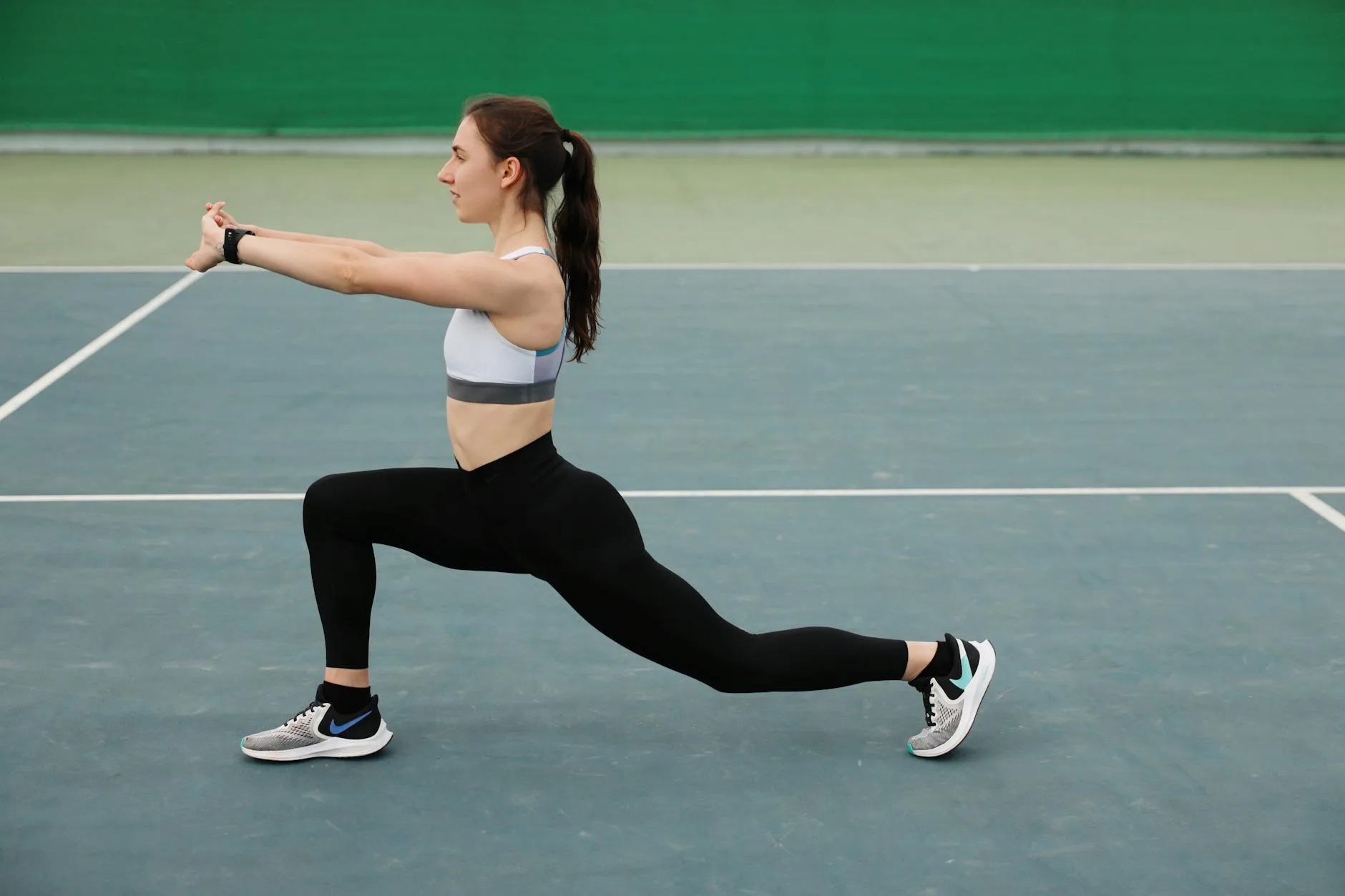
Hip Flexor Stretch (Kneeling Lunge)
Kneel on one knee (use a folded towel or your jacket if on hard ground). Push hips forward until you feel a stretch at the front of the rear hip.
- Targets: hip flexors (psoas, iliacus, rectus femoris)
- Hold: 30-45 seconds per leg
- Key point: squeeze the glute of the back leg and tuck your pelvis slightly under — this deepens the stretch on the psoas, the muscle runners chronically tighten
I’ve found this is the single most impactful post-run stretch. After six months of consistent hip flexor stretching, my hip stiffness on morning runs dropped noticeably. The improvement was gradual but real.
Pigeon Stretch (Modified)
From a standing position, place one ankle across the opposite knee (figure-4 position) and sit back into a squat. Hold a wall for balance if needed.
- Targets: glutes, piriformis, deep hip rotators
- Hold: 30-45 seconds per leg
- Alternative: lying figure-4 stretch (on your back, cross ankle over knee, pull the bottom knee toward chest)
- Why it matters: tight glutes and piriformis are common contributors to IT band issues and sciatica-like symptoms in runners
IT Band/TFL Stretch
Stand with feet together, cross one foot behind the other, and lean your hips away from the back foot side. Reach the same-side arm overhead to increase the stretch.
- Targets: tensor fasciae latae (TFL) and lateral hip
- Hold: 30 seconds per side
- Note: the IT band itself can’t be stretched (it’s a thick fascia band) — this targets the muscles that attach to it
Seated or Standing Glute Stretch
Cross one ankle over the opposite knee, then either sit into a squat (standing) or lean forward from the hips (seated on a bench).
- Targets: gluteus maximus and medius
- Hold: 30 seconds per side
How Long to Hold Each Stretch
The 30-Second Rule
Research consistently shows that 30 seconds is the minimum effective hold time for a static stretch to produce measurable flexibility change. Under 15 seconds has virtually no lasting effect. Over 60 seconds shows diminishing returns for most people. Our Best Running Watches Under £100 2026 UK: Budget Picks guide is useful alongside this.
The Practical Approach
- Post-run maintenance: 30 seconds per stretch is plenty
- Targeting a specific tight area: 45-60 seconds, twice
- Flexibility development (you want to become more flexible): 60 seconds, repeated 2-3 times, done daily — not just after runs
Frequency Matters More Than Duration
Stretching for 5 minutes every day produces better flexibility results than stretching for 30 minutes once a week. Consistency beats intensity. The British Association of Sport and Exercise Medicine recommends daily mobility work for runners, even on rest days.
Stretches for Common Running Injuries
Tight Calves / Achilles Issues
Add these to your routine if you feel calf tightness or early-stage Achilles discomfort:
- Straight-leg wall calf stretch — 45 seconds per leg
- Bent-knee wall calf stretch (soleus) — 45 seconds per leg
- Step drops — stand on a step edge, slowly lower heels below the step, hold 30 seconds (eccentric loading, not just stretching)
Tight IT Band / Knee Pain
When the outside of your knee aches after runs:
- TFL stretch — as described above, 45 seconds
- Foam roller on lateral quad/TFL — 60 seconds per side (not directly on the IT band — roll the muscles around it)
- Pigeon stretch — 45 seconds per side (glute tightness pulls on the IT band)
Tight Hip Flexors / Lower Back Pain
Common in desk workers who also run:
- Kneeling hip flexor stretch — 60 seconds per side, twice
- Couch stretch — back foot on a chair or couch, kneel down, push hips forward — more intense version of the kneeling lunge
- Glute bridge hold — not a stretch, but activating glutes helps release opposing hip flexors. Hold 30 seconds, 3 reps
Hamstring Tightness
If your hamstrings feel perpetually tight (common in newer runners):
- Standing hamstring stretch — 45 seconds per leg
- Supine hamstring stretch — lying on your back, one leg up (use a towel or belt around the foot), 45 seconds per leg
- Note: “tight” hamstrings in runners are often weak hamstrings rather than short hamstrings — if stretching doesn’t help after 4 weeks, try hamstring strengthening exercises instead
When Stretching Isn’t Enough
See a Physiotherapist If…
- Pain persists despite consistent stretching for 2+ weeks
- A specific area is getting worse, not better
- You feel sharp pain during a stretch (never push through sharp pain)
- One side is noticeably tighter than the other with no obvious cause
- You have numbness, tingling, or radiating pain (these suggest nerve issues, not muscle tightness)
Complementary Work
Stretching alone leaves gaps. A complete runner’s maintenance routine includes:
- Strength training — 2× per week focusing on glutes, hamstrings, calves, and core
- Foam rolling — 5-10 minutes after runs for deep tissue release
- Mobility drills — ankle, hip, and thoracic spine mobility (different from stretching — active movement through range)
- Rest days — muscles need recovery time, not just stretching
If you’re building an overall training structure, our interval training guide covers how to balance hard sessions with recovery.
Building a 10-Minute Routine
Pre-Run (5 minutes)
- Leg swings forward-back — 12 per leg (1 min)
- Leg swings side-to-side — 12 per leg (1 min)
- Walking lunges — 8 per leg (1 min)
- High knees — 30 seconds
- Butt kicks — 30 seconds
- A-skips — 30 seconds
- Ankle circles — 10 each direction per foot (30 seconds)
Post-Run (5 minutes)
- Standing quad stretch — 30 seconds per leg (1 min)
- Wall calf stretch (straight + bent knee) — 30 seconds each per leg (2 min)
- Standing hamstring stretch — 30 seconds per leg (1 min)
- Kneeling hip flexor stretch — 30 seconds per leg (1 min)
That’s it — 10 minutes total that covers every major muscle group used in running. It’s not exhaustive (a full routine would include glute, IT band, and piriformis work), but it hits the essentials that keep most runners moving well. We cover a similar decision in Best Running Tights 2026 UK: Winter & Year-Round.
If you want to extend it on days when you have time, add the pigeon stretch, IT band stretch, and a seated glute stretch for another 3-4 minutes. On days when 5 minutes is all you have post-run, prioritise hip flexors and calves — the two areas where tightness most directly affects running form.
Frequently Asked Questions
Should I stretch before or after running? Both — but differently. Before running, do dynamic movements (leg swings, lunges, high knees) for 5 minutes. These warm up muscles without reducing power. After running, do static stretches (holding positions for 30+ seconds) to restore muscle length and reduce stiffness. Never do static holds before a run.
How long should I stretch after a run? Five minutes covering the major muscle groups (quads, calves, hamstrings, hip flexors) is the practical minimum. Ten minutes is ideal if you can include glutes, IT band area, and a second pass on any tight spots. More than 15 minutes shows diminishing returns for most recreational runners.
Can stretching prevent running injuries? Stretching alone doesn’t prevent injuries — the evidence is clear on this. Injuries are primarily caused by training load errors, weakness, and biomechanical issues. What stretching does help with is maintaining range of motion, identifying tight areas early, and reducing post-run discomfort. It’s one component of injury prevention alongside strength work, proper training progression, and adequate rest.
Why do my hamstrings always feel tight despite stretching? Chronically “tight” hamstrings in runners are often weak, not short. Your hamstrings may feel tight because they’re working harder than they should (compensating for weak glutes, for instance). If 4 weeks of consistent stretching doesn’t improve things, try hamstring strengthening exercises — Nordic curls, Romanian deadlifts, and single-leg bridges. The tightness often resolves when the muscles get stronger.
Is foam rolling better than stretching? They do different things. Stretching lengthens muscle fibres and improves range of motion. Foam rolling addresses trigger points and fascial adhesions — it’s more like self-massage. Both are useful, and they complement rather than replace each other. If you only have time for one, stretching is more directly beneficial for post-run recovery. Foam rolling is the better choice for targeting specific sore spots.