Garmin vs Apple Watch running: buy the watch that fits the rest of your week, not just your next 5K. A Garmin Forerunner puts training controls, recovery information and longer gaps between charges first. An Apple Watch is the stronger companion to an iPhone and still records useful runs. Of these four, runners following a plan should start with the Forerunner 265; if calls, apps and everyday convenience matter as much as training, look at the Apple Watch Series 11.
The named Apple watches below are previous-generation models: Apple has since introduced Series 12 and Ultra 4. Compare the newer watches before buying, especially if the total cost is close.
Four useful starting points

Garmin Forerunner 165
Running basics without the 265’s extra training metrics
43mm black, GPS, no onboard music

Garmin Forerunner 265
Structured training and longer battery margin
46mm black, GPS, onboard music
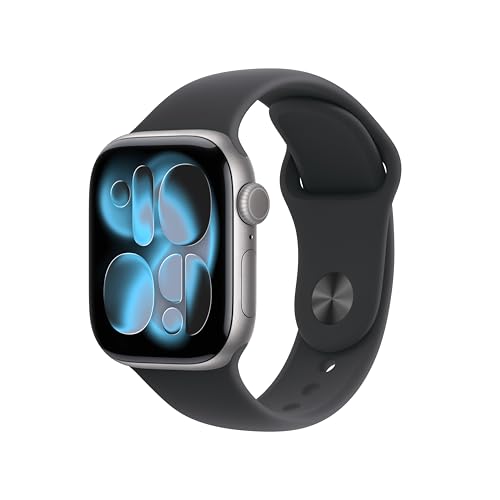
Apple Watch Series 11
Everyday iPhone smartwatch that also tracks runs
42mm space grey, GPS, black S/M band

Apple Watch Ultra 3
Apple features with longer battery life
49mm black titanium, GPS + Cellular, black Ocean Band
On this page
- Garmin vs Apple Watch running at a glance
- The four models in detail
- Training, GPS and heart-rate data
- Battery life and controls
- Phone compatibility and everyday use
- What to check before buying
- How we compared
- The verdict
- Frequently asked questions
Garmin vs Apple Watch running at a glance
| Watch | Best fit | Training focus | Charging and connection |
|---|---|---|---|
| Forerunner 165 | Newer runners who want a dedicated GPS watch | Core workouts and recovery time; not the 265’s training-readiness package | Up to 11 days smartwatch use; works with iPhone or Android |
| Forerunner 265 | Runners following structured plans | Training readiness, load and multisport tools | Up to 13 days smartwatch use; works with iPhone or Android |
| Apple Watch Series 11 GPS | iPhone owners wanting one everyday watch | Custom workouts, training load and running metrics | Up to 24 hours normal use; requires compatible iPhone |
| Apple Watch Ultra 3 Cellular | iPhone owners wanting Apple’s larger sports watch | Dual-frequency GPS, Action button and running workouts | Up to 42 hours normal use; cellular service may cost extra |
Battery figures above are manufacturers’ maximums in specified modes, not promises for a run with GPS, music and an always-on display. Our running-watch battery guide explains why settings and use change the result.
The four models in detail
Forerunner 165 — running-first without excess
The 43mm Forerunner 165 gives you GPS, an AMOLED display, buttons and Garmin’s running basics. Garmin rates it for up to 11 days in smartwatch mode and up to 19 hours in GPS mode. The named black variant here is the standard 165, not the Music version: do not assume it stores playlists for phone-free listening.
Its smaller case and simpler training set make it a sensible first dedicated running watch. It does not give you the full training-readiness and load package of the 265, so a runner who studies each training block may outgrow it. Check the differences in our beginner GPS-watch guide.
Verdict: Choose it when you want the Garmin workflow and battery advantage without paying for a more advanced training dashboard.
Forerunner 265 — the stronger training buy
The black 46mm Forerunner 265 adds a broader training toolkit, including training readiness, load and HRV context, plus onboard music. Garmin rates this case for up to 13 days in smartwatch mode and up to 20 hours in GPS mode. Multi-band positioning is available, although buildings and tree cover can still affect a run trace.
This is the more useful Garmin for repeated intervals, longer training blocks and races. The 46mm case may be too large for some wrists; compare the fit with the smaller 265S before ordering. Garmin’s Forerunner 265 manual describes the training and battery claims.
Verdict: For a runner who actively uses training feedback, this is our first pick. Do not buy it just because it has more numbers.
Apple Watch Series 11 — the iPhone all-rounder
This exact Series 11 is the 42mm GPS model with a space-grey aluminium case and black S/M band. It records structured workouts, running metrics, heart-rate zones and training load while serving as an everyday iPhone companion. Apple rates Series 11 for up to 24 hours of normal use; plan around more frequent charging than with the two Garmins.
GPS-only is important: it does not become a phone-free cellular watch just because another Series 11 variant can do that. An iPhone is required for setup and use. Apple’s Series 11 announcement gives the model-level battery context; check the exact model and band before ordering.
Verdict: Pick this if you value calls, apps, payments and iPhone integration as much as running, and will keep a charging routine.
Apple Watch Ultra 3 — more sports hardware, still Apple
The exact Ultra 3 is a 49mm black titanium GPS + Cellular watch with a black Ocean Band. It adds an Action button, dual-frequency GPS and a longer battery claim than Series 11: up to 42 hours of normal use. Apple’s Ultra 3 product announcement also describes its cellular and satellite features, subject to service and regional conditions.
The large case, higher upfront cost and possible mobile-plan charge are real trade-offs. Its GPS + Cellular hardware does not mean phone-free calls are included without a compatible network plan. Check the case size and total cost against alternatives before committing.
Verdict: Consider it if you want the Apple ecosystem with tougher sports controls and more battery headroom; for running data alone, the Forerunner 265 is a less extravagant choice.
Training, GPS and heart-rate data
Know which metrics you will use
Garmin’s advantage is its running-first presentation: pace screens, button-controlled laps, scheduled sessions and recovery context are central to the Forerunner range. The 265 adds training readiness and load; the 165 is simpler. Apple’s Workout app is not merely a step counter. Series 11 and Ultra 3 can show custom workouts, heart-rate zones, training load and running-form metrics. The choice is between two interfaces and different levels of built-in coaching, not between “serious” and “not serious”.
A GPS trace or optical heart-rate reading varies with route, buildings, trees, fit, temperature and movement. Neither brand can promise perfect pace on a tight city turn or immediate wrist-heart-rate response to hard intervals. If zone work depends on accurate short-interval readings, see our optical versus chest-strap explainer.
Battery life and controls
The charging habit is a buying criterion
The two Garmins are rated in days of smartwatch use; Series 11 is rated for up to a day, and Ultra 3 lasts longer than Series 11 but has a shorter claim than the Garmins. Those numbers are not directly comparable to continuous GPS use. Before a long event, check the maker’s GPS-mode estimate for the settings you will actually use, and charge the watch rather than trusting a headline figure.
Physical buttons are useful for laps or pausing in rain and gloves. Forerunner models make them central. Ultra 3 adds an Action button, while Series 11 relies more heavily on its touch display and Digital Crown. Try the controls in a shop if wet-weather or interval use matters to you. Our GPS-watch buying guide helps prioritise controls alongside battery and screen size.
Phone compatibility and everyday use
Check the phone you own first
An Apple Watch needs a compatible iPhone; it is not the choice for an Android phone. Garmin Connect works with both major phone platforms, although the available reply and notification features differ. Apple has the deeper iPhone experience for messages, apps, Apple Pay and music. Garmin offers notifications and selected smart features without making them the point of the watch.
The Series 11 pick here is GPS-only. The Ultra 3 has cellular hardware, but phone-free calling depends on network support and a plan; check that recurring cost before buying. Safety features on either platform depend on setup and coverage and should not replace telling someone your route. For other training-first alternatives, our Garmin, Coros and Polar comparison widens the field.
What to check before buying
- Exact case and strap: the 265 shown here is 46mm; the Series 11 has a 42mm case and S/M band. Try wrist fit where possible.
- Music and connectivity: this Forerunner 165 is not the Music edition, and this Series 11 is GPS-only. Confirm the chosen configuration.
- Older versus newer Apple models: Series 12 and Ultra 4 now exist. Compare features and checkout totals before buying Series 11 or Ultra 3.
- Total ownership cost: include an optional cellular plan, music service or additional straps only if you will use them. Do not assume any membership is mandatory for basic run recording.
Discounts change with colour, band and seller, so a lower headline price may describe a different configuration. Compare the exact model, returns terms and total at checkout. If your budget is tight, our budget running-watch guide may be a better starting point than a premium comparison.
How we compared
We compared the named watches’ manufacturer-stated running tools, connectivity, case configuration and battery modes, then weighed the practical trade-offs for UK runners. We did not wear-test these watches, time their GPS traces or measure heart-rate accuracy against a reference device. Our recommendation is therefore a buying judgement based on documented capabilities, not a laboratory ranking.
The verdict
Among these four, runners planning regular sessions or races should start with the Forerunner 265 if its 46mm case fits: its training-first controls and battery margin are the useful differences. Choose the Forerunner 165 for core GPS running without the extra analysis. If you own an iPhone and want one watch for running and daily life, the Series 11 is the better match; step up to Ultra 3 only if its larger case, Action button, cellular option and battery headroom justify the extra spend to you.
Neither brand is a substitute for checking your phone, wrist fit and charging habits. Compare the exact configuration and total cost before ordering.
Frequently asked questions
Is Garmin or Apple Watch better for marathon training?
The Forerunner 265 is the stronger starting point if you want structured training, buttons and a larger battery margin. An Apple Watch can record marathon training well, but check battery settings and charging habits before race day.
Can I use Apple Watch with an Android phone?
No. Apple Watch requires a compatible iPhone. Garmin watches work with iPhone and Android, although some phone features differ.
Does the standard Forerunner 165 store music?
No. The standard Forerunner 165 named here is not the 165 Music edition. Choose the exact Music variant if phone-free stored playlists matter.
Does Apple Watch Series 11 GPS make phone-free calls?
The GPS-only Series 11 in this comparison does not have cellular service. You need a compatible cellular watch and network plan for ordinary calls away from your iPhone and Wi-Fi.
Do I need a subscription to record runs?
No paid training subscription is required to record basic runs with these watches. Optional apps, music services and cellular plans can add costs.
Is Ultra 3 worth buying now that Ultra 4 exists?
Possibly, if the exact Ultra 3 configuration suits you and its total checkout cost makes sense. Compare Ultra 4’s features, case, network terms and current cost before choosing a previous-generation model.