You’ve just finished Couch to 5K. You’re running three times a week, you’re loving it, and you want to know how far you actually went — because the phone GPS says 5.2km one day and 4.8km the next on the exact same route. A running watch solves that problem and about twenty others you didn’t know you had. But the choice is overwhelming when you’re new to it.
Garmin alone has about fifteen current models. Coros has six. Apple Watch does running things now too, apparently. They all have numbers on the back — VO2 max, training load, recovery time — that mean nothing to you yet. You don’t need most of those features right now. What you need is accurate GPS, decent battery life, and something that doesn’t require a PhD in sports science to use on a Tuesday evening jog.
I’ve been through four running watches in six years — started with a budget Garmin, upgraded too early to a mid-range Coros, went back to Garmin, and finally found what actually matters at each stage. Here’s what I wish someone had told me at the start.
In This Article
- Best Overall for Beginners: Garmin Forerunner 165
- What Beginners Actually Need vs What They Don’t
- Best GPS Watches for Beginner Runners 2026
- Garmin vs Coros vs Apple Watch for New Runners
- Features That Matter in Your First Year
- Features You Can Ignore for Now
- Wrist-Based Heart Rate: Is It Accurate Enough?
- How to Set Up Your First GPS Watch
- When to Upgrade
- Frequently Asked Questions
Best Overall for Beginners: Garmin Forerunner 165
If you want one answer — the Garmin Forerunner 165 (about £250 from Amazon UK or Wiggle) is the watch to buy. It’s got everything a beginner needs, nothing overwhelming you don’t, and it’ll last you a solid 2-3 years before you outgrow it.
Why this one specifically:
- AMOLED touchscreen — beautiful, readable in sunlight, responsive
- Multi-band GPS — accurate to within a few metres (the older Forerunner 55 used single-band GPS and would cut corners on tight paths)
- 11 days smartwatch / 19 hours GPS — charge it once a week at most
- Built-in running plans — Couch to 5K, 10K plans, half marathon. Follow-along workouts on your wrist
- Garmin Coach — free adaptive training plans that adjust based on your actual performance
- Simple daily metrics — training status, body battery, sleep tracking. Enough to learn from without drowning in data
It’s not the cheapest option. But it’s the one you won’t outgrow in six months, and the one that teaches you about running data at the right pace.
What Beginners Actually Need vs What They Don’t
Essential Features
- Accurate GPS — the whole point. Multi-band/dual-frequency GPS is noticeably more accurate in cities, tree cover, and tight corners. Single-band GPS (older budget watches) loses accuracy by 3-5% on winding routes
- Heart rate monitor — for easy runs and zone training. You don’t need to understand zones yet, but having the data from day one means you can look back later
- Pace display — current pace, average pace, lap pace. This is how you learn to run consistently instead of going out too fast and dying at 3km
- Interval timer — for structured sessions (run 4 minutes, walk 1 minute, repeat)
- Battery life — minimum 8 hours GPS for worry-free use. Most beginners won’t need more, but long battery life means less charging hassle
Nice-to-Have (But Not Critical)
- Running plans on-watch — structured training without checking your phone
- Music storage — leaving the phone at home
- Basic recovery metrics — knowing when to rest
- Route navigation — turn-by-turn on unfamiliar paths
Best GPS Watches for Beginner Runners 2026
Garmin Forerunner 165 — Best Overall
Price: About £250 | Battery: 11 days / 19h GPS | GPS: Multi-band
The sweet spot. Does everything well, nothing badly. The interface is intuitive enough that you’ll be tracking runs within ten minutes of unboxing. The Garmin Connect app is the best ecosystem in running — your data is accessible, exportable, and properly useful.
The AMOLED screen is a genuine upgrade over older Garmin models with memory-in-pixel displays. You can actually read your pace mid-stride without squinting.
- Best for: Anyone who wants a “buy once, grow into it” watch
- Downsides: Touchscreen can be finicky with sweaty fingers; no offline maps
Coros Pace 3 — Best Value
Price: About £200 from Sigma Sports | Battery: 24 days / 38h GPS | GPS: Multi-band
The Coros Pace 3 is absurd value. For £50 less than the Garmin, you get substantially better battery life, equally accurate GPS, and a lighter watch (39g with nylon strap — you’ll forget it’s there).
Where it falls short for beginners: the Coros app is less polished than Garmin Connect, the training plan ecosystem is smaller, and there are fewer third-party integrations. But if you mainly want accurate tracking and incredible battery, this is hard to beat.
- Best for: Runners who hate charging things, or anyone training for long events
- Downsides: App less intuitive than Garmin; smaller training plan library; screen not as vibrant
Garmin Forerunner 55 — Best Budget
Price: About £130 from Amazon UK | Battery: 14 days / 20h GPS | GPS: Single-band
The Forerunner 55 is the previous-generation beginner pick, now heavily discounted. It still does the fundamentals well — GPS tracking, heart rate, interval timers, Garmin Coach compatibility. The screen is smaller and less vibrant (MIP display), and single-band GPS means slightly less accuracy in built-up areas.
For a true beginner on a budget, this delivers 90% of what you need at roughly half the price of the Forerunner 165. Buy this if you’re unsure whether running is going to stick.
- Best for: Budget-conscious beginners; testing whether you’ll use a running watch
- Downsides: Single-band GPS less accurate in cities; no touchscreen; older screen technology
Apple Watch SE (2nd Gen) — Best for iPhone Users Who Run Casually
Price: About £220 from Apple or Currys | Battery: 18h / ~6h GPS | GPS: Standard
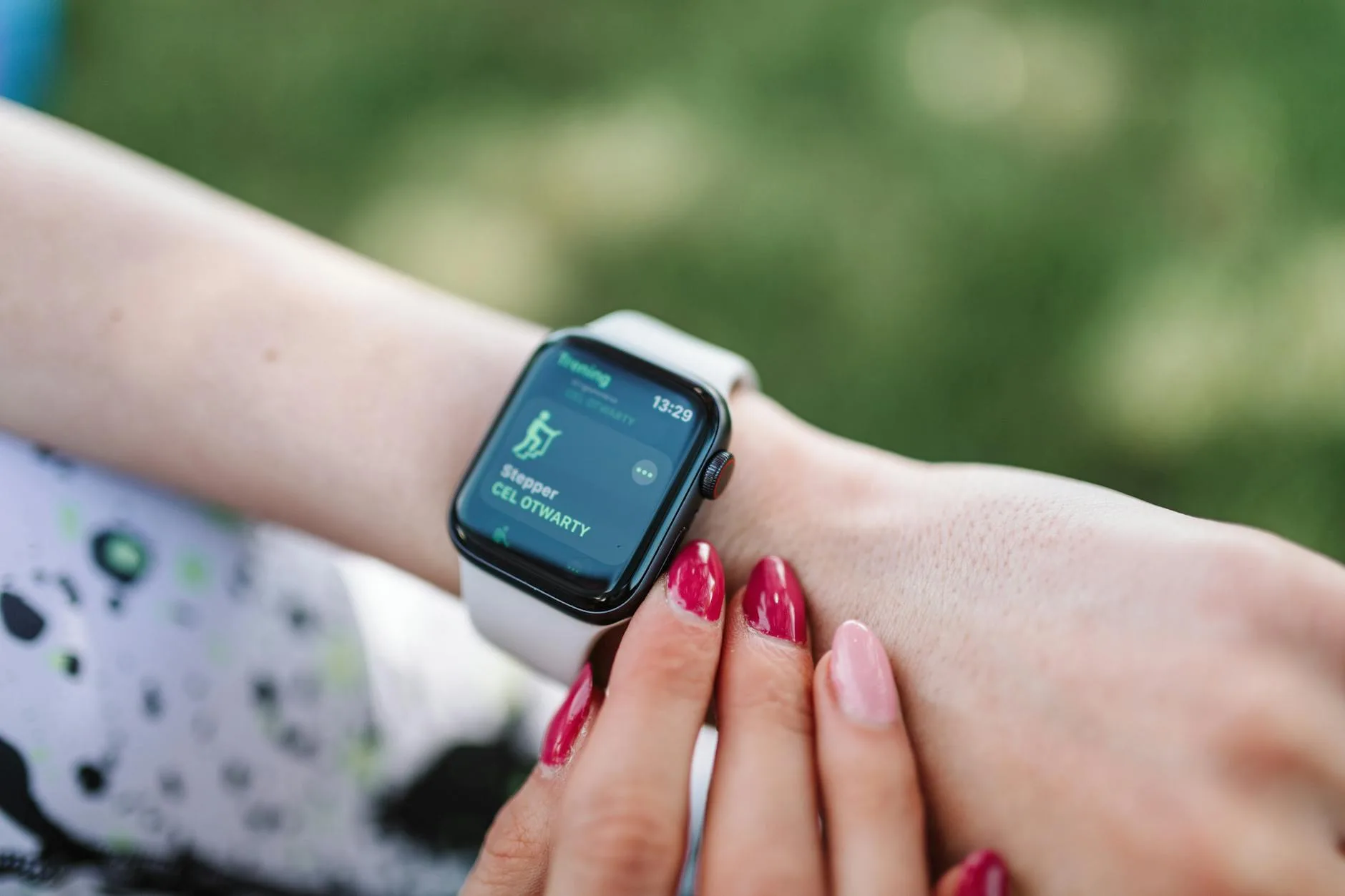
If you already have an iPhone and want a smartwatch that also tracks runs, the Apple Watch SE does a decent job. The running metrics have improved substantially in recent watchOS updates — you get pace, cadence, stride length, heart rate zones, and route mapping. For a related angle, see our Best Running Watches Under £100 2026 UK: Budget Picks guide.
The fundamental limitation: battery life. Six hours of GPS means serious runners will be anxious on long days. And without always-on display, glancing at your pace mid-run requires a wrist-raise that becomes annoying.
- Best for: iPhone users who want a smartwatch first, running watch second
- Downsides: Poor battery for GPS use; no always-on display; no multi-band GPS
Polar Pacer — The Under-the-Radar Option
Price: About £170 from John Lewis | Battery: 35h GPS | GPS: Standard
Polar doesn’t get the attention Garmin and Coros do, but the Pacer is quietly excellent for beginners. The Polar Flow app provides clear training guidance, excellent sleep tracking, and a “FitSpark” feature that suggests workouts based on your recovery status.
The trade-off: it’s not as feature-rich as the Forerunner 165, the screen is basic, and there’s no multi-band GPS. But for pure running focus with great heart rate accuracy, Polar’s optical sensor is arguably the best wrist-based HR in the business.
- Best for: Runners who prioritise heart rate accuracy and training guidance
- Downsides: Basic screen; no multi-band GPS; fewer sport profiles
Garmin vs Coros vs Apple Watch for New Runners
Garmin: The Safe Bet
- Ecosystem: Largest, most established. Garmin Connect has millions of users, excellent community features, and the most third-party app integrations
- Training plans: Garmin Coach offers free adaptive plans for 5K, 10K, and half marathon
- Watches at every price: From £130 (Forerunner 55) to £900+ (Enduro 3)
- Verdict: If unsure, buy Garmin. You can’t go wrong, and the resale value is strong if you upgrade later
Coros: The Battery King
- Ecosystem: Smaller but growing fast. The app is clean and functional, less cluttered than Garmin’s
- Battery life: Demolishes everything else at every price point
- Training plans: “EvoLab” training metrics plus structured training hub. Fewer guided plans than Garmin
- Verdict: Best if battery anxiety is your main concern. Slightly steeper learning curve for the app
Apple Watch: The Generalist
- Ecosystem: Unbeatable as a smartwatch (notifications, payments, calls). Mediocre as a dedicated running tool
- Battery life: The deal-breaker. Daily charging is non-negotiable. GPS drains it in hours
- Training plans: No built-in running plans. Relies on third-party apps (Nike Run Club, Strava)
- Verdict: Only buy for running if you already own it or want a smartwatch that happens to track runs. Dedicated runners will outgrow it quickly
Features That Matter in Your First Year
Pace Alerts
Set a maximum and minimum pace, and the watch vibrates when you drift outside your range. This single feature transformed my early running — as I explain in our GPS watch features guide, pace alerts are the beginner’s best friend. It — I stopped going out at 5:00/km when my easy pace should have been 6:30/km. Most beginners run far too fast on easy days because they don’t have pace feedback.
Heart Rate Zones
You don’t need to fully understand these yet, but having the data matters. The key insight for beginners: if your easy runs feel hard and you can’t hold a conversation, you’re running in Zone 4 when you should be in Zone 2. A watch showing your current zone fixes this immediately.
Check out our guide on choosing a GPS running watch for a deeper look at HR features — but for now, just know that Zone 2 should feel properly easy.
Run/Walk Timers
Perfect for Couch to 5K graduates who still benefit from walk breaks. Set the watch to beep every 4 minutes running / 1 minute walking, and gradually extend the run intervals as fitness builds. Most GPS watches have this built in — Garmin calls it “Run/Walk”.
Course and Back-to-Start Navigation
Once you start running longer, you’ll explore unfamiliar routes. Basic breadcrumb navigation (showing your route on screen with a “back to start” arrow) prevents the anxiety of getting lost on a trail run. The Forerunner 165 and Coros Pace 3 both offer this. Our Best Running Watches Under £150 2026 UK guide is useful alongside this.
Features You Can Ignore for Now
VO2 Max Estimates
Every watch calculates this. It’s useful once you have 6+ months of data to see trends. In your first few months, it’ll bounce around wildly as your running economy develops. Don’t obsess over the number — just run.
Training Load and Recovery Advisors
Garmin’s “Training Status” and Coros’s “Training Load” are powerful tools for experienced runners periodising their training. For beginners doing 3 runs per week, they add confusion without value. You’ll know when you’re tired — you don’t need a watch to tell you.
Advanced Running Dynamics
Cadence, vertical oscillation, ground contact time — fascinating data for biomechanics nerds. Completely irrelevant to someone whose main goal is “run 5K without stopping.” Ignore these for at least a year.
Offline Maps and Navigation
Unless you’re planning trail ultras (you’re not, yet), basic breadcrumb navigation covers your needs. Full offline maps add cost and battery drain for a feature beginners rarely use.
Wrist-Based Heart Rate: Is It Accurate Enough?
The Honest Answer
For easy and moderate running, wrist-based optical heart rate is accurate enough. Modern sensors (Garmin Elevate 5, Coros, Polar Precision Prime) typically read within 3-5 BPM of a chest strap during steady-state running.
Where they struggle:
- Interval sessions — the rapid HR changes outpace the optical sensor. You’ll see a 10-15 second lag during hard efforts
- Very cold weather — blood moves away from your wrist, reducing sensor accuracy
- Loose strap fit — if the watch slides around, accuracy drops off a cliff
- Dark skin tones and tattoos — some optical sensors perform less reliably (this is improving but still a factor)
Do You Need a Chest Strap?
Not yet. For your first year of running — zone 2 easy runs, building a base, occasional intervals — wrist HR gives you enough information to train sensibly. The NHS Couch to 5K programme doesn’t even require heart rate data.
If you later get serious about heart rate zone training or notice your watch consistently misreads during intervals, that’s when a chest strap becomes worthwhile.
How to Set Up Your First GPS Watch
First Run Checklist
- Charge fully before your first run (most watches ship at 50%)
- Download the companion app (Garmin Connect, Coros, Polar Flow) and pair via Bluetooth
- Set your data screens — start with just: current pace, total distance, elapsed time, heart rate
- Go outside and wait for GPS lock before starting (usually 15-30 seconds)
- Start the activity, run your usual route, stop the activity when done
- Review the data in the app — pace graph, route map, heart rate chart
Data Screens for Beginners
Keep it simple. You don’t need six data fields per screen. Start with:
Screen 1 (during run):
- Current pace
- Distance
- Time
Screen 2 (glance):
- Heart rate
- Average pace
- Lap pace
You can add more screens later as you learn what data helps you. Most watches let you customise this in the app.
Connect to Strava (Optional but Recommended)
Strava is where the running community lives. Connecting your watch means every run automatically uploads with your route, pace, and splits visible to friends. The social motivation of “kudos” from other runners is surprisingly powerful for building consistency.
All four recommended watches sync automatically with Strava — just link accounts in the companion app.

When to Upgrade
Signs You’ve Outgrown Your Beginner Watch
- You’re training for a specific time goal (sub-50 10K, sub-2:00 half marathon) and need structured workouts on-wrist
- You want offline maps for trail running
- You need more precise HR data during intervals (chest strap compatibility)
- Battery life is limiting your long runs or ultras
- You’re using training load metrics to plan your week
The Upgrade Path
From a Forerunner 55 → Forerunner 165 or 265 (more metrics, better GPS, AMOLED screen)
From a Forerunner 165 → Forerunner 265 or Coros Pace 3 Sport (advanced training metrics, longer battery)
From any beginner watch → Garmin Forerunner 965 or Coros Apex 2 Pro (full navigation, maps, music, premium build)
Don’t upgrade before you’ve been running consistently for 12+ months. The watch isn’t holding you back — consistency is. Our Couch to 5K guide has more on building that base.
Frequently Asked Questions
Is a GPS watch worth it for a beginner runner? Yes — if you’re running twice a week or more. The pace feedback alone makes you a better runner faster because it stops you from going out too hard on easy days. GPS accuracy beats phone GPS (which bounces off buildings and cuts corners), and having data from day one means you can track progress over months. If you’re running once a week recreationally, a phone app is probably fine.
How accurate is GPS on a running watch? Modern multi-band GPS watches (Forerunner 165, Coros Pace 3) are accurate to within 1-2% on open routes. A 5K run might read 5.02-5.08km. Single-band GPS watches can drift 3-5% in built-up areas or dense tree cover. No GPS device is perfect — accept small variations and look at trends over time rather than individual run distances.
Can I use my Apple Watch for serious running? You can, but you’ll hit limitations fast. The battery drains rapidly during GPS tracking (6-8 hours max), there’s no multi-band GPS, and the running features lack the depth of dedicated running watches. For 3-4 runs per week under an hour, it’s adequate. For half marathon training or anyone running over 90 minutes regularly, a dedicated running watch is better.
Do I need cellular/4G on my running watch? No. Cellular connectivity adds cost (£3-5/month), drains battery faster, and solves a problem most runners don’t have. If you’re worried about emergencies while running without your phone, carry your phone. The weight difference is negligible. Cellular watches make sense for some situations, but it’s not a beginner priority.
How long do GPS running watches last before needing replacement? Most quality GPS watches (Garmin, Coros, Polar) last 4-6 years before battery degradation becomes noticeable. Software updates typically continue for 3-4 years. The Forerunner 55 from 2021 is still receiving updates in 2026. Buy quality once and you won’t need to replace it for years — making even the £250 options excellent value per year of use.