The best running watch under £200 is the one that gives you the training tools you will use without spending the whole budget on features you will ignore. The Garmin Forerunner 165 is our best overall pick for a runner who wants clear run planning and an AMOLED screen. The COROS PACE 3 makes more sense if GPS battery life matters most; Polar, Suunto and Amazfit offer different answers for training feedback, music and everyday smartwatch use.
These are five specific watches, not a promise that every colour or seller stays below the price ceiling. Prices change: check the final checkout price before buying, and skip a variant if it moves over £200. None of the recommendations depends on an invented hands-on test or a claimed accuracy percentage.
Our top picks

Best overall for run planning — Garmin Forerunner 165 (43 mm, black)
AMOLED screen, daily suggested workouts and a focused Garmin running toolkit.

Best for long GPS battery life — COROS PACE 3 (black, nylon strap)
Light nylon-strap design, dual-frequency positioning and breadcrumb route following.
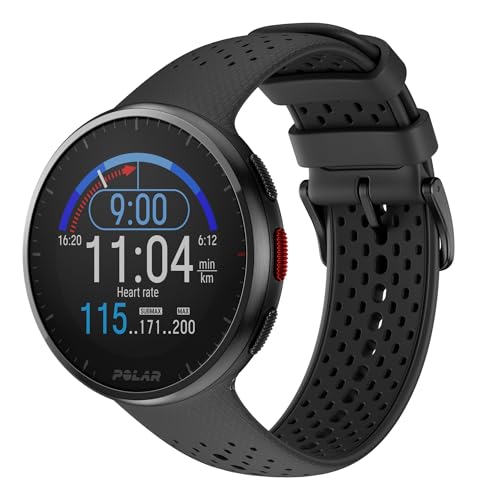
Best for structured training feedback — Polar Pacer Pro
FitSpark suggestions, Training Load Pro and a barometer for elevation data.

Best for phone-free local music — Suunto Run
AMOLED screen, dual-band GPS and storage for music files transferred to the watch.

Best lower-cost smartwatch choice — Amazfit Active 2 (standard, 44 mm)
AMOLED screen, running modes and downloadable maps in a general-purpose smartwatch.
On this page
- Running watches under £200 compared
- The five watches in detail
- How to choose within the budget
- GPS, heart rate and battery: realistic expectations
- Which watch suits your running?
- The bottom line
- Frequently Asked Questions
Running watches under £200 compared
| Watch | Best fit | Navigation and music | Main trade-off |
|---|---|---|---|
| Garmin Forerunner 165 | Run planning and an AMOLED display | Course following; no downloaded music on this version | No multi-band GPS or onboard music |
| COROS PACE 3 | Longer GPS sessions and a light fit | Breadcrumb routes; transferred MP3s, no streaming app | Less vivid transflective display |
| Polar Pacer Pro | Structured training and recovery feedback | Route guidance; phone music controls | Single-band GPS and no onboard music |
| Suunto Run | AMOLED and local music files | Route following; transferred music files | No watch-based streaming app |
| Amazfit Active 2 | Everyday smartwatch use at a lower spend | Downloaded map areas and imported routes | Less dedicated running analysis |
Choose by the feature that changes a run, not by the largest feature list. Garmin’s non-Music 165 is a different purchase from the 165 Music; COROS and Suunto require local files for phone-free music; Polar’s music controls still need your phone. A map on a small watch screen is useful for orientation, but it is not a substitute for planning a route.
The five watches in detail
Garmin Forerunner 165 — best overall
The Forerunner 165 is the easiest recommendation here for runners who want a dedicated watch without stepping into higher-priced models. Its AMOLED screen makes pace and workout prompts clear at a glance, while daily suggested workouts and Garmin Coach give structure to a running week. It also has wrist-based running power and a morning report.
Trade-off: Buy this version for running guidance, not for phone-free Spotify. This is the standard non-Music model. It uses multi-system satellite reception but not the dual-frequency positioning of the COROS or Suunto. If music downloads or multi-band GPS are essential, choose on those features rather than assuming every Forerunner has them.
COROS PACE 3 — best for longer GPS use
The black nylon-strap PACE 3 is the run-first choice for someone who dislikes frequent charging. COROS states up to 38 hours in standard full-GPS mode, but dual-frequency, music and other settings shorten that figure. The light design, dual-frequency GPS option and breadcrumb route following suit longer training days.
Trade-off: Its transflective screen is always visible but does not have the same bright look as Garmin’s AMOLED panel. It can play transferred music files; it cannot run a Spotify-style streaming app. Compare the price carefully because this model can sit close to the article’s ceiling.
Polar Pacer Pro — best for training feedback
Polar’s FitSpark suggestions and Training Load Pro make the Pacer Pro a good match for runners who already enjoy reviewing sessions in Polar Flow. Its barometer adds elevation information, and the manufacturer rates it for up to 35 hours of training with GPS and wrist heart rate under its stated conditions.
Trade-off: The Pacer Pro is not a multi-band watch. Its route tools are not downloadable colour topographic maps, and its music controls operate playback on your phone. Choose it for the training presentation, not because a higher feature count automatically makes it a better coach.
Suunto Run — best for music files without a phone
Suunto Run brings an AMOLED display, dual-band positioning and storage for audio files to a running-focused watch. It supports interval work, route following and local music playback when you transfer files. Suunto states up to 20 hours of training in its high-accuracy multi-band mode; display and music use can affect real runtime.
Trade-off: It is a file-transfer music solution, not a streaming-service watch. Check the physical fit and screen controls if you prefer buttons during wet or cold runs, and compare its app workflow with the one you already use.
Amazfit Active 2 — best lower-cost smartwatch
The standard Active 2 is a more general-purpose watch that still records outdoor runs. It pairs an AMOLED display with the Zepp app and supports downloaded map areas and imported routes. That makes it attractive if you want exercise tracking and everyday watch functions without using the whole budget.
Trade-off: It does not give the same running-specific analysis or training history as the dedicated Garmin, COROS or Polar models. Maps require setup in the app; importing a route is different from asking the watch to calculate a new route for you. This is the standard model, not the differently equipped Premium version.
How to choose within the budget
Start with the job, not the badge
For regular 5K, 10K or half-marathon training, look for workout guidance you understand and a screen you can read while moving. The Forerunner 165 offers a balanced start; Polar rewards a runner who wants to work with Polar Flow. If this is your first GPS watch, our GPS watch buying guide explains the core decisions without assuming you need every training metric.
Music and navigation need specific checks
“Music” can mean phone controls, local MP3 files or downloads from a supported service. They are not interchangeable. Likewise, breadcrumb directions, imported routes and downloadable maps solve different problems. Our running-watch feature explainer helps separate useful training data from an attractive specification list.
Treat the price ceiling as a checkout rule
Compare the exact model and strap on the page you are about to buy. If a seller’s final price exceeds £200, wait for a better offer or choose another watch here; the title is a budget limit, not a reason to overspend. A refurbished version also needs its own condition and warranty check.

GPS, heart rate and battery: realistic expectations
GPS hardware is not a guarantee of route accuracy
The COROS PACE 3 and Suunto Run offer dual-frequency positioning; Garmin Forerunner 165 and Polar Pacer Pro do not. Buildings, tree cover and satellite conditions still affect a recorded route. Satellite hardware alone cannot guarantee a fixed accuracy percentage. Our GPS accuracy guide explains what can distort distance and pace.
Wrist heart rate is useful, not infallible
Fit, movement and the type of session all affect optical heart-rate readings. A compatible chest strap can be worthwhile if precise interval-zone data matters to you. A watch’s estimate of recovery or fitness is training guidance, not a medical measurement. See our heart-rate zone guide before letting a single number dictate every run.
Compare battery in the mode you use
Manufacturers quote battery life under different conditions. GPS mode, dual-frequency positioning, always-on display, navigation and music can all change endurance. Compare the published modes for your longest planned session rather than treating a smartwatch-days figure as continuous GPS time. Our watch battery guide covers the main settings. COROS publishes separate figures for PACE 3 satellite and music modes.
If you want to see the source behind Polar’s training-mode estimate, its Pacer Pro specification states the GPS-and-wrist-heart-rate conditions. Those figures are planning guides, not a promise of identical results on your wrist.

Which watch suits your running?
- Choose Garmin Forerunner 165 for dedicated running guidance and an AMOLED screen if you do not need phone-free music.
- Choose COROS PACE 3 for a light watch and longer stated GPS endurance, provided its final price stays within the budget.
- Choose Polar Pacer Pro if FitSpark, Training Load Pro and Polar Flow are tools you will actually use.
- Choose Suunto Run if you want AMOLED, dual-band GPS and transferred music files in one running watch.
- Choose Amazfit Active 2 if a lower-cost everyday smartwatch matters more than deep run analysis.
For a simpler first watch, compare our lower-budget running-watch guide. For a watch aimed at longer race preparation, our marathon-training shortlist looks beyond this price ceiling.
The bottom line
For most runners keeping below £200, the Garmin Forerunner 165 is the strongest all-round choice because its training guidance and display are useful without a complicated setup. Choose the COROS PACE 3 when GPS endurance and a light fit matter more; Polar Pacer Pro for Polar’s training view; Suunto Run for local phone-free music; or Amazfit Active 2 for a less expensive smartwatch. Check the final price and exact variant. None of these watches makes a fixed GPS-accuracy or heart-rate promise.
Frequently Asked Questions
Which running watch is best under £200? For a runner who wants clear workout guidance and an AMOLED screen, the standard Garmin Forerunner 165 is our best overall choice. COROS PACE 3 is a better fit for longer stated GPS battery life, provided its final price remains below £200.
Does the Garmin Forerunner 165 have music storage? The standard Forerunner 165 does not have the music-download feature. Garmin sells a separate 165 Music version, so check the exact model before ordering.
Do I need multi-band GPS for running? Not for every route. Dual-frequency positioning can help in more difficult signal conditions, but buildings, trees and settings still affect recorded tracks. COROS PACE 3 and Suunto Run offer the feature; the standard Forerunner 165 and Polar Pacer Pro do not.
Can I listen to music without my phone? COROS PACE 3 and Suunto Run can play compatible music files transferred to the watch. They do not run streaming-music apps on the watch. The standard Forerunner 165 has no music downloads, and Pacer Pro controls music on a paired phone.
Is wrist heart rate accurate enough for intervals? Optical readings can vary with watch fit and movement. If interval zones depend on a steadier heart-rate signal, consider a compatible chest strap rather than assuming a fixed accuracy margin for any watch.
Will every watch here always cost less than £200? No. Retail prices change by seller and variant. Check the final checkout price for the exact watch, and choose another option or wait if it exceeds your limit.