The FlipBelt Zipper is the best running belt for most UK runners. It carries a phone, keys and gels in a low-profile stretch band, with one zipped pocket for the item you most want secured. Choose the Salomon Pulse for trail capacity, the Salomon Active Bottle when hydration is the priority, or the Waterfly for race-number attachment.
The right belt is the smallest one that holds your actual kit without shifting. Phone dimensions, loaded weight and where the belt sits matter more than “one size fits all” or “bounce-free” claims.
In This Article
- Quick answer
- Running belts at a glance
- Six recommendations
- How to choose
- Phone fit and bounce control
- Fuel and hydration
- Belt vs running vest
- Care and race-day testing
- The Bottom Line
- Frequently Asked Questions
Best Running Belt: Quick Answer
Buy the FlipBelt Zipper if you carry a phone, key and a few gels and are happy to choose a fixed size. Buy the Nathan 5K if buckle adjustment matters more than wraparound capacity. For longer runs, the Salomon Pulse spreads soft-flask and fuel storage around the waist; for a supplied rigid bottle, choose the Salomon Active Bottle.
Before buying, assemble the exact phone case, key, inhaler, gels and other items you carry. If the load includes spare clothing or substantial water, skip the oversized belt and compare a running hydration vest.

Running Belts at a Glance
The table is CTA-free so you can compare carrying style and capacity before opening a retailer. Confirm the selected size and exact included accessories.
| Belt | Best for | Style | Selected size | Storage |
|---|---|---|---|---|
| FlipBelt Zipper | Best overall | Pull-on stretch belt | Medium | Zip pocket + three openings |
| Salomon Pulse Belt | Best for trail and longer runs | Four-way stretch belt | XL variant | Two horizontal flask pockets |
| Nathan 5K Waist Pack | Best adjustable phone belt | Adjustable pouch belt | One size | Two zipped pockets |
| Salomon Active Bottle Belt | Best with included bottle | Adjustable bottle belt | One size | Angled bottle + gel pocket |
| Waterfly Race Belt | Best for race day | Adjustable multi-pocket belt | 30–39in stated | Three pockets + number clips |
| HAISSKY Running Belt | Best budget | Adjustable three-pocket belt | 72–120cm stated | Phones up to 6.9in stated |
Our Six Running Belt Recommendations
1. FlipBelt Zipper — Best Overall

The FlipBelt Zipper is the best all-round choice when you want phone, key and gel storage without a buckle or dangling pouch. It pulls on like a waistband, sits flat around the hips and adds one zipped section to three slip-in openings. The selected offer is medium, so measure where you intend to wear it rather than ordering from trouser size.
A stretch belt works best when loaded evenly. Put the phone in the zipped compartment, then balance keys and gels around the remaining openings. No belt is universally bounce-free: phone weight, case size, running pace and fit all matter.
- Buy it if: you want a low-profile belt for phone, keys and several gels.
- Skip it if: you dislike pull-on sizing or need a bottle included.
- Main compromise: changing size means replacing the belt rather than adjusting a buckle.
2. Salomon Pulse Belt — Best for Trail and Longer Runs

The Salomon Pulse is the most capable stretch belt here. Its two horizontal pockets are designed to take compatible 500ml soft flasks, while smaller pockets hold a phone, fuel or keys. Four-way stretch spreads the load more evenly than a narrow pouch.
The selected variant is XL, which is a crucial detail. A good design in the wrong size will still move, fold or chafe. Soft flasks are not stated as included with this offer, so treat them as a separate purchase unless the current product page explicitly says otherwise.
- Buy it if: you need more storage for trails, long runs or soft-flask hydration.
- Skip it if: the XL variant does not match your measured waist or hip position.
- Main compromise: sizing and compatible flask choice require more checking.
3. Nathan 5K Waist Pack — Best Adjustable Phone Belt
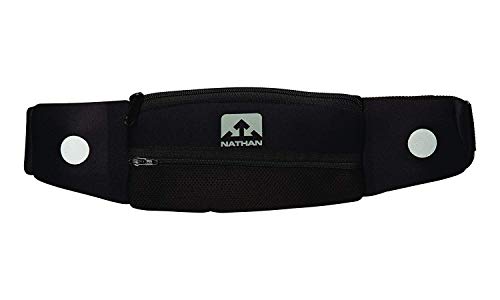
The Nathan 5K uses a conventional adjustable strap and two external zipped pockets. That makes it easier to fine-tune than a pull-on band and keeps the phone separate from keys or coins. The stated adjustment range is 26–44 inches, but test the belt with your actual phone and case before relying on broad compatibility claims.
A narrow pouch is well suited to 5K training, parkrun and ordinary road sessions. It is less useful when you need several gels, gloves or hydration. Reflective detailing improves visibility when illuminated but does not replace lights or high-visibility clothing.
- Buy it if: you prefer buckle adjustment and separate zipped pockets.
- Skip it if: you carry a bulky phone plus substantial long-run kit.
- Main compromise: convenient adjustment with less wraparound capacity.
4. Salomon Active Bottle Belt — Best with Included Bottle

The Salomon Active Bottle Belt is the clearest hydration option. It includes a 3D bottle positioned at a 45-degree angle for access, plus a pocket for gels and small essentials. An adjustable closure lets you tighten the load after adding water.
A rigid bottle concentrates weight in one place and can feel more noticeable than two smaller soft flasks. Practise removing and replacing it before race day. The belt is useful when a handheld bottle is annoying but a hydration vest would be excessive.
- Buy it if: you want a bottle supplied and quick access on road or trail runs.
- Skip it if: you prefer balanced soft-flask storage or need substantial clothing capacity.
- Main compromise: the bottle creates a more concentrated rear or side load.
5. Waterfly Race Belt — Best for Race Day
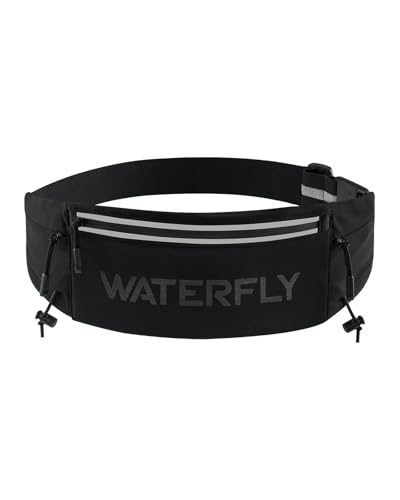
The Waterfly combines phone storage with dedicated race-number attachment. Three zipped compartments separate a phone, fuel and small valuables, while an internal key clip helps prevent metal keys rubbing against the screen. The stated waist range is 30–39 inches.
The main pocket is described as fitting phones up to seven inches, but diagonal screen size does not account for case thickness or camera bumps. Measure the complete device. Water-resistant or “waterproof” pocket wording also does not justify submersion or guarantee dry electronics in prolonged rain.
- Buy it if: you want phone, gels and a race number in one adjustable belt.
- Skip it if: your waist sits outside the stated range or you need bottle storage.
- Main compromise: more compartments create a bulkier front section.
6. HAISSKY Running Belt — Best Budget
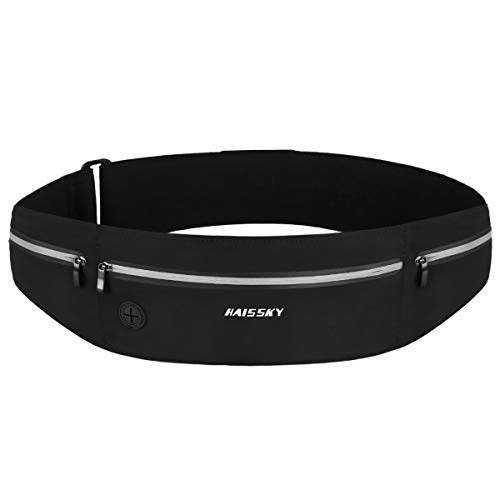
The HAISSKY is the budget pick for carrying a phone, key and small essentials. It has three zipped pockets, an adjustable elastic strap and a stated fit range of 72–120cm. The main compartment is described for phones up to 6.9 inches.
The low price means the decision should be based on basic fit and capacity, not broad durability or weatherproof claims. Put electronics in a separate waterproof sleeve if heavy rain is possible, and check the zipper and elastic before longer runs.
- Buy it if: you need simple phone storage for short training runs.
- Skip it if: you carry water, poles or a large race-day fuel load.
- Main compromise: basic construction and limited long-run capacity.
How to Choose a Running Belt
Start with the load. A phone and key need a slim pouch; a marathon plan may require several gels; unsupported trail running may require water, a jacket and mandatory kit. Buying extra capacity “just in case” encourages overpacking and increases movement.
Next choose pull-on or adjustable. Pull-on stretch belts distribute weight well but depend on accurate sizing. Buckle belts adjust across clothing layers and body changes but place more load in a central pouch. Reflective trim is useful as a secondary detail, not primary visibility equipment.
Phone Fit and Bounce Control
Measure your phone inside its normal case. Check length, width, thickness and the size of the pocket opening. Large camera modules can catch on zips even when the screen diagonal looks compatible. Keep keys in a separate pocket or on a clip.
Wear the belt snugly against the body, usually around the waist or high hips. Tight enough to prevent vertical movement does not mean painfully compressed. Test it over the same layers you will wear in the race. For seasonal clothing choices, see our guide to what to wear running in the UK.
Fuel and Hydration
For ordinary shorter runs, water and fuel may not be necessary. Needs vary with duration, intensity, weather and the runner. The NHS hydration guidance gives general fluid advice, but long-event planning should be practised rather than improvised on race morning.
Use our guides to energy gels, running gels and electrolyte drinks to decide what actually needs carrying. Arrange gels so wrappers can return to the belt rather than becoming litter.
Running Belt vs Running Vest
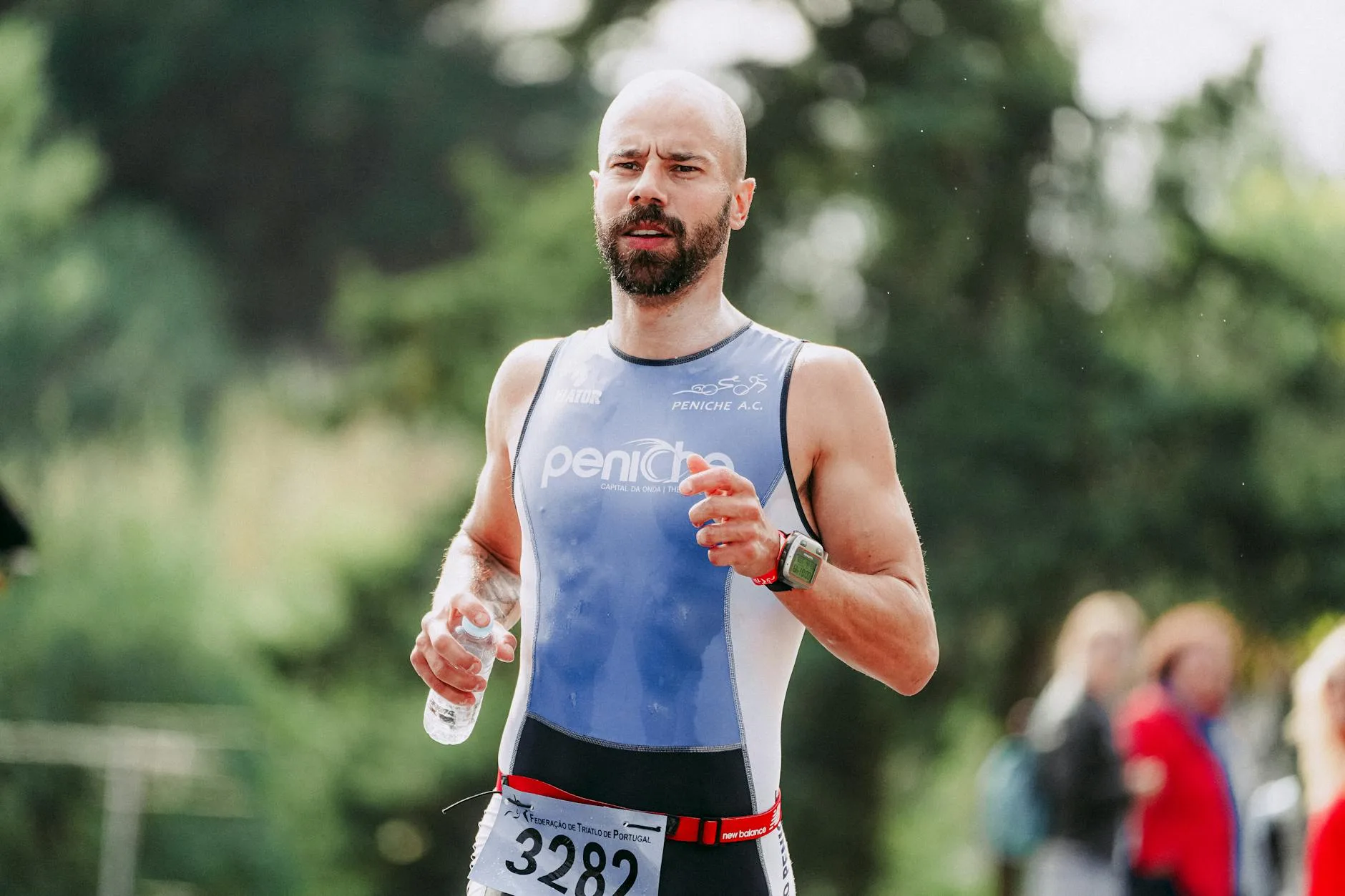
A belt is lighter and cooler when you need only a phone, small fuel load and modest hydration. A vest spreads larger loads across the torso and provides easier access to bottles, layers and race kit. If a loaded belt must be tightened uncomfortably to control bounce, the load has probably outgrown it.
For a first marathon, train with the exact system you plan to race in. Our first-marathon guide covers the broader preparation. Some runners combine a belt for phone security with a vest for water, but duplicated storage adds weight without automatically adding usefulness.
Care and Race-Day Testing
Empty the belt after every run and let it dry fully. Sweat salts can stiffen elastic, affect zips and create odour. Follow the exact care label: some stretch bands are machine washable, while structured bottle belts may need hand cleaning.
Complete at least one long or faster session with the planned race load. Check whether the phone is accessible, gels can be removed one-handed, the key cannot scratch the screen and empty wrappers can be stored. Do not discover a chafing seam at kilometre 30.
The Bottom Line
The FlipBelt Zipper is the best running belt here for everyday phone and fuel carrying. Choose the Salomon Pulse for greater trail capacity, the Nathan 5K for adjustable simplicity, the Salomon Active Bottle for included hydration or the Waterfly for integrated race-number clips.
Fit beats feature count. Measure your body and phone, pack only what the run requires and test the complete load before race day.
Frequently Asked Questions
What is the best running belt for carrying a phone? The FlipBelt Zipper is the best all-round option here when correctly sized. The Nathan 5K is better if you prefer an adjustable buckle and separate zipped pockets.
How do I stop a running belt bouncing? Wear it snugly around the narrowest stable position, remove unnecessary items and spread weight evenly. A heavy phone or bottle can still move if the belt is too loose or the wrong size.
Will my phone fit in a running belt? Measure the full phone with its case, including thickness and camera bump. Screen size alone is not enough. Compare those measurements with the usable pocket opening and internal dimensions.
Do I need a running belt for a 5K? Not necessarily. A belt is useful when clothing lacks secure pockets or you need a phone, key or medication. Carrying less usually gives the most comfortable result.
Is a running belt waterproof? Most are better described as water resistant. Sweat and prolonged rain can reach zips and seams, so protect electronics in a separate sealed sleeve when conditions are wet.
When should I choose a running vest instead? Choose a vest when you need more water, compulsory race kit, spare layers or food than a belt can hold without bouncing. A belt remains lighter for shorter, simpler runs.