You are climbing the last mile of a wet Sunday long run, shorts heavy with rain, vest rubbing under one arm, and that small hot patch on your inner thigh has turned into a sharp sting with every stride. By the time you get home, the shower feels like a punishment. Chafing is rarely serious, but it can ruin training, cut a race short, and make the next run feel impossible. The good news: with the right clothing choices, skin prep, and kit checks, most runners can stop it before it starts. These tips for preventing chafing while running are built for real UK conditions: drizzle, humidity, winter layers, race vests, sweaty summer parkruns, and long runs where small irritations become big problems.
In This Article
- Why Runners Chafe
- Build a Chafe-Free Running Kit
- How to Prevent Chafing Before a Run
- During the Run: Spot Problems Early
- Aftercare for Chafed Skin
- Common Chafing Mistakes to Avoid
- A Race-Day Chafing Checklist
- Frequently Asked Questions
Why Runners Chafe
Chafing happens when repeated rubbing damages the outer layer of skin. For runners, the usual triggers are fabric moving against skin, skin rubbing against skin, salt from sweat, wet clothing, heat, and pressure from kit such as waist belts, sports bras, race vests, phone armbands, or hydration packs.
The most common running chafing zones are:
- Inner thighs
- Groin creases
- Underarms
- Nipples
- Sports bra band and shoulder straps
- Waistband area
- Lower back where a pack bounces
- Neckline or collarbone from vests and jackets
- Feet, especially between toes or along the heel collar
Chafing can show up as redness, soreness, a burning sensation, small cracks, raw skin, or bleeding. Medical resources such as the MedlinePlus chafing advice describe chafing as irritation caused by skin rubbing against skin or clothing, often made worse by moisture. That description fits running very well: the longer you move, the more chances there are for friction to build.
Why UK running conditions make chafing worse
UK runners get a difficult mix: cool air but high humidity, rain that soaks cuffs and waistbands, muddy trails that add grit, and changeable weather that encourages layering. A winter runner might start cold in a jacket, warm up after ten minutes, sweat into a base layer, then cool down again in the wind. That cycle leaves fabric damp and more abrasive.
Summer is not automatically easier. Warm parkruns, club sessions, and marathon blocks bring sweat, salt, and sunscreen. Salt crystals can act like fine grit when they dry on the skin. If you then add a loose vest or shorts with raised seams, irritation can appear quickly.
Friction, moisture, and pressure
Think of chafing as a three-part problem:
- Friction is the repeated rubbing.
- Moisture softens the skin and makes fabric cling.
- Pressure keeps the rubbing focused on one spot.
A loose cotton T-shirt may create friction under the arms. A soaked base layer may create moisture around the waistband. A hydration pack may create pressure across the chest or back. You do not need all three for chafing, but when they combine, the risk rises fast.
In practice, runners who deal with chafing best tend to treat it like shoe fit: not an afterthought, but a small setup choice that protects the whole run.
Build a Chafe-Free Running Kit
The best chafing prevention starts before any balm or tape. Clothing fit, fabric, seam placement, and layering decide how much rubbing your skin has to tolerate. If you often finish runs with red marks, your first job is to inspect what touches those areas.
For a wider clothing foundation, see How to Choose the Right Running Clothing. The same principles that help comfort and temperature control also reduce friction: technical fabrics, suitable fit, and minimal movement against the body.
Choose technical fabrics over cotton
Cotton feels soft when dry, but it holds sweat and rain. Once wet, it stretches, sags, clings, and can turn rough at seams and hems. For running, look for polyester, nylon, elastane blends, merino blends, or other technical fabrics designed to move moisture away from the skin.
This does not mean expensive kit is always better. A £12 technical top that fits well can be kinder to your skin than a £60 premium top with a seam in the wrong place. Fit and construction matter more than the logo.
Get the fit right: snug, not squeezing
A good running fit reduces movement. For base layers, shorts liners, sports bras, and undershorts, the aim is usually close-fitting without digging in. Loose fabric can flap and rub. Over-tight kit can create pressure points and skin folds that rub.
Useful fit checks:
- Raise both arms and check whether the vest twists into the armpit.
- Jog on the spot and feel whether the waistband moves.
- Squat or lunge to see if shorts ride up.
- Check sports bra straps for rough edges or hard adjusters.
- Wear your pack or belt loaded, not empty, before deciding it fits.
For everyday UK training would be a close-fitting technical base layer in cool weather and properly fitted split or two-in-one shorts in warmer weather, rather than loose cotton layers that only feel comfortable for the first mile.
Pay attention to seams and labels
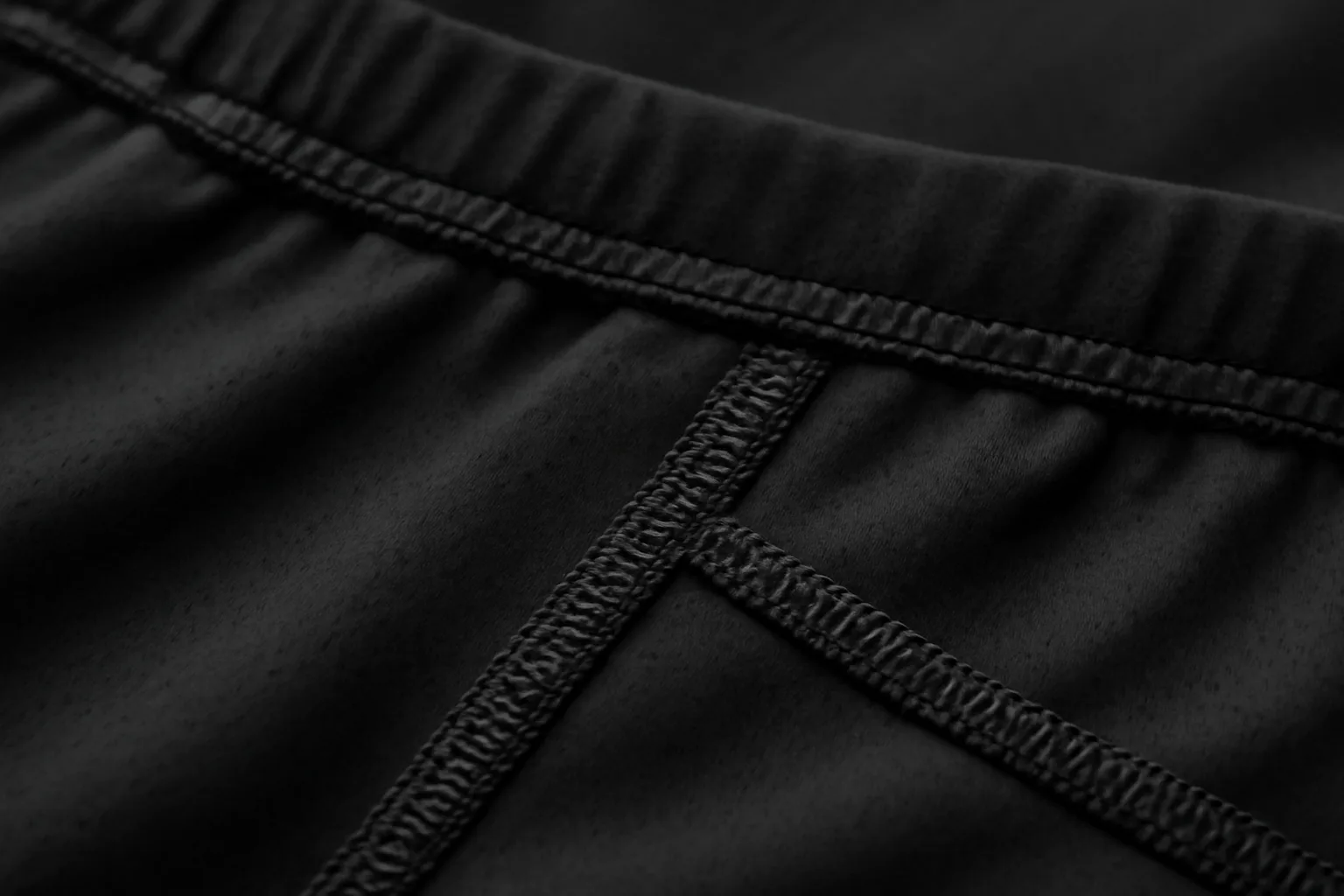
Flatlock seams, bonded hems, and tag-free designs are not just marketing points. Raised stitching can irritate when repeated thousands of times during a run. Inner thigh seams, underarm seams, and sports bra bands are common offenders.
Turn the garment inside out. Run your fingers over the seams. If a seam feels scratchy to your hand, it may feel worse after 90 minutes of sweat and movement. Remove labels carefully if they rub, but avoid cutting so close that you leave sharp plastic or thread ends.
Shorts and tights: stop thigh chafing at source
Inner thigh chafing is one of the most common runner complaints. The fix is usually a combination of fabric coverage, stable fit, and lubrication.
Options include:
- Two-in-one shorts with a supportive inner liner
- Half tights or compression-style shorts
- Longer boxer-style running underwear under looser shorts
- Anti-chafe balm on both inner thighs
- Seam-free or flat-seamed underwear
The practical trade-off is heat versus protection. Half tights may feel warmer on a hot day, but if they stop your thighs rubbing over a long run, they can be the better choice. For race day, comfort over the full distance matters more than feeling cool while standing at the start.
Sports bras and chest fit
Sports bra chafing often happens around the lower band, between the breasts, at the shoulder straps, or near the clasp. Sweat, movement, and pressure all combine here. A bra that is fine for gym work may not suit a long run.
Look for:
- A firm band that does not slide up or roll
- Smooth internal seams
- Wide straps that do not cut in
- No rough clasp edges against the skin
- Enough support for running impact, not just daily wear
If a sports bra has caused chafing once, do not assume it was a one-off. Try it on a short run after adjusting fit and adding balm to risk areas. If the same mark returns, the design may not suit your body shape or running style.
Jackets, waterproofs, and outer layers
Rain kit can prevent chill but create rubbing if it is too stiff, too loose, or poorly layered. A waterproof jacket that moves independently from your base layer can rub the neck, wrists, zip guard, and waist. Wet cuffs and collars are common chafe zones.
For wet-weather buying guidance, read Waterproof Running Jackets: What to Look For. From a chafing point of view, pay special attention to soft collars, smooth zip garages, adjustable cuffs, pack compatibility, and whether the hem bounces while running.
Seasonal clothing also matters. A winter setup that works at 2°C may be miserable in mild rain, while summer kit can leave you exposed to pack rub on longer trail runs. The guide to What to Wear Running in Every Season: A UK Guide can help you match layers to the conditions without overdressing.
How to Prevent Chafing Before a Run
Pre-run preparation is where most chafing is won or lost. If you wait until the burning starts, you are already managing damage. The aim is to identify friction points, protect them, and choose kit that stays stable when wet.
Map your personal chafe zones
Every runner has a pattern. Some always chafe at the inner thigh. Others struggle with nipples, bra bands, toes, waistbands, or pack straps. Keep a simple note after longer runs: weather, clothing, distance, and any sore spots.
You do not need a training diary masterpiece. A quick phone note is enough:
- Distance and duration
- Clothing worn
- Weather conditions
- Balm or tape used
- Any redness, soreness, or blistering
After a few runs, patterns become obvious. If your underarms only chafe in one vest, remove it from long-run use. If thigh chafing appears after 10 miles in rain, treat wet long runs as higher risk and prep accordingly.
Apply anti-chafe balm before the first step
Anti-chafe balm creates a protective layer that reduces rubbing. Popular options include sports anti-chafe sticks, petroleum jelly, silicone-based balms, and some foot lubricants. A small tube or stick usually costs around £5 to £12 and can last many runs.
Apply balm to clean, dry skin before dressing. Use enough to cover the area, but not so much that clothing slides around. Common application points include inner thighs, nipples, underarms, bra band, waistband, toes, and any area where a pack or belt touches.
For long races, carry a small mini stick, sachet, or decanted portion in a race vest. If the weather is very wet, you may need to reapply.
Tape high-risk areas
For some areas, balm is not enough. Nipples, bra clasp points, and pack-rub spots often respond better to tape or dressings. Use products designed to stay on skin during exercise, such as sports tape, kinesiology tape, blister tape, or nipple covers.
Good taping habits:
- Apply to clean, dry skin.
- Round the corners of tape so it does not peel easily.
- Avoid stretching tape tightly across moving skin.
- Test the product on a short run before race day.
- Remove gently after the run, especially if skin is sore.
Do not place adhesive over broken or infected skin unless directed by a healthcare professional. If tape causes itching, rash, or blistering, stop using it and try a different product.
Dress for the whole run, not the first five minutes
Many runners overdress because the first few minutes feel cold. After warming up, sweat builds, layers get damp, and rubbing starts. A better approach is to dress for how you will feel after 10 to 15 minutes of running.
In cool weather, a close-fitting base layer under a light shell is often better than a thick loose top. In rain, choose layers that still sit smoothly when wet. In summer, lighter kit helps, but it still needs to fit securely.
This is one area where a little discomfort at the start can protect the rest of the run. Feeling slightly cool while waiting at the door is often preferable to carrying a soaked, rubbing layer for two hours.
Check shoes and socks too
Chafing is not limited to upper-body kit. Foot friction can cause hot spots, blisters, and skin breakdown. Socks should fit without wrinkles, bunching, or thick seams across the toes. Shoes should hold the foot securely without pinching.
Before longer runs:
- Trim toenails neatly.
- Wear running socks, not thick cotton sports socks.
- Check for sock seams that cross known hot spots.
- Lace shoes to reduce heel slip.
- Use balm or blister prevention tape on repeat problem areas.
Wet trail runs deserve extra attention. Mud and grit can enter shoes and turn minor rubbing into raw patches. If you know a route has puddles, stream crossings, or boggy sections, choose socks that drain and dry well rather than heavy socks that stay waterlogged.
During the Run: Spot Problems Early
A chafe problem rarely goes from zero to severe without warning. Most runners feel a warm spot, sting, itch, or dragging sensation first. The mistake is ignoring it because the pace feels good or the group is moving well.
Act on hot spots
If you feel a hot spot, stop briefly and check it. Thirty seconds can save the rest of the run. Smooth a twisted waistband, pull shorts back into place, adjust a bra strap, tighten a pack, or move a gel packet that is pressing through a pocket.
Small mid-run fixes include:
- Reapplying balm from a mini stick
- Moving a phone or key away from the waistband
- Tightening a race vest so it stops bouncing
- Loosening a strap that is cutting in
- Removing a wet outer layer if safe to do so
- Rinsing grit from skin or socks if water is available
A strong opinion here: stopping early is not weakness. It is basic kit management. Runners will often pause for a shoelace but push through skin damage that takes days to settle.
Manage rain and sweat
Once clothing is soaked, your chafing risk changes. Fabric gets heavier, seams press differently, and hems cling. In rain, check collars, cuffs, bra bands, and waist belts more often. In heat, salt build-up can make friction sharper.
If you are running an event with aid stations, use water sensibly. Rinsing salt from hands, face, or thighs can help, but soaking clothing may create new rubbing. Pouring water over your head in a race can feel refreshing, yet if it runs down into shoes or shorts, it may increase friction later.
Adjust packs and belts under load
Hydration packs and waist belts should be adjusted when they contain the kit you will actually carry. A pack with 1 litre of water sits differently from an empty pack. Soft flasks shrink as you drink, which can make the fit looser and bouncier.
During long runs, tighten or rebalance the pack as contents change. Check the sternum straps, side straps, and shoulder contact points. If the pack rubs your neck or collarbone, the solution may be a different top underneath, a lower strap position, or a better-fitting pack.
Aftercare for Chafed Skin
If chafing has already happened, treat the skin gently. The aim is to clean, calm, protect, and allow healing before the next hard run. Do not scrub the area, do not cover it with strongly scented products, and do not rush back into the same rubbing setup.
Clean and dry the area
Shower with lukewarm water rather than very hot water. Use mild soap if needed, but avoid harsh scrubbing. Pat the area dry with a clean towel. If the skin is raw, even water may sting. That does not always mean it is serious, but it is a sign to be gentle.
The Cleveland Clinic chafing guidance recommends keeping chafed skin clean and dry and giving it time to heal. That advice is very relevant for runners because returning too soon in the same clothing can reopen the skin.
Protect healing skin
For mild redness, a soothing barrier ointment may help protect the area while it settles. For raw or cracked skin, a sterile dressing may be useful, especially if clothing will rub against it during the day. Change dressings regularly and keep the area clean.
Avoid applying strong antiseptics, perfumed lotions, or exfoliating products to chafed skin unless advised by a healthcare professional. These can sting and may irritate the area further.
Know when to seek medical advice
Most running chafing improves with rest from rubbing and basic care. Seek medical advice if you notice:
- Increasing redness, swelling, warmth, or pain
- Pus, spreading rash, or red streaks
- Fever or feeling unwell
- Chafing that does not improve after several days
- Recurrent skin breakdown in the same area despite kit changes
- Chafing around sensitive areas that is severe or bleeding
People with diabetes, reduced immune function, or skin conditions should be more cautious with broken skin. If in doubt, ask a pharmacist, GP, or qualified healthcare professional.
Common Chafing Mistakes to Avoid
Chafing prevention often fails because of small habits rather than lack of expensive kit. These are the mistakes that catch runners out again and again.
Wearing new kit for a long run or race
New shorts, a new sports bra, a new vest, or a new waterproof may feel fine in the shop. That tells you very little about how it behaves after 90 minutes of sweat, rain, pockets, and fatigue.
Test new kit on shorter runs first. Build up to longer distances only when you know it does not rub. Race day is not the time to discover that a zip guard scratches your collarbone or a gel pocket bounces against your ribs.
Assuming expensive clothing cannot chafe
Premium running kit can still have the wrong seam, fit, or cut for your body. Price may buy better fabric and design, but it cannot guarantee comfort. A budget top that fits your shape may outperform a costly one that twists under the arms.
Runners typically notice this after buying a highly rated item that works for many runners but not for them. Reviews are useful, yet skin contact is personal. Your own chafe map matters more than popularity.
Using balm only after chafing starts
Balm works best as prevention. Applying it to already raw skin during a run can sting, trap dirt, or offer only limited relief. Put it on before the run, then reapply early if you feel a hot spot.
For marathon training, keep balm near your socks or watch so it becomes part of the routine. If it is hidden in a drawer, you will forget it until the shower reminds you.
Ignoring underwear
Running shorts are only part of the system. Underwear that bunches, holds sweat, or has thick seams can ruin otherwise good kit. Some runners prefer shorts with built-in liners and no separate underwear. Others prefer seamless running briefs or longer boxer-style underwear.
There is no single correct option. The test is simple: does it stay put, manage moisture, and avoid seams on high-friction areas?
Forgetting body changes and seasonal changes
Weight changes, muscle gain, pregnancy and postnatal changes, different training loads, and warmer or wetter seasons can all alter chafing risk. Kit that worked last year may not fit the same now. A winter base layer may be fine for easy runs but rub during faster work when arm swing changes.
Reassess regularly. If chafing appears out of nowhere, check recent changes: new detergent, different shorts, higher mileage, longer runs, hotter weather, backpack use, or a change in pace.
A Race-Day Chafing Checklist
Race day magnifies every small kit issue. You run longer, sweat more, carry gels, stand around at the start, and may run in weather you did not choose. A plan helps you avoid last-minute guesses.
The week before
Use the final week to confirm your clothing, not to experiment. Choose the exact shorts, socks, bra, top, jacket, belt, or vest you will wear. Wash them with your usual detergent, then inspect seams and labels.
Check the forecast, but prepare for change. For UK events, pack a light layer, gloves, and a waterproof option if conditions look unsettled. If rain is likely, practise your wet-weather setup before the event rather than hoping it will be fine.
The night before
Lay out kit in full. Add anti-chafe balm, tape, dressings, and spare socks if you need them after the finish. Place balm somewhere visible so you apply it before leaving.
A useful race kit list:
- Race top or vest already tested
- Shorts, tights, or leggings already tested
- Sports bra or base layer already tested
- Running socks with no known rubbing points
- Anti-chafe balm or petroleum jelly
- Nipple covers or tape if needed
- Plasters or blister dressings for after the race
- Weather layer that does not rub
- Belt or vest adjusted under load
- Dry clothing for after the finish
On race morning
Apply balm before you put on tight layers. Cover high-risk areas generously enough to last, especially inner thighs, nipples, bra band, underarms, waistband, toes, and pack contact points.
Tape before you sweat. If you wait until the start pen, skin may be damp and adhesive may fail. Warm up gently and notice any rubbing. If something feels wrong before the gun, fix it rather than hoping race excitement will hide it.
During the race
Carry a small anti-chafe option if you have a history of problems, especially for half marathons, marathons, ultras, and wet trail races. If you feel a hot spot, deal with it at the next safe opportunity.
Aid stations can help, but choose carefully. Water can rinse salt, yet soaking yourself may worsen rubbing. If rain starts, check any jacket collar, vest straps, or waist belt within the first mile after putting on the layer.
After the finish
Change out of wet kit as soon as practical. Finish areas can involve standing in wind and rain, which leaves damp clothing pressed against sore skin. Use dry underwear, loose trousers, and a soft top for the journey home.
If you have raw skin, clean it when you can and avoid wearing the same rubbing kit during the next run. Missing one easy run or changing the route to a shorter option is better than turning a small patch into a recurring wound.
Chafing often comes from the kit around the problem area, not just the skin itself. For foot and heel rubbing, check our running socks guide. If waist or lower-back rubbing appears on longer runs, compare carry options in our best running belts guide.
Frequently Asked Questions
What is the best way to prevent chafing while running? The best approach is to combine well-fitted technical clothing, anti-chafe balm, and early action when hot spots appear. Start by identifying your usual chafe zones, then choose kit that does not move or bunch in those areas. Apply balm before the run, use tape for nipples or pack-rub points if needed, and avoid untested clothing on long runs or race day.
Is Vaseline good for running chafing? Petroleum jelly can work as a low-cost barrier for many runners and is easy to find in UK pharmacies for a few pounds. It can feel greasy and may mark some fabrics, so sports anti-chafe sticks are often tidier. If you use petroleum jelly, apply it before the run to areas such as inner thighs, nipples, toes, underarms, and waistbands.
Why do I chafe more in the rain? Rain makes clothing heavier and changes how fabric sits against the skin. Wet skin is also more vulnerable to friction. Seams, cuffs, waistbands, and pack straps can become more abrasive once soaked. In wet weather, wear close-fitting technical layers, avoid cotton, use balm more generously, and check that jackets or waterproofs do not bounce or rub.
How do I stop inner thigh chafing when running? Use shorts or tights that keep the thighs separated and stable. Half tights, two-in-one shorts, longer liner shorts, or seamless running underwear can all help. Add anti-chafe balm to both inner thighs before running, especially for long runs, warm days, and wet conditions. If shorts ride up, change the fit or length rather than relying on balm alone.
Should I run if I already have chafing? If the skin is only mildly red and not painful, an easy run may be possible with different clothing and protection. If the skin is raw, cracked, bleeding, or painful, rest from rubbing until it improves. Running through broken skin can delay healing and raise infection risk. Seek medical advice if redness spreads, pain increases, or there are signs of infection.
Can running socks cause chafing? Yes. Socks can bunch, wrinkle, hold sweat, or rub at toe seams and heel collars. Choose running-specific socks that fit closely and manage moisture. Avoid thick cotton socks for longer runs. If you repeatedly get hot spots, try a different sock thickness, seam design, or shoe lacing pattern, and consider balm or blister tape on known problem areas.