Running in the dark is not automatically reckless, but it is less forgiving than a daylight loop. The big wins are simple: choose a route you know, make yourself visible from every angle, carry enough kit to solve small problems, and save risky pace work for better light.
In This Article
- The Dark-Run Rule: Be Seen, See Clearly, Stay Predictable
- Plan the Route Before You Leave
- What to Wear So Drivers Actually Notice You
- Lights, Head Torches and Clip-On LEDs
- Cold, Rain and Footing After Dark
- Running Alone, With Others or With a Dog
- What to Carry on a Dark Run
- A Simple Dark-Run Kit Setup by Budget
- Frequently Asked Questions
The Dark-Run Rule: Be Seen, See Clearly, Stay Predictable
Most running in dark safety tips gear advice starts and ends with “wear hi-vis”. That helps, but it is not enough. A bright yellow top on its own can disappear under streetlights, through rain, or when a driver sees you side-on rather than head-on.
Use three layers of safety:
- Be seen: reflective panels, bright colour, front light and rear light.
- See clearly: head torch or chest light if pavements, kerbs, puddles or unlit sections are involved.
- Stay predictable: run familiar routes, avoid sudden road crossings and make your line obvious to drivers, cyclists and pedestrians.
That last one is underrated. If a driver cannot predict whether you are about to step off the kerb, your expensive reflective jacket is doing only half the job.
Visibility is not the same as brightness
Fluorescent yellow or orange is useful in dull daytime and twilight. Reflective material is what lights up when car headlights hit it. A small flashing LED is active visibility, because it creates its own light.
For proper night running, use all three if you can. I would rather have a £15 reflective vest, a £10 rear clip light and a basic £20 head torch than a £120 black winter jacket with one tiny reflective logo. No contest.
The RoSPA active travel safety guidance gives the same basic message for people moving near roads in low light: reflective clothing and a light or headlamp make you easier for other road users to spot.
Keep pace expectations sensible
Dark runs are not ideal for sharp intervals, all-out hill reps or technical trail descents. Your brain has less visual information, especially when moving between bright streetlights and dark gaps.
Easy and steady runs work best. Tempo efforts can work on a well-lit, familiar loop. Save fast sessions for daylight, a track, a treadmill or a properly lit path where you know the surface.
Plan the Route Before You Leave
The route matters more than the gear. Good kit on a poor route still leaves you negotiating blind corners, uneven paths and isolated stretches where nobody can see you.
Choose boring before brave
For dark runs, boring is a compliment. Pick loops with:
- Street lighting: even lighting beats one bright lamp followed by 200 metres of nothing.
- Pavements or wide paths: avoid narrow roads with no verge, especially in rain.
- Simple crossings: controlled crossings are better than darting between parked cars.
- Known surfaces: familiar potholes, tree roots and kerbs are easier to manage.
- Exit options: shops, stations, busier roads or a shortcut home if something feels off.
If you are testing a new route, run it in daylight first. You will notice dark patches, poor pavements and awkward crossings that do not show up on a map.
Share the boring details
Before a dark solo run, tell someone your route and rough finish time. A location-sharing app costs nothing if you already use Apple Find My, Google Maps or WhatsApp live location. A Road ID tag or simple emergency contact wristband costs about £10-£25 if you want something physical.
This is not dramatic. It is the same logic as carrying a bank card on a long run. You probably will not need it. If you do, you will be glad you bothered.
Think about loops, not out-and-backs
Short loops near home are useful after dark because you can stop early without a long walk back. A 5 km run can be two laps of a 2.5 km loop. A 10 km run can be three laps of a well-lit circuit with a small extension.
Loops also let you drop a layer, swap gloves or bail if the weather turns. In UK winter, that flexibility is worth more than a pretty route.
What to Wear So Drivers Actually Notice You
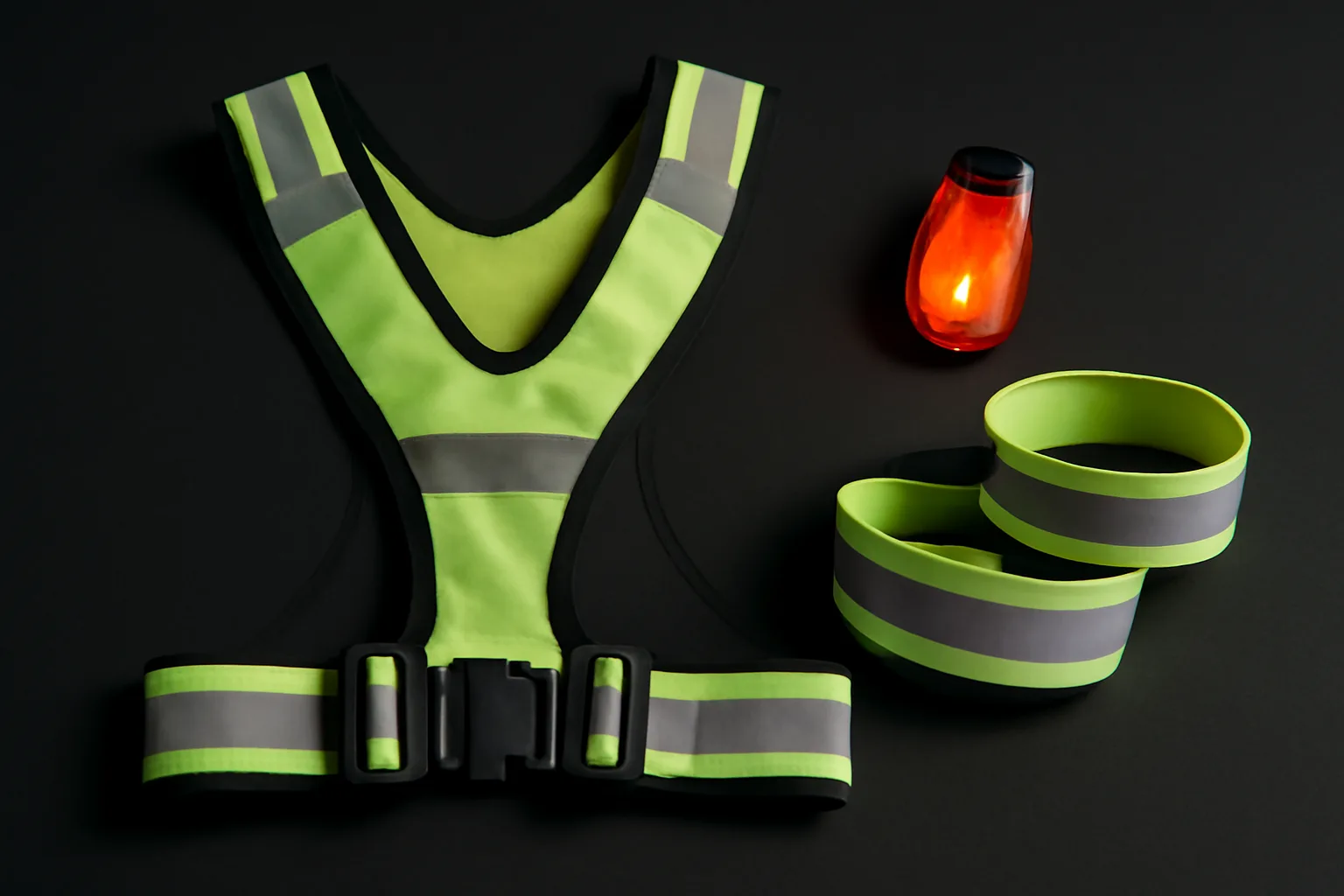
Dark running kit should work from the front, back and sides. Cars do not always approach from directly behind. Cyclists, e-scooters and pedestrians may come from side streets, driveways or shared paths.
Start with contrast
Black leggings and a dark top are fine indoors. Outside in November at 6pm, they are not doing you any favours. Add contrast high on the body and on moving parts.
Good options include:
- Reflective vest: £8-£25 from Decathlon, Amazon UK, Sports Direct or Runners Need.
- Bright long-sleeve top: £15-£40 for entry-level running tops from Decathlon, ASICS outlet or SportsShoes.
- Reflective ankle bands: £5-£12, useful because moving ankles catch headlights well.
- Reflective gloves or hat: £8-£25, good for signalling and cold-weather comfort.
- Reflective jacket: £35-£120, depending on waterproofing and breathability.
If you buy one thing, buy the reflective vest. It goes over whatever you already own, it is cheap, and it works in more conditions than a single bright top.
Do not rely on one reflective logo
Many running jackets have small reflective details and big marketing claims. Look for reflective strips across the chest, shoulders, back and arms. Side visibility matters at junctions.
The later article on reflective running gear can go deeper on specific products. For this safety guide, the principle is enough: add reflection to the torso and movement points, then add lights if traffic or unlit paths are involved.
Dress for being warm after five minutes
You should feel slightly cool when you step outside. If you are warm at the front door, you may overheat after ten minutes and end up unzipping layers, which can cover lights or reflective strips.
For many UK winter evening runs, a breathable long-sleeve top plus a light windproof layer is better than a thick hoodie. A proper running jacket at £45-£90 from Decathlon, Ronhill, Proviz or Sportsshoes.com is a better buy than a cotton sweatshirt that gets damp and heavy.
Lights, Head Torches and Clip-On LEDs
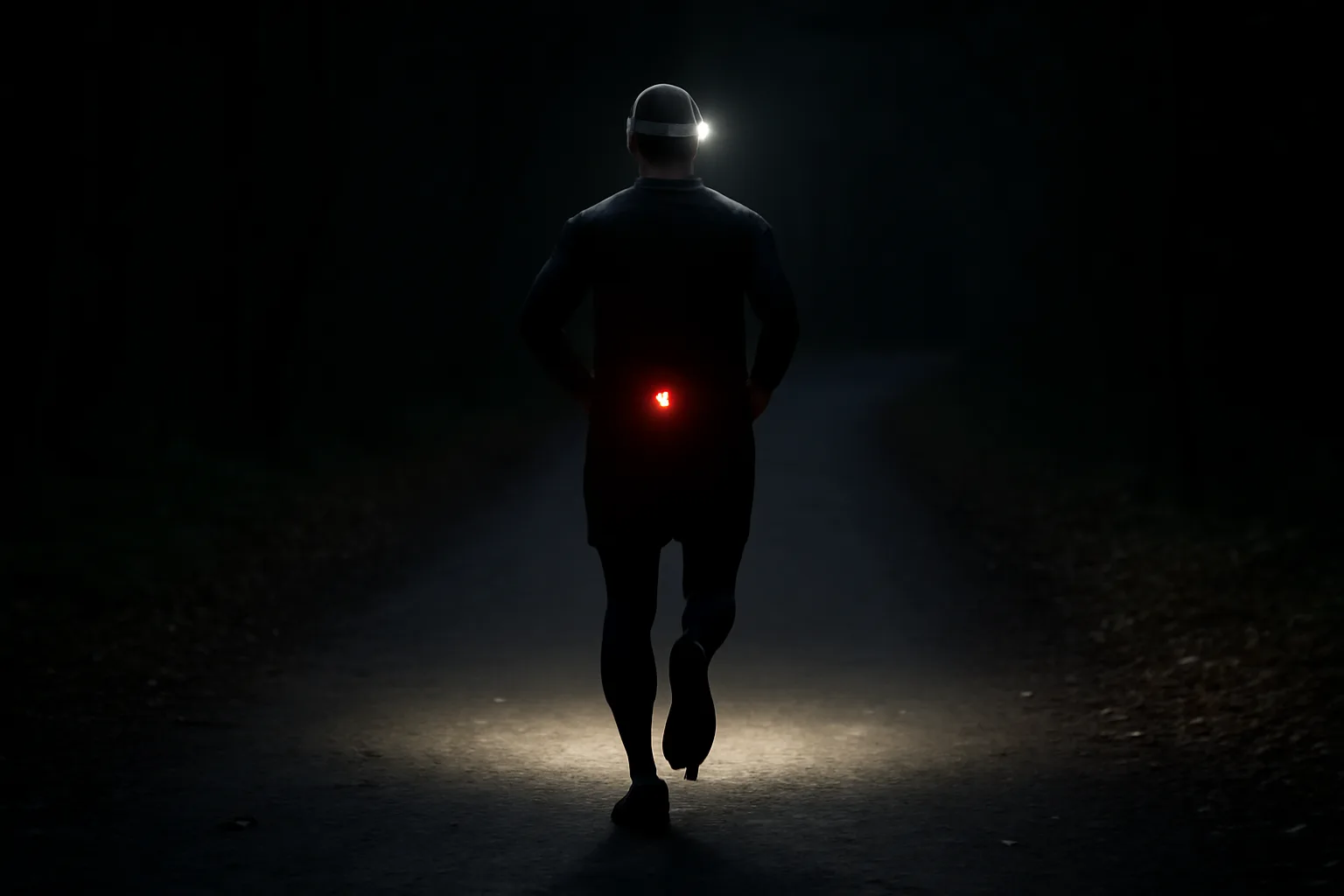
Reflective kit needs another light source to work. LEDs and head torches make you visible even before headlights hit you, and they help you see kerbs, puddles and uneven paving.
Head torch basics
A road-running head torch does not need to be a mountain rescue lamp. For lit pavements with occasional dark patches, 100-250 lumens is fine. For unlit paths or trails, look at 300-500 lumens and a secure fit.
Typical UK prices:
- Basic clip-on LED: £5-£12 from Decathlon, Amazon UK or Halfords.
- Entry head torch: £15-£30, fine for easy pavements and park paths.
- Better running head torch: £35-£60, usually lighter, brighter and less bouncy.
- Premium trail head torch: £70-£120, useful for long off-road winter runs but overkill for most 5 km loops.
Decathlon’s running lights page often lists options around the £30-£80 mark, while Alpkit, Petzl, Ledlenser and Silva are common UK names for head torches. My pick for most road runners would be a comfortable £30-£45 rechargeable head torch plus a small rear red light.
Front and rear both matter
A head torch helps you see and helps oncoming traffic notice you. It does very little for a cyclist or driver approaching from behind. Add a rear red clip light to a waistband, vest, jacket or running belt.
Do not point a powerful head torch straight into people’s faces on shared paths. Angle it down enough to light the ground 3-5 metres ahead. You can still lift your head briefly at crossings.
Battery habits
Recharge lights after every second or third use, not when they are already fading. Keep a spare cheap LED in a pocket during winter. It weighs almost nothing and costs less than a coffee and cake stop.
If you use a GPS watch for safety alerts or route tracking, check the battery before leaving. We cover watch battery behaviour in Running Watch Battery Life: What Affects It.
Cold, Rain and Footing After Dark
Darkness hides surface changes. Rain adds glare. Cold stiffens hands and makes fiddly kit harder to use. That combination is why your normal lunchtime route can feel different after work.
Watch the surface, not the split
After dark, keep your eyes scanning 3-5 metres ahead. Look for:
- Wet leaves: slippery on corners and painted surfaces.
- Black ice: especially on bridges, shaded pavements and quiet roads.
- Potholes and raised slabs: harder to spot under patchy streetlights.
- Puddles: they can hide kerb edges or deeper holes.
Slow down before turns and crossings. A cautious dark run is still a useful run.
Shoes and grip
Most road shoes are fine for lit pavements. If your route includes muddy parks, canal paths or winter trails, use a trail shoe with moderate lugs. You do not need an aggressive fell shoe for a town park, but slick carbon race shoes are a poor choice on wet leaves.
If your shoes are near the end of their life, dark winter is the wrong time to squeeze out another month. Our guide to knowing when running shoes are worn out covers the signs.
Layering without bulk
Use thin layers you can vent. For example:
- Mild wet evening: technical T-shirt, light reflective jacket, cap.
- Cold dry evening: long-sleeve base layer, gloves, reflective vest.
- Cold wet evening: base layer, breathable waterproof jacket, gloves and head torch.
For clothing detail, link this to our guides on what to wear running in every season, how to layer for running in cold weather and waterproof running jackets.
Running Alone, With Others or With a Dog
Kit helps, but company changes the risk profile too. Some dark runs are better with another person, especially on quiet paths or unfamiliar routes.
Solo running
Solo dark runs work best when they are short, familiar and easy. Keep one ear free if you use headphones. Bone-conduction headphones such as Shokz OpenRun cost around £90-£130, while cheaper JLab or open-ear options can sit around £25-£70. The point is awareness, not brand loyalty.
The RunTogether runner FAQ, from the England Athletics-backed programme, recommends high-visibility and bright colours when running in the dark. It also points runners toward qualified run leaders for extra guidance, which is a sensible route if you are nervous about winter evenings.
Group running
Running with a club or informal group is not only safer; it often makes winter training less miserable. Many UK clubs run social 5 km to 10 km routes in the evening. Some are free, while club membership might be £20-£60 a year depending on the club and England Athletics registration.
For beginners, a RunTogether or local club session is often better than trying to invent a safe winter routine alone. You get route knowledge, pacing help and someone else has usually checked the dark corners already.
Running with a dog
If you run with a dog, visibility applies to both of you. A reflective lead costs about £8-£20. A dog LED collar costs around £8-£25. Keep the lead short near roads and avoid waist leads until your dog is predictable around traffic, cyclists and other dogs.
Do not assume a driver has seen the dog just because they have seen you. Low, dark shapes disappear beside parked cars.
What to Carry on a Dark Run
You do not need to turn every 5 km run into an expedition. You do need enough to handle a dead phone, a twisted ankle or a weather change.
Short run carry list
For a 30-45 minute dark road run, carry:
- Phone: charged enough for maps, calls and location sharing.
- Key: clipped inside a zipped pocket, not loose in a hoodie pouch.
- Bank card or £10 note: for a bus, taxi, drink or emergency stop.
- ID or emergency contact: free on your phone lock screen or £10-£25 for a band/tag.
- Small rear light: £5-£12, even if your jacket has reflective panels.
A running belt is the neatest option if your clothing has poor pockets. Budget belts are £10-£20, while better bounce-free belts from FlipBelt, Spibelt or Decathlon are usually £20-£40. We cover carry options in Best Running Belts 2026 UK.
Longer or quieter routes
For longer runs, trail routes or canal paths, add a foil blanket, a spare buff and enough battery for navigation. A foil blanket costs about £3-£6 and weighs almost nothing. It sounds excessive until you have to walk home cold after rolling an ankle.
If you use routes with very quiet sections, consider a personal alarm at £5-£15. Some runners prefer one; some do not. It is not a substitute for route choice, but it can be part of a sensible setup.
A Simple Dark-Run Kit Setup by Budget
You can spend a silly amount on winter running gear. You do not need to. Build the kit around your route, not around Instagram.
Under £25
This is the minimum setup for lit pavements:
- Reflective vest: £8-£15.
- Rear clip light: £5-£10.
- Reflective ankle bands: £5-£8.
Use your existing running shoes and clothing. This setup is not luxurious, but it makes you much easier to spot.
£40-£70
This is the sweet spot for most runners:
- Reflective vest or sash: £10-£25.
- Rechargeable head torch: £25-£45.
- Rear red light: £5-£12.
- Thin gloves or reflective hat: £8-£20.
That setup covers visibility from front and back, lets you see rough ground and keeps hands warm enough to use your phone if needed.
£100 plus
Spend more only if you run often in winter, use unlit routes or commute on foot. A reflective waterproof jacket at £80-£150, a better head torch at £60-£100 and a bounce-free belt at £25-£40 can be worth it for frequent runners.
For most people, I would buy lights before a premium jacket. Drivers and cyclists notice lights first. The jacket matters more for weather comfort than raw safety.
The final test is simple: stand outside in your kit, front and back, and ask whether someone would see you quickly from a car, bike or side road. If the answer is “only if they are paying attention”, add another reflective point or light.
Frequently Asked Questions
Is it safe to run in the dark? It can be, if you choose familiar lit routes, wear reflective kit, use lights and avoid isolated or technical sections. The risk rises when you combine darkness with poor route choice, headphones, speed work or bad weather.
What should I wear for running in the dark? Wear bright or fluorescent clothing, reflective panels and at least one active light. A reflective vest, rear red clip light and head torch is a better setup than one expensive dark jacket.
Do I need a head torch for road running? Not always. On well-lit pavements, a rear light and reflective kit may be enough. Use a head torch if your route has dark gaps, uneven surfaces, parks, towpaths or country lanes.
How much should dark running gear cost? A basic visibility setup can cost £20-£25. A stronger setup with a reflective vest, rear light and rechargeable head torch is usually £40-£70. Frequent winter runners may spend £100 plus on a better jacket and light.
Should I run with headphones in the dark? Keep at least one ear free, lower the volume or use open-ear headphones. Awareness matters more after dark because bikes, dogs, cars and pedestrians are harder to read early.
What is the biggest mistake runners make after dark? Relying on one piece of kit. A small reflective logo or bright top is not enough by itself. Combine route choice, reflection, active lights and predictable road behaviour.