Running shoe cushioning is not just about softness. The right shoe should reduce harsh impact, roll smoothly at your normal pace and still feel stable when you get tired.
In This Article
- Running Shoe Cushioning Types: The Quick Decision
- What Cushioning Actually Does Underfoot
- The Main Foam Types in Modern Running Shoes
- Stack Height, Drop and Rocker Shape
- Which Cushioning Suits Different Runners
- UK Shoe Examples and Typical Prices
- Common Cushioning Mistakes to Avoid
- Frequently Asked Questions
Running Shoe Cushioning Types: The Quick Decision
If you want the short version, most UK road runners should start with a neutral daily trainer with moderate cushioning. Think Nike Pegasus, Brooks Ghost, Saucony Ride or New Balance 880 territory: enough foam for comfort, not so much that the shoe feels wobbly or slow.
Max-cushion shoes suit long easy runs, heavier runners, recovery days and anyone who feels beaten up by firmer trainers. They are not automatically better for every run. A very soft shoe can feel lovely in the shop and clumsy at 7km when your form gets tired.
Responsive cushioning suits tempo runs, faster daily miles and race-day shoes. That does not always mean carbon plates. It usually means a lighter, springier foam that returns more energy and compresses less like a sponge.
The real choice is not “soft or hard”. It is:
- Moderate cushion: best first choice for most beginners and general runners
- Max cushion: best for easy mileage, long runs and impact comfort
- Responsive cushion: best for faster running and runners who dislike a sink-in feel
- Firm stable cushion: best for runners who want guidance, ground feel or a more planted landing
That is why two shoes with similar-looking midsoles can feel nothing alike. Foam type, stack height, drop, rocker shape, outsole rubber and your own stride all change the ride.
If you are still choosing your first proper pair, read this alongside our guide on how to choose the right running shoes. Cushioning is one part of the decision, not the whole thing.
What Cushioning Actually Does Underfoot
Cushioning spreads and manages force. When your foot lands, the midsole compresses, the outsole grips, your ankle and knee flex, and your body carries you forward into the next stride. Good cushioning makes that sequence feel controlled.
Poor cushioning does one of three things:
- It bottoms out: the foam compresses too easily and feels dead after a few kilometres
- It feels harsh: the shoe protects poorly on tired legs, descents or hard pavements
- It feels unstable: the foam is soft or tall enough that your foot wobbles through landing
The NHS recommends building running gradually and mixing running with walking when starting out, which matters because cushioning cannot save a sudden jump in training load. A soft shoe will not cancel out going from no running to five hard runs a week; it just makes the bad plan feel nicer for the first few outings. The NHS running guidance is still a useful sanity check if you are building from scratch.
Impact protection
Impact protection is the bit most runners think of first. More foam can reduce how sharp the ground feels, especially on concrete pavements and long downhill stretches.
The catch: your body still absorbs load. Cushioning changes the feel and timing of that load, but it does not make you immune to sore calves, knees or hips. If a shoe lets you run farther than your tissues are ready for, it can still contribute to niggles.
Ride feel
Ride feel is the personality of the shoe. Some shoes feel soft and slow, like you are sinking into them. Some feel firm and snappy. Some feel cushioned but guided, rolling you forward through a curved sole.
After rotating between soft max-cushion shoes and firmer daily trainers, the thing I notice most is rhythm. A shoe can be protective but still interrupt your cadence if it is too soft for your stride.
Stability
Stability does not only mean motion-control shoes. A neutral shoe can feel stable if the platform is broad, the foam is not too mushy and the upper holds your foot well.
This is where cushioning gets personal. A 60kg runner with neat form may love a tall soft shoe. A 95kg runner landing hard on the heel may find the same shoe collapses sideways. Neither runner is wrong.
The Main Foam Types in Modern Running Shoes
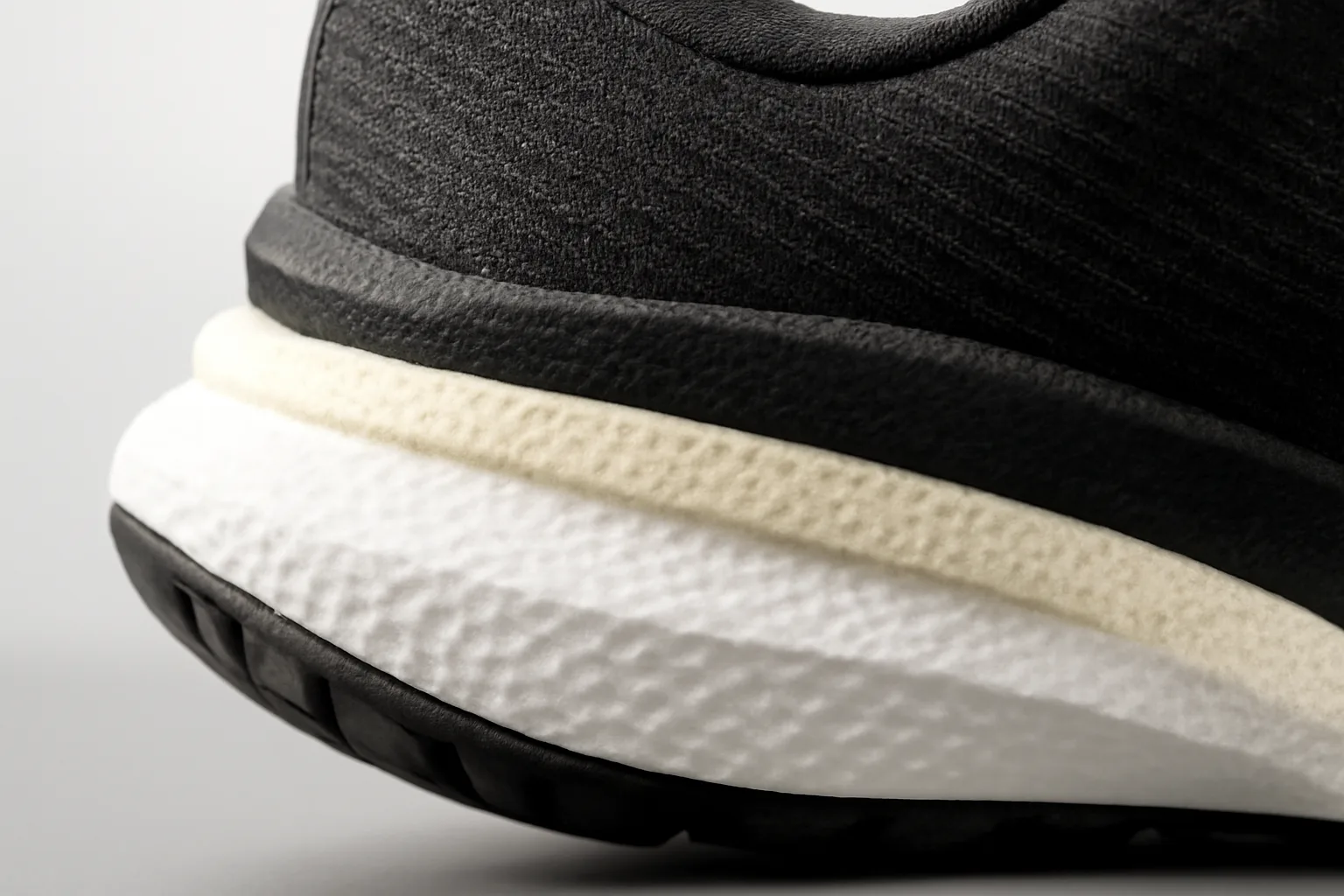
Running brands love giving foam a trademarked name. ReactX, Fresh Foam X, FF BLAST, PWRRUN, DNA LOFT, ZoomX, PEBA, EVA, TPU. It can sound like someone tipped a Scrabble bag into a product page.
Ignore the name first. Ask what the foam is trying to do.
EVA foam
EVA is the classic running-shoe midsole material. It is light, relatively cheap and easy for brands to tune from firm to soft. Plenty of good shoes still use EVA-based cushioning.
The downside is that basic EVA can flatten with mileage and temperature changes. In UK winter, some foams feel firmer on cold pavements. In summer, the same shoe can feel a touch softer.
Budget and mid-range daily trainers often use EVA blends. Expect about £70-£130 for many shoes in this category, with older colourways often discounted at SportsShoes, Start Fitness, Decathlon, Nike, ASICS, Brooks and specialist running shops.
Supercritical foams
Supercritical foams are made using gas-infusion processes that create a lighter, bouncier structure. They tend to feel springier than traditional EVA while keeping weight down.
This is where many modern daily trainers have improved. A shoe can now be cushioned without feeling like a brick. Nike says the Pegasus 42 uses ReactX foam with a full-length Air Zoom unit for responsive cushioning, which is the kind of mainstream example most runners will recognise from UK shops.
Supercritical daily trainers usually sit around £120-£160 at full price, though sale prices can drop below £100 when colours change.
TPU and PEBA foams
TPU and PEBA-style foams are often used in higher-energy trainers and racing shoes. PEBA-based foams are common in expensive race-day shoes because they can be light, soft and springy at the same time.
The trade-off is price and sometimes durability. A plated race shoe can cost £180-£280 in the UK. It might feel amazing for fast sessions, but it is overkill for a new runner’s Tuesday 4km loop.
If you are building a simple shoe rotation, use a normal daily trainer first. Add a faster shoe later if you are doing intervals, parkrun efforts or races often enough to justify it.
Gel, air and insert systems
ASICS GEL, Nike Air Zoom and similar systems are not the whole midsole. They are inserts or units used with foam to change landing feel, impact absorption or rebound.
Do not buy purely because a shoe has gel or air. The full midsole geometry matters more. A shoe with a small insert can still feel firm; a shoe without gel can still feel protective.
The useful question is: does the whole shoe feel good at your normal pace after ten minutes, not just when you bounce on the shop floor?
Stack Height, Drop and Rocker Shape
Foam type gets the attention, but geometry often decides whether a cushioned shoe works for you.
Stack height
Stack height is the amount of material between your foot and the ground. Higher stack usually means more protection, but also more shoe to control.
A moderate daily trainer might sit around 30-38mm at the heel. A max-cushion shoe may push higher. Race shoes can be very tall but use light foams and plates to keep them efficient.
More stack can help on long runs, especially if your feet feel battered late on. It can also feel disconnected on uneven pavements or canal paths. If you do plenty of mixed surfaces, compare this with our trail running shoes vs road running shoes guide.
Heel-to-toe drop
Drop is the height difference between heel and forefoot. A 10mm drop means the heel sits 10mm higher than the forefoot. A 4mm drop feels flatter.
Higher-drop shoes often feel easier on calves and Achilles for runners used to traditional trainers. Lower-drop shoes can shift more load towards the calf and foot. That is not bad, but it needs adapting to.
If you are injury-prone or returning after a break, do not change drop, cushion level and training load all at once. That is how people create a mystery niggle and then blame the wrong thing.
Rocker shape
A rocker is the curve of the sole that helps the shoe roll forward. It can make a thick shoe feel smoother because you do not have to bend the forefoot as much.
Rockered shoes can be brilliant for long easy runs, especially if your toes or forefoot get tired. They can also feel odd if you prefer a flexible, ground-connected shoe. Try before buying if possible.
Which Cushioning Suits Different Runners
There is no single best cushioning type. There is only the best match for your body, pace and weekly mileage.
New runners
Start moderate. A stable neutral daily trainer around £90-£140 is a safer first buy than a towering max-cushion shoe or a plated racer.
You want a shoe that disappears underfoot. If it feels exciting for 30 seconds in the shop but strange when jogging, leave it.
Heavier runners
Look for a cushioned shoe with a broad platform and foam that does not collapse. Max cushion can help, but only if the shoe stays stable.
Shoes like the Brooks Ghost, ASICS Nimbus, New Balance 1080 and HOKA Clifton often appear on shortlists here, but try them on. Weight, stride and foot shape change everything.
Runners with sore joints
More cushioning can reduce harshness, but it is not a medical fix. If pain persists, get proper advice rather than buying softer shoes every month and hoping.
For many runners, the better answer is moderate cushioning, gradual mileage and replacing dead shoes early. Our guide on when running shoes are worn out covers the signs: compressed midsole, uneven outsole wear, new aches and a flat ride.
Faster runners
If you run tempo sessions, intervals or races, responsive cushioning becomes more useful. You want the shoe to pop back quickly rather than absorb everything.
That might mean a lightweight daily trainer, a nylon-plated trainer or a carbon-plated race shoe. Prices jump quickly: £130-£170 for faster trainers, £180-£280 for premium race shoes.
Flat feet and overpronation
Cushioning is not the same as support. A very soft shoe can make overpronation feel worse if your foot rolls through the foam.
If you need more guidance, compare cushioning with fit and support features in our running shoes for flat feet guide. A firmer stable platform may beat a plush neutral shoe.
UK Shoe Examples and Typical Prices
Use these as examples, not commandments. Shoe models change every year, and sale pricing moves weekly.
Moderate daily cushioning
Nike Pegasus 42 is the classic mainstream daily trainer example. UK price is about £130 at launch, and Nike highlights ReactX foam plus a full-length Air Zoom unit. It is cushioned enough for daily miles but not a huge marshmallow shoe.
Brooks Ghost 17 is another safe daily trainer. Expect roughly £120-£135 in UK shops, often less in sales. Its DNA LOFT v3 cushioning suits runners who want comfort without a wild rocker or race-shoe feel.
Saucony Ride 18 sits in the same broad category at about £130-£135. It is the kind of shoe I would recommend to someone who wants one pair for steady runs, parkrun, gym treadmill sessions and holiday running.
Max-cushion daily shoes
ASICS Gel-Nimbus 27 is a premium max-cushion option, usually around £175-£180 full price in the UK. It suits easy miles and comfort-first runners, but it is not the shoe I would pick for fast intervals.
New Balance Fresh Foam X 1080 v14 is another plush daily option at about £160. It gives a soft, protective ride and works well for longer steady runs if the fit suits your foot.
HOKA Clifton 10 is around £130-£135 in the UK and sits between lightweight max-cushion and everyday trainer. It has that rolling HOKA feel, which some runners love and some find too shaped.
Responsive and faster cushioning
If you want a faster feel, look at shoes like the Saucony Endorphin Speed, Adidas Boston, Puma Deviate Nitro or New Balance Rebel. UK prices tend to run from about £130 to £180 depending on version and sales.
For carbon race shoes, the price often climbs to £220-£280. They can be brilliant on race day, but they are a poor first running shoe. Save them for when you know what pace, distance and fit you actually need.
For brand-level differences, our Nike vs ASICS vs Brooks comparison goes deeper without turning this cushioning article into a brand fight.
Common Cushioning Mistakes to Avoid
The biggest mistake is buying the softest shoe in the shop because it feels luxurious while walking. Running changes the question. A shoe that feels amazing for twelve steps on carpet can feel sloppy on wet pavement.
Mistake: assuming more foam means fewer injuries
More foam can help comfort, but injury risk is tied to training load, strength, sleep, previous injury, terrain and running form too. Cushioning is not a force field.
Mistake: changing too much at once
If you move from a firm 10mm-drop shoe to a soft 4mm-drop rocker and double your weekly distance, you will have no idea which change caused the calf pain.
Change one variable at a time. New shoe first, normal mileage for two weeks, then build.
Mistake: using race foam for everything
High-energy foams can feel addictive. The problem is cost and durability. If your race shoes cost £240 and feel best for 300-500km, using them for every easy run is an expensive habit.
Keep a durable daily trainer for most miles. Use the faster shoe when it serves the session.
Mistake: ignoring fit because the cushioning feels good
Fit beats foam. If your toes hit the end, your heel lifts or the upper squeezes your midfoot, the cushioning will not rescue the shoe.
Use the thumb-width toe rule, try shoes late in the day when feet are slightly swollen, and wear your normal running socks. If you use orthotics, take them to the shop.
Mistake: keeping dead shoes too long
Midsole foam can die before the outsole looks ruined. If your familiar shoe starts feeling flat, your legs feel unusually beaten up, or one side is visibly compressed, it may be done.
Most road shoes last roughly 500-800km, but heavier runners, rough surfaces and softer foams can shorten that. Track mileage if you can.
The bottom line: choose cushioning for the run you actually do. For most people, that means a stable moderate daily trainer first, a max-cushion shoe for comfort or long runs second, and a responsive faster shoe only when your training earns it.
Frequently Asked Questions
What type of running shoe cushioning is best for beginners? Moderate cushioning in a stable neutral daily trainer is the safest first choice for most beginners. It gives comfort without the instability of very soft max-cushion shoes or the cost of race shoes.
Is max cushioning better for knees? Max cushioning can make running feel less harsh, but it is not a guaranteed knee fix. Training load, strength, stride, terrain and shoe stability matter too. Persistent pain needs proper assessment.
What is the difference between soft and responsive cushioning? Soft cushioning compresses easily and feels plush. Responsive cushioning rebounds faster and feels springier. Some premium foams manage both, but many soft shoes feel slower than responsive shoes.
Do heavier runners need more cushioning? Often they benefit from more protection, but stability is just as important. A broad, well-supported cushioned shoe usually works better than a very soft shoe that collapses sideways.
How much should I spend on cushioned running shoes in the UK? Most runners can get a good cushioned daily trainer for £90-£140, especially in sales. Premium max-cushion shoes are often £150-£180, while race shoes can cost £220-£280.
How do I know if my shoe cushioning is worn out? Watch for a flat or dead ride, new aches, visible midsole creasing, uneven compression or outsole wear that changes your landing. Mileage around 500-800km is a useful rough guide.